

Planning a trip to Prague and unsure whether you need a visa, which entry rules apply, what to expect at the airport, or which new EU systems will launch soon?
If you plan to visit Prague in the near future next steps should be looking beyond sightseeing plans. You should also focus on practical matters that matter just as much. Many travelers first ask about entry rules for the Czech Republic.
In this article, I summarize everything you need to know about travel documents and visa policies. You’ll learn what to prepare before departure and what to expect upon arrival. The goal is to save you time and spare you from searching dozens of websites.
Please note that this website serves informational purposes only and may not always be fully accurate. Entry rules can change at any time. Always verify details in your home country and on the Ministry of Foreign Affairs website where all necessary information can be found https://mzv.gov.cz/jnp/en/information_for_aliens/index.html
What Documents Do You Need Before You Travel to the Czech Republic?
If you are an EU citizen, you must travel with a valid travel document – national ID card is sufficient. You may of course also use a passport if you prefer.
If you are a citizen of a non-EU country, you need a valid passport that:
- remains valid for at least three months after your planned departure from the Schengen Area,
- was issued within the last ten years,
- shows no damage.
Children under 15 years of age don´t need their own passport if a parent’s passport officially lists them.
Some nationalities also require a visa to enter the Czech Republic. You’ll find details below.
Border police may ask you to present additional documents such as:
- a return or onward ticket,
- proof of accommodation,
- travel health insurance or medical insurance
- evidence of sufficient financial means ( cash or credit card, bank statements)
Officers do not request these documents from everyone, but you should keep them ready.
Registration with the Foreign Police
Every foreigner over the age of 15 must register with the Czech Foreign Police after arrival.
If you stay in a hotel, hostel, or Airbnb, the accommodation provider handles the registration. You only complete a short form with basic details such as your name, address, and passport number. That explains those check-in forms.
Czech law requires this registration. Refusing to provide information breaks the law. Accommodation providers also face penalties if they fail to cooperate, and fines can be significant.
Prague, the Czech Republic and the Schengen Area
The Czech Republic joined the European Union in 2004 and belongs to the Schengen Area.
The Schengen Area includes European countries with shared visa rules and no internal border controls. This system greatly benefits travelers.
In practice, the same entry rules apply whether you arrive in Prague or Paris. Once inside Schengen, you can travel freely between 26 countries without additional passport checks.
Schengen Area Countries
EU member states in Schengen:
Austria, Belgium, Bulgaria, Croatia, Czechia, Denmark, Estonia, Finland, France, Germany, Greece, Hungary, Italy, Latvia, Lithuania, Luxembourg, Malta, the Netherlands, Poland, Portugal, Romania, Slovakia, Slovenia, Spain, Sweden.
(From overseas territories, only Madeira, the Azores, and the Canary Islands apply.)
Non-EU Schengen countries:
Iceland, Liechtenstein, Norway, Switzerland
Countries Not in the Schengen Area
These countries apply their own entry rules:
- Ireland (EU member that opted out of Schengen)
- Cyprus (still under evaluation, expected to join)
- United Kingdom, Albania, Bosnia and Herzegovina, Serbia, Montenegro, Kosovo, North Macedonia, Ukraine, Moldova, Belarus, Russia
Do I Need a Visa to Travel to Prague, Czechia?
What is the visa requirement? The answer depends on three factors:
- your nationality ( visa- free stay applies for EU citizens, Schengen country members and other third-country nationals – see the list bellow)
- the length of your stay in the Czech Republic or Schengen Area ( tourist visa versus long-stay visa)
- the purpose of stay ( temporary stay such as tourism, business purposes, visiting a family member, or work, studies or marriage)
If you stay longer than 90 days or plan to work or earn money, you need a long-term visa ( work visa or student visa) or long-term residence permit/permanent residency. This rule applies regardless of nationality. Remember that the 90-day limit covers all Schengen countries combined.
Visa-Free Travel for Short Stays (Up to 90 Days)
If you travel for tourism, short visits, or business, you do not need a visa when you hold citizenship from one of the following countries.
EU & Schengen countries:
Austria, Belgium, Bulgaria, Croatia, Czechia, Denmark, Estonia, Finland, France, Germany, Greece, Hungary, Iceland, Italy, Latvia, Liechtenstein, Lithuania, Luxembourg, Malta, the Netherlands, Norway, Poland, Portugal, Romania, Slovakia, Slovenia, Spain, Sweden, Switzerland.
Non-EU & non-Schengen countries with visa-free access:
Albania, Andorra, Antigua and Barbuda, Argentina, Australia, Bahamas, Barbados, Bosnia and Herzegovina, Brazil, Brunei, Canada, Chile, Colombia, Costa Rica, Dominica, East Timor, Georgia, Grenada, Guatemala, Honduras, Israel, Japan, Kiribati, Malaysia, Marshall Islands, Mauritius, Mexico, Micronesia, Moldova, Monaco, Montenegro, Nauru, New Zealand, Nicaragua, North Macedonia, Palau, Panama, Paraguay, Peru, Saint Kitts and Nevis, Saint Lucia, Saint Vincent and the Grenadines, El Salvador, Samoa, San Marino, Serbia, Seychelles, Singapore, Solomon Islands, South Korea, Taiwan, Tonga, Trinidad and Tobago, Tuvalu, Ukraine, United Arab Emirates, United Kingdom, United States of America, Uruguay, Vatican City, Venezuela
Important notes
- Citizens of Albania, Bosnia and Herzegovina, Georgia, Kosovo, Moldova, Montenegro, North Macedonia, Serbia, and Ukraine may travel visa-free only with biometric passports.
- Hong Kong – visa-free travel is allowed only for holders of a Hong Kong SAR passport.
- Macao – visa-free travel only for holders of a Macao SAR passport.
Countries That Require a Visa for the Czech Republic / Schengen
Citizens of the following countries must obtain a visa before travel:
Afghanistan, Algeria, Angola, Armenia, Azerbaijan, Bahrain, Bangladesh, Belarus, Belize, Benin, Bhutan, Bolivia, Botswana, Burkina Faso, Burundi, Cambodia, Cameroon, Cape Verde, Central African Republic, Chad, China, Comoros, Congo (Brazzaville), Congo (DRC), Cuba, Djibouti, Dominican Republic, North Korea, Ecuador, Egypt, Equatorial Guinea, Eritrea, Ethiopia, Fiji, Gabon, Gambia, Ghana, Guyana, Guinea, Guinea-Bissau, Haiti, India, Indonesia, Iran, Iraq, Ivory Coast, Jamaica, Jordan, Kazakhstan, Kenya, Kosovo, Kuwait, Kyrgyzstan, Laos, Lebanon, Lesotho, Liberia, Libya, Madagascar, Malawi, Maldives, Mali, Mauritania, Mongolia, Morocco, Mozambique, Myanmar, Namibia, Nepal, Niger, Nigeria, Oman, Pakistan, Papua New Guinea, Philippines, Qatar, Russia, Rwanda, São Tomé and Príncipe, Saudi Arabia, Senegal, Sierra Leone, Somalia, South Africa, South Sudan, Sri Lanka, Sudan, Suriname, Eswatini, Syria, Tajikistan, Tanzania, Thailand, Togo, Tunisia, Turkey, Turkmenistan, Uganda, Uzbekistan, Vanuatu, Vietnam, Yemen, Zambia, Zimbabwe.
For accurate information about necessary documents, short-stay visa, long stay visa and application procedures you can also refer to Czech embassy or consulate. Applications are filed at consulates or visa centers located in applicants´ consular districts, commonly in person, not at a border crossing nor in Czech republic.
EES – Entry/Exit System (No More Passport Stamps)
From October 2025, the EU will introduce the Entry/Exit System (EES).
This system replaces passport stamps with digital records. EES registers non-EU travelers entering the Schengen Area for stays of up to 90 days in 180 days.
Its goals include:
- monitoring length of stay,
- preventing overstays,
- reducing illegal migration.
All non-EU travelers must use this system, regardless of visa requirements.
EES will collect:
- personal data from your travel document,
- date and place of entry and exit,
- biometric data, including a facial image and fingerprints.
Authorities will also record refused entries.
ETIAS – Coming in Late 2026
ETIAS will become mandatory in the last quarter of 2026 for travelers from visa-free third countries. EU countries and Schengen citizens do not need it.
ETIAS stands for the European Travel Information and Authorization System. It is not a visa. It works similarly to ESTA for the USA or eTA for Canada.
How ETIAS Will Work
Before traveling, ideally before booking, you must:
- complete an online application
- provide personal information,
- answer security questions,
- pay an additional fee.
Once approved ( check your email address), the system links the authorization electronically to your passport. Always travel with the same passport you used for the application.
ETIAS remains valid for at least three years or until your passport expires. It allows multiple trips during its validity.
For official details, visit the ETIAS website. http://www.etias.com
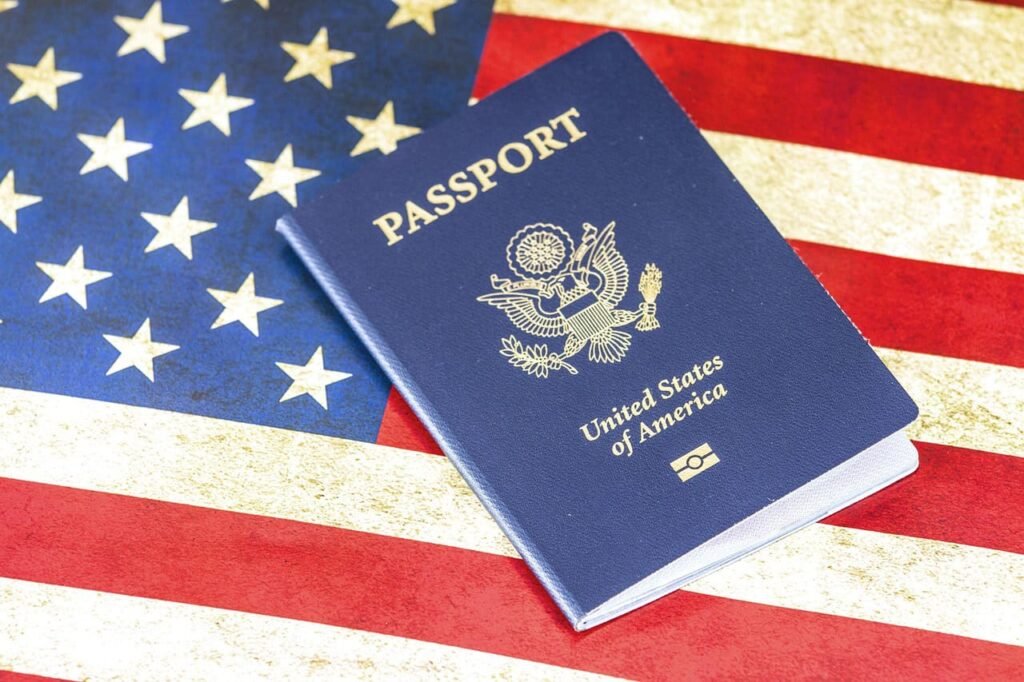
Travelling to Prague from the USA
If you are planning a trip from the USA to Prague, it is important to understand entry requirements, visa regulations, travel documents, and other practicalities. This guide provides all the information you need, so you can focus on enjoying your trip rather than worrying about paperwork.
Do US Citizens Need a Visa to Visit Prague?
Good news. US citizens do not need a visa to visit Prague, the Czech Republic, or any other Schengen country. This applies if you travel as a tourist, on a business trip, or for a short visit.
You can stay up to 90 days within a 180-day period. This limit applies to the entire Schengen Area, not only the Czech Republic.
That means if you visit Italy or France before Prague, those days also count. Once you enter one Schengen country, you can travel freely to the others. No extra paperwork is needed.
ETIAS System Starting in 2026
From autumn 2026, the ETIAS system will be introduced in Europe, including the Czech Republic.
Before traveling, you will need to apply online for entry authorization. You will fill in an electronic form. Approval usually arrives by email within minutes or a few days.
ETIAS will be valid for three years and will apply to all Schengen countries.
Are There Any Other Requirements at the Border?
Border police may ask you to show additional documents. It is recommended to have them ready:
- A return or onward flight ticket
- Proof of accommodation (hotel, Airbnb, etc.)
- Proof of sufficient financial means (credit card, bank statement, or cash)
- Proof of travel health insurance
What Happens After Arrival in the Czech Republic or Schengen Area?
In October 2025, the EES system was introduced in Europe for security reasons.
After landing, you will fill in a short electronic form at the airport. Your fingerprints will be taken, and a facial photo will be recorded.
Registration with the Foreign Police
By law, you must register with the foreign police within three days of arrival.
You usually do not need to handle this yourself. When staying in a hotel or Airbnb, you simply fill in the accommodation form. The host will register you for you.
Planning Your Trip: Documents and Procedures
Before traveling from the USA to Prague, prepare the following:
- Valid passport (minimum 3 months validity after departure)
- ETIAS form (from autumn 2026)
- Return or onward flight ticket
- Proof of accommodation
- Proof of sufficient funds
- Travel health insurance
- EES registration after arrival (fingerprints and photo)
- Foreign police registration via your accommodation

Celebrate Easter 2026 in Prague: Markets and Traditions
Easter in Prague and the Czech Republic Easter is an important holiday in the Czech…

History of Prague
Prague has grown for more than a thousand years, starting as small settlements on the…

Basic information for travelers
Here are some useful basics for travelers heading to Prague : Language: Czech is the…

Best Christmas Markets and Events in Prague 2025
Christmas in Prague: A Magical Time of Year The Advent and Christmas season is truly…

Prague Landmarks: The Top Attractions for First-Time Visitors
Exploring the city of Prague, the enchanting capital of the Czech Republic, is one of…