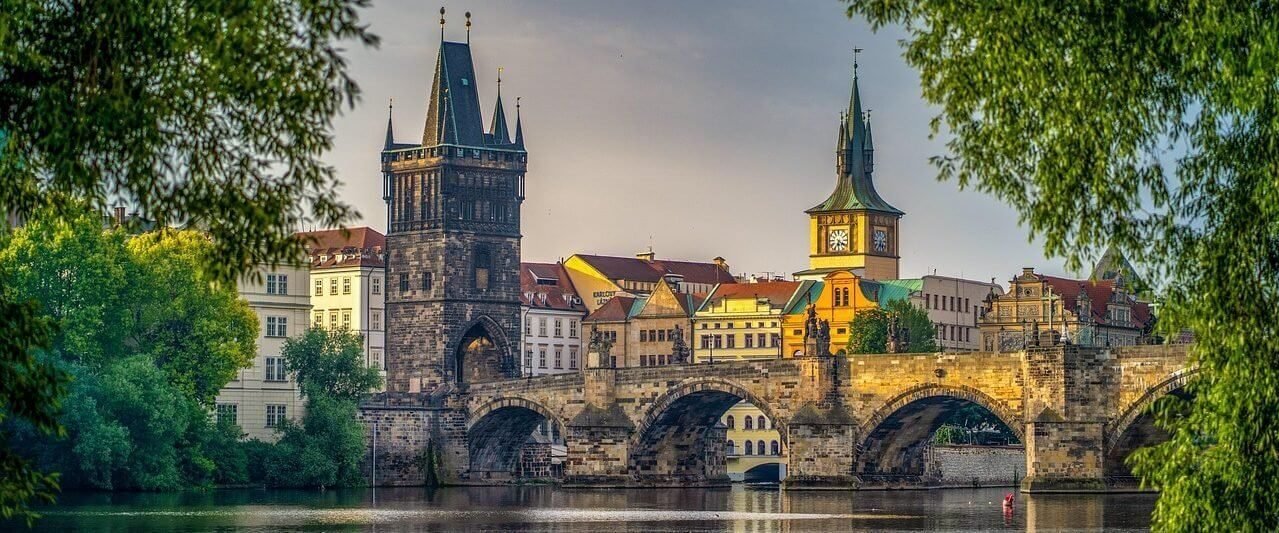
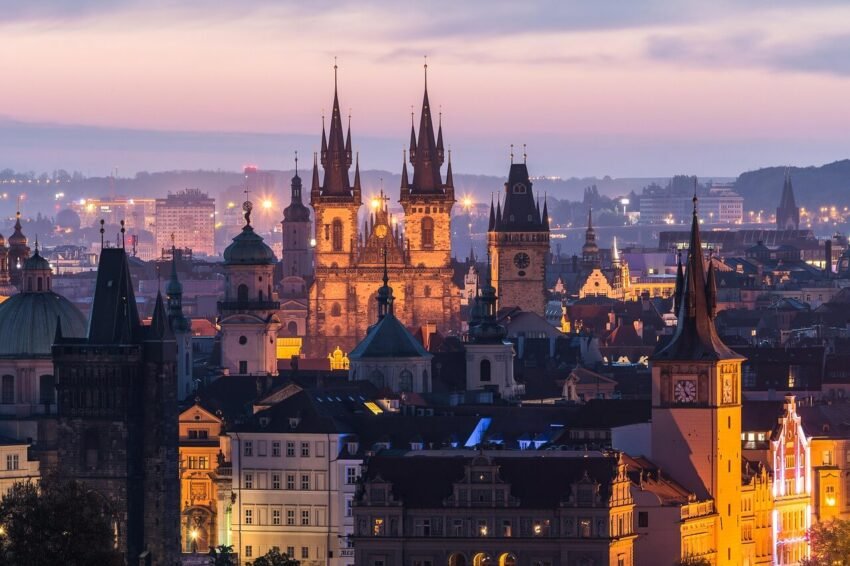
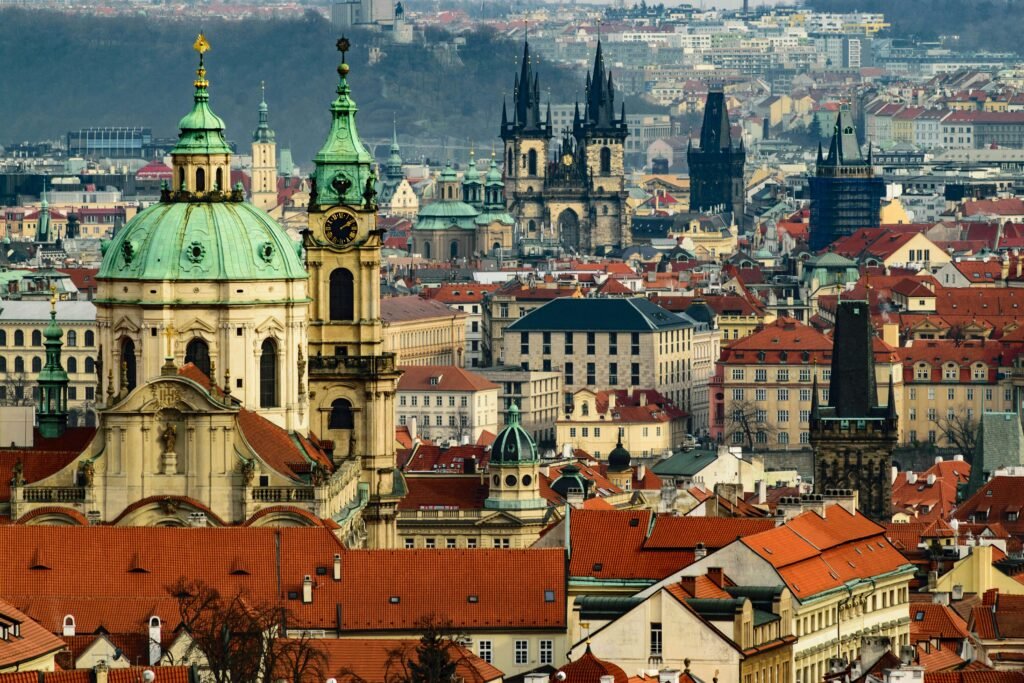
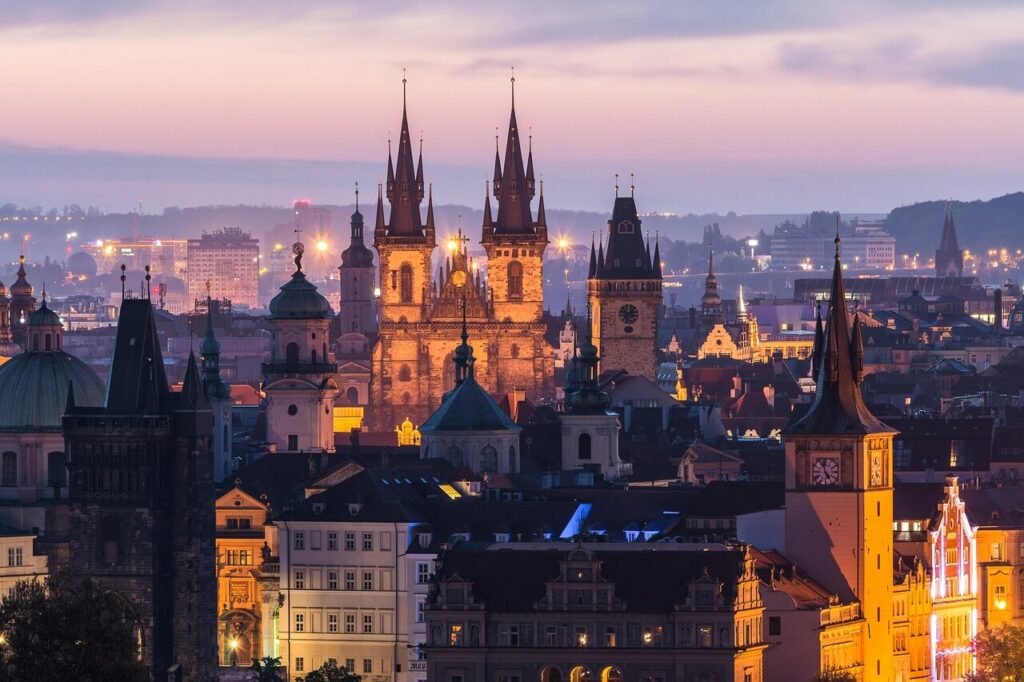
Exploring the city of Prague, the enchanting capital of the Czech Republic, is one of the best things to do in Central Europe. Often called the city of a hundred spires, Prague is filled with famous landmarks and historical monuments, that make it one of the most beautiful cities in the world. Whether it’s your first time visiting or you’re returning for a closer look, you’ll quickly discover why its tourist attractions rank among the best places to visit.From the iconic Charles Bridge to the oldest building hidden in its medieval streets, from grand baroque buildings and elegant baroque style palaces to awe-inspiring churches in striking gothic style, Prague offers something unforgettable at every turn. The historic centre of Prague was inscribed on the World Heritage List in 1992.
Old Town Square ( Staroměstské náměstí)
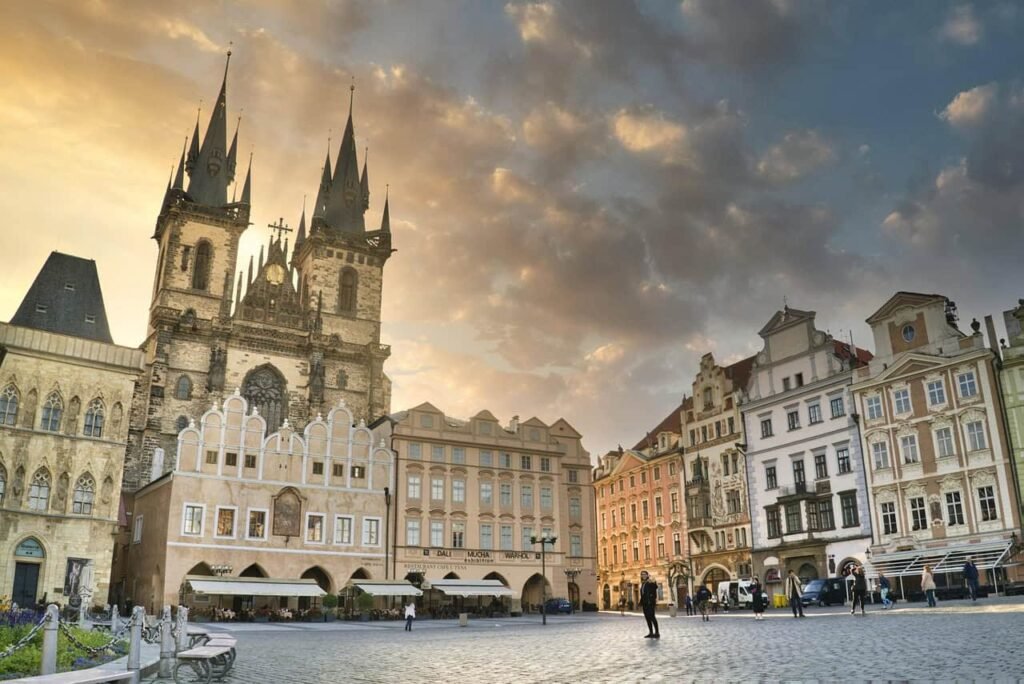
Old Town Square is the beating heart of Prague, full of history, culture, and energy. Located on the right side of the Vltava River, it has been a central meeting place for centuries. The square is surrounded by a mix of stunning buildings—from the towering spires of the Church of Our Lady of Týn to the elegant Baroque façade of St. Nicholas Church, and the historic Old Town Hall with its famous astronomical clock. This square has seen it all: bustling markets, grand celebrations, and even tragic events that shaped the city. Back in the 11th century, it was a major hub for traders traveling across Europe, making it an important center for commerce. Over time, it became the stage for both joyous festivals and darker moments in Prague’s history.Today, Old Town Square is a lively spot for both locals and tourists. Cafés spill out onto the cobblestones, street performers entertain crowds, and shops, galleries, and museums invite exploration. Walking through the square, it’s easy to feel the mix of centuries-old history and modern city life in one place.
The Astronomical Clock (Orloj)
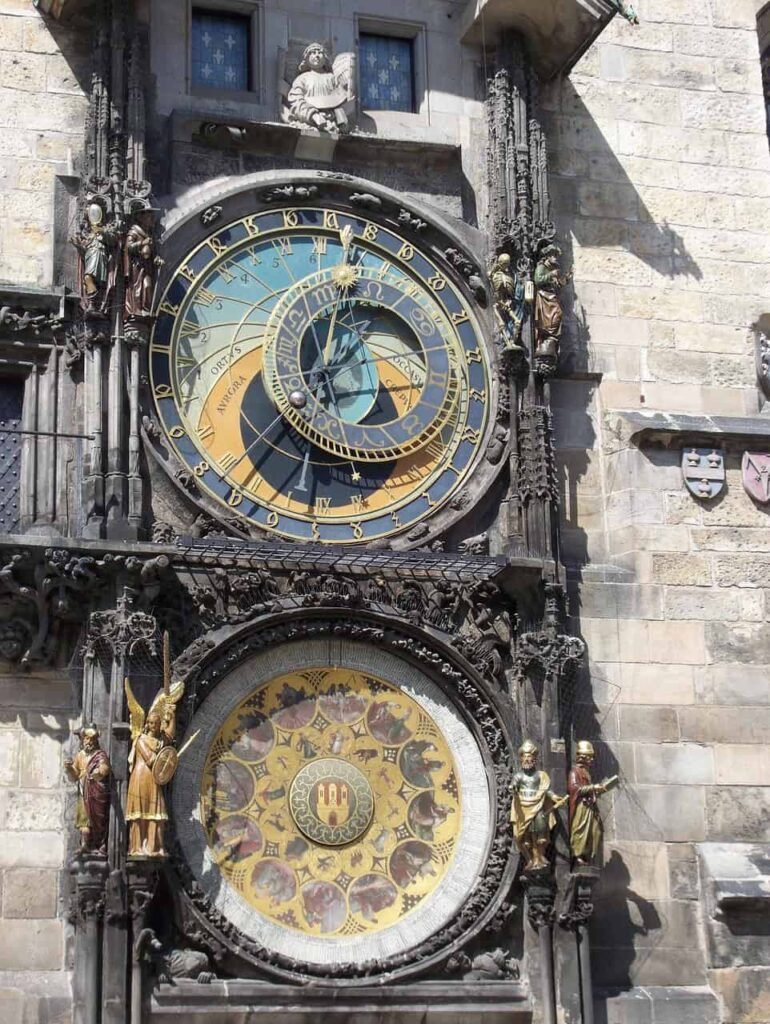
Tucked onto the side of Prague’s Old Town Hall tower is the city’s iconic Astronomical Clock, a masterpiece that has fascinated visitors for over 600 years. The tower itself reaches nearly 70 meters (230 feet) into the sky. The clock was first built in the early 1400s and later refined by a master craftsman, whose story is surrounded by legend: it’s said he was blinded to stop him from creating another clock, but he reportedly sabotaged his own creation before passing away.The Orloj isn’t just a timepiece—it’s a show of art and science. Its main features include a dial tracking the sun and moon, a calendar with detailed month medallions, and the famous hourly parade of the twelve apostles. From morning until late evening, spectators gather to watch the tiny figures march across the clock, a tradition that draws crowds every hour.Visiting the Orloj is more than seeing a clock; it’s stepping into a piece of Prague’s history that continues to enchant visitors centuries later.
Charles Bridge ( Karlův most)
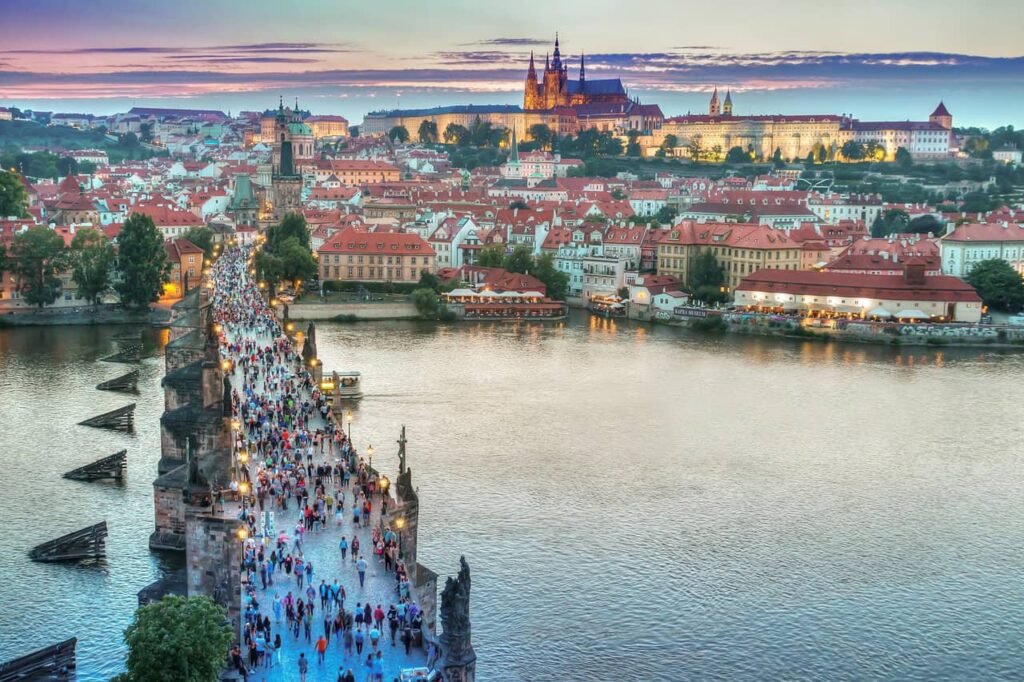
Charles Bridge is one of Prague’s most iconic landmarks, connecting the historic neighborhoods of Old Town (Staré Město) and Lesser Town (Malá Strana) across the Vltava River. Construction began in the late 14th century under Emperor Charles IV and was completed in the early 15th century during the reign of King Wenceslas IV.Originally called the Stone Bridge, it became known as Charles Bridge in 1870. Its sturdy structure helped establish Prague as an important trade link between eastern and western Europe. Today, the bridge is famous for its stunning Baroque statues that line the sides and is one of the city’s most visited spots, attracting photographers, street performers, and tourists from around the world.Walking across Charles Bridge offers not just views of the river and city but a step back into Prague’s rich history.
Prague Castle ( Pražský Hrad)
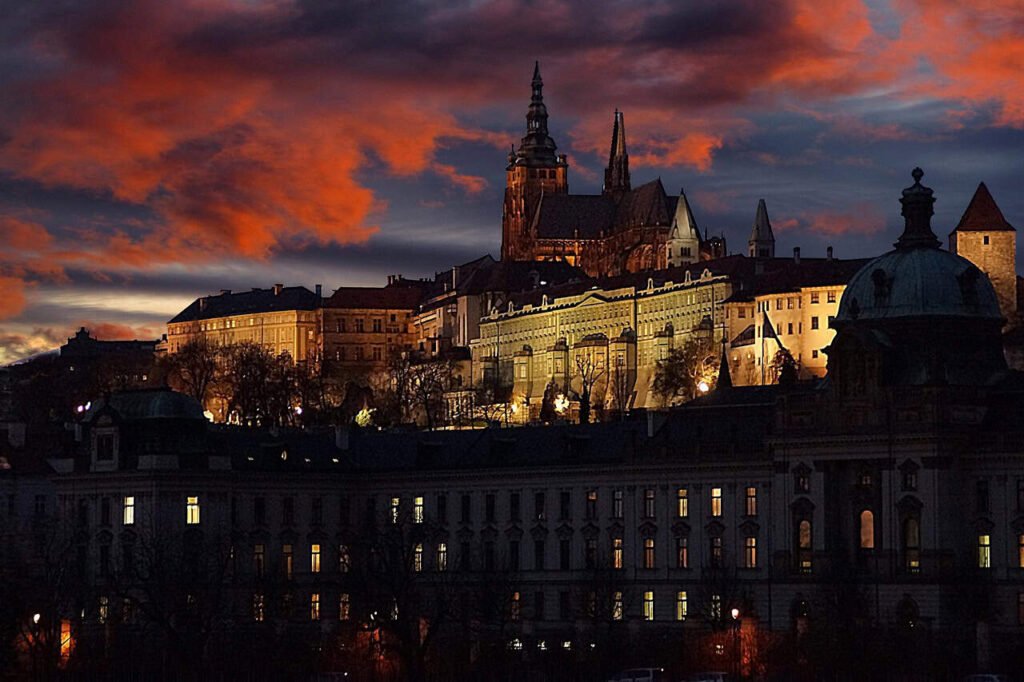
Perched on a hill overlooking the city, Prague Castle is like a small town of its own, filled with towers, palaces, churches, gardens, and museums. It holds the title of the largest ancient castle complex in the world and has been the seat of power for Czech kings, Holy Roman emperors, and modern presidents.The castle isn’t a single-style fortress—it grew over centuries, with each era leaving its mark. The first royal palace was established here in the 980s by Prince Bořivoj, making this hill a center of leadership and culture for more than a thousand years.Visiting Prague Castle offers a journey through time, showcasing layers of history, architecture, and the story of the Czech nation.
Jewish Quarter ( Josefov)
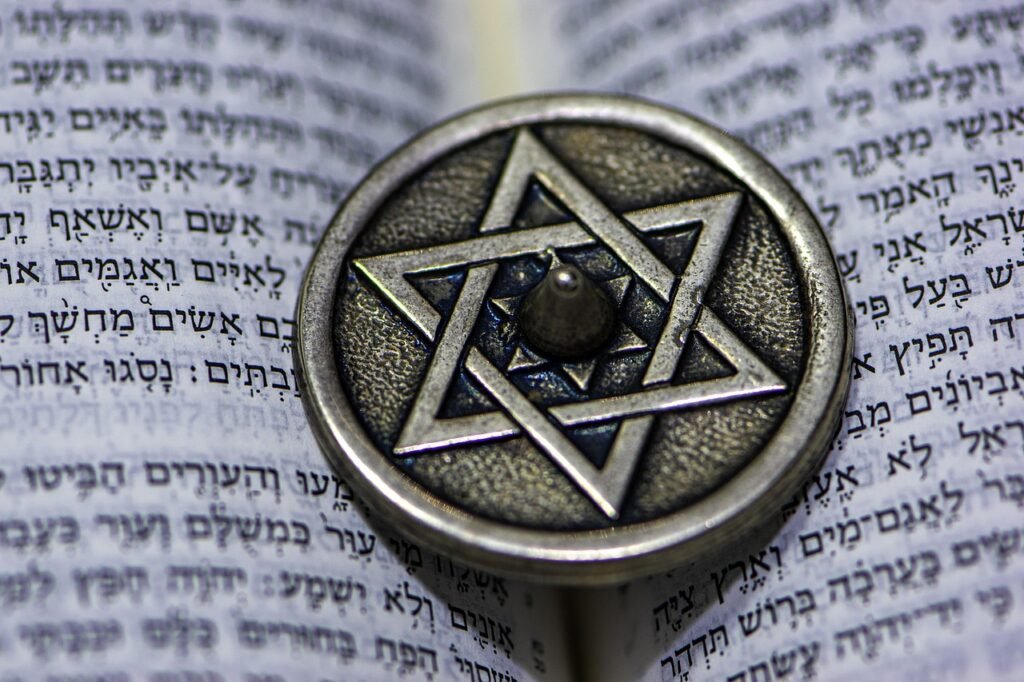
Nestled between Old Town Square and the Vltava River, Josefov is Prague’s historic Jewish Quarter. Its roots go back to the 10th century, and by the 17th century, thousands of Jewish families called the area home. Life here was often difficult, marked by persecution, fires, and plundering over the centuries.In the 18th century, Emperor Josef II brought important changes, tearing down the ghetto walls and improving living conditions—a reform that gave the quarter its name. Despite this, full civil rights weren’t granted to the Jewish community until 1848. The darkest chapter came during World War II, when the majority of Bohemian and Moravian Jews were deported and killed under Nazi occupation.Today, Josefov preserves its history through a collection of synagogues, including the oldest in Europe, and the old Jewish cemetery. The area now serves as an open-air museum, offering visitors a glimpse into the rich and sometimes tragic history of Prague’s Jewish community.
Celebrate Easter 2026 in Prague: Markets and Traditions
Easter in Prague and the Czech Republic Easter is an important holiday in the Czech…
History of Prague
Prague has grown for more than a thousand years, starting as small settlements on the…
Basic information for travelers
Here are some useful basics for travelers heading to Prague : Language: Czech is the…
Best Christmas Markets and Events in Prague 2025
Christmas in Prague: A Magical Time of Year The Advent and Christmas season is truly…
Prague Landmarks: The Top Attractions for First-Time Visitors
Exploring the city of Prague, the enchanting capital of the Czech Republic, is one of…