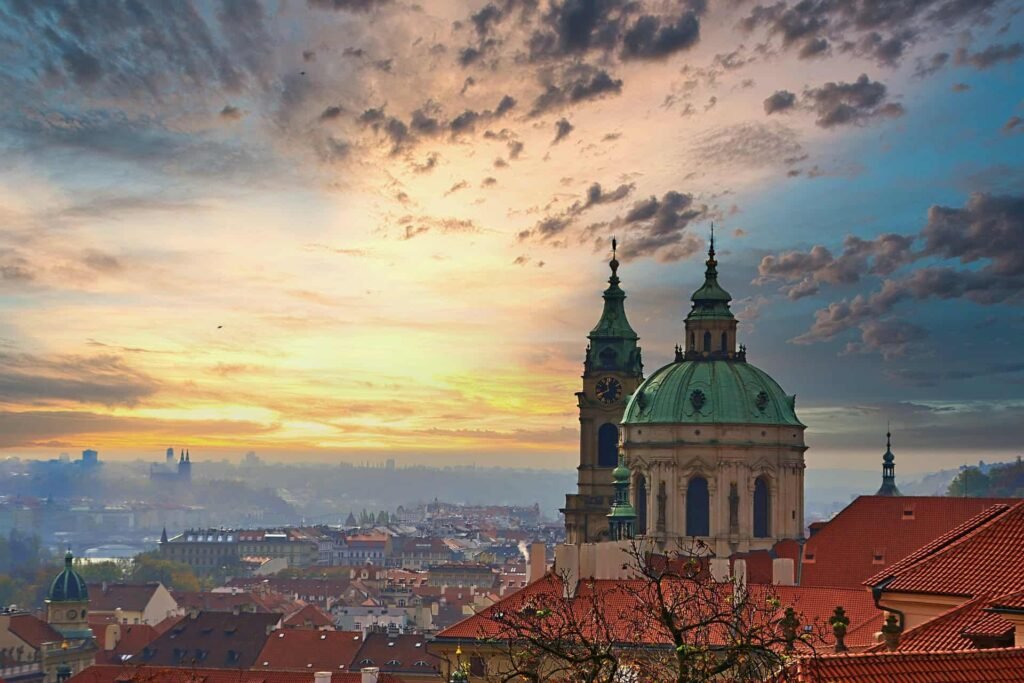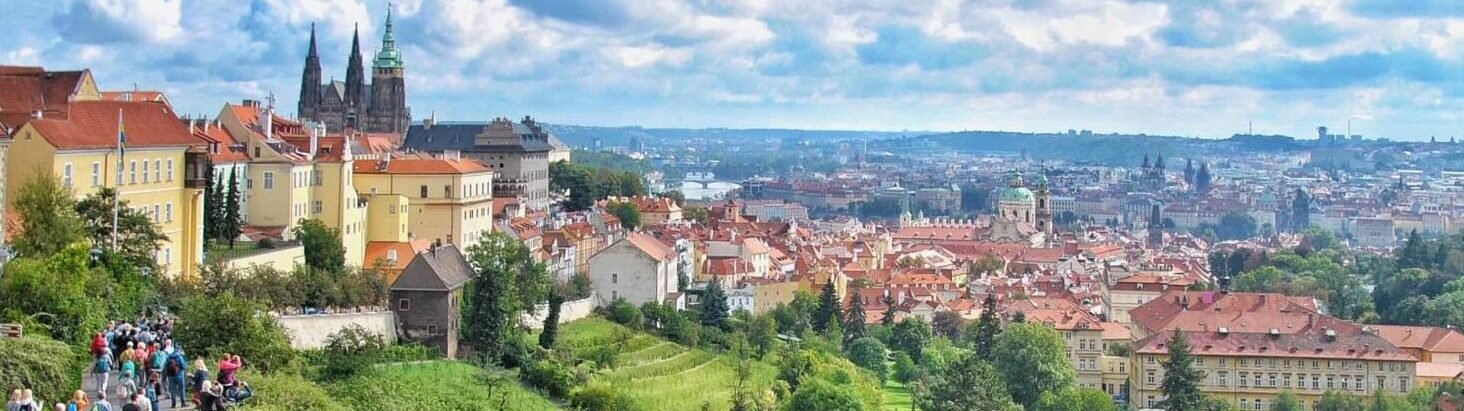
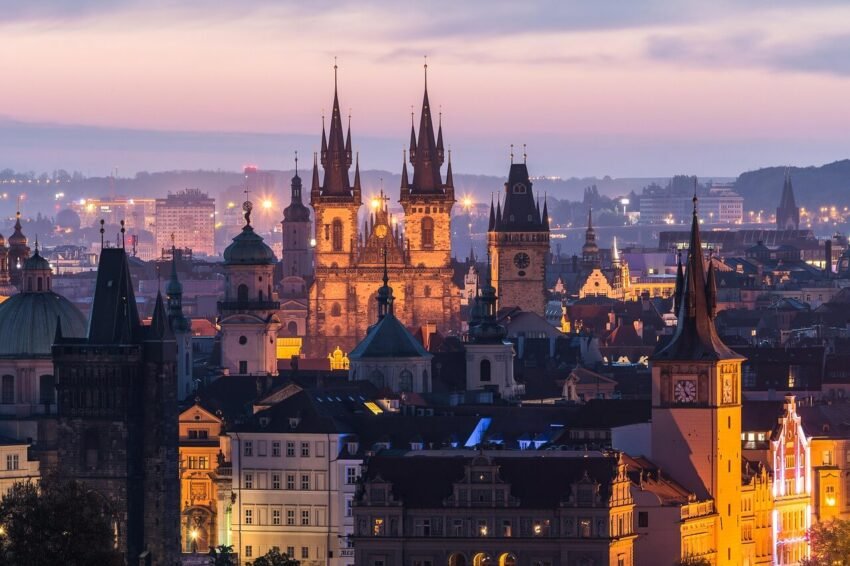
Prague is often called the city of a hundred spires. And when you arrive, you understand why. The skyline is full of church towers and rooftops. The city is packed with famous landmarks and historical monuments everywhere you look. The historic centre of Prague was inscribed on the UNESCO World Heritage List in 1992.
Crossing the iconic Charles Bridge is something you will definitely experience. From there, narrow medieval streets lead you past the oldest building in the city. Beautiful Baroque buildings and elegant palaces appear along the way. Stunning churches in Gothic style also come into view as you explore. Every corner feels special…In the following article, you will find a list of the top attractions for first-time visitors. Be sure to also check out Top 16 Unmissable Landmarks and Attractions in Prague .
Old Town Square ( Staroměstské náměstí)
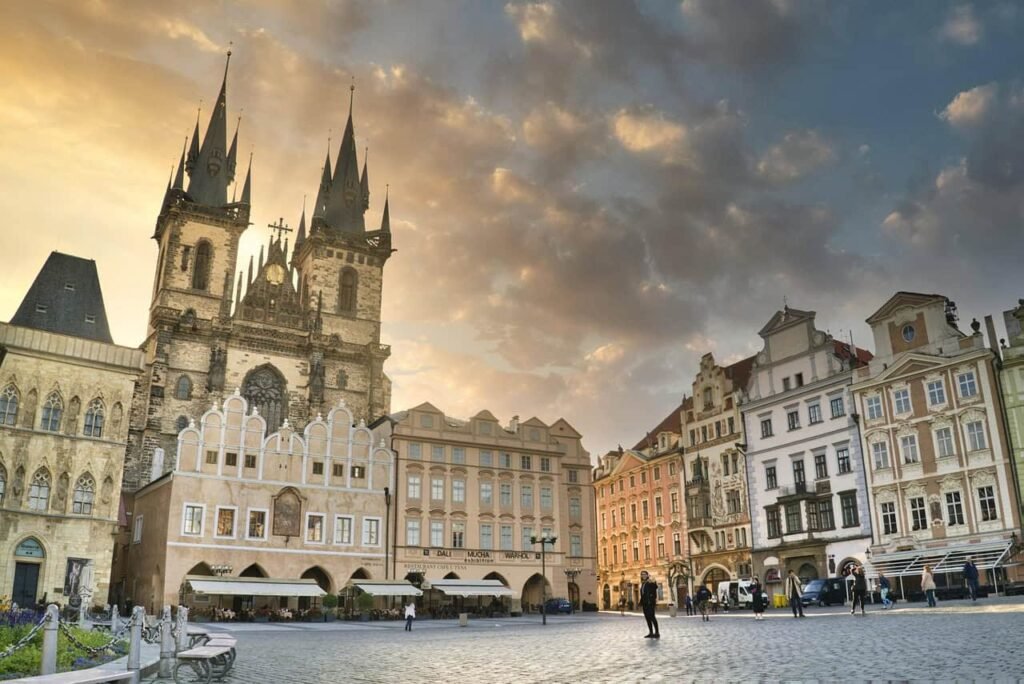
Old Town Square is the heart of Prague. It is one of the most beautiful places in the city. For hundreds of years, it has been a meeting place for locals and visitors. The square is surrounded by beautiful historic buildings. You can see the tall Gothic towers of the Church of Our Lady before Týn. There is also the beautiful St. Nicholas Church. The Old Town Hall and its famous Astronomical Clock are another highlight.
What I love most about the square is its history. In the 11th century, traders from all over Europe came here to buy and sell goods. It became one of the most important marketplaces in the region. Over the years, the square hosted royal celebrations, festivals, and many important events in Czech history.
Today, the square is always full of life. Locals meet friends for coffee. Visitors admire the historic buildings. There are also cafés, galleries, museums, and small shops all around the square. If you visit Prague during Christmas, you are in for a real treat. The Christmas Market in Old Town Square is famous around the world. Many people consider it one of the best Christmas markets in the world. The large Christmas tree, festive lights, traditional Czech food, and holiday atmosphere make it truly special. The Easter Market is also worth visiting. The square fills with colorful decorations, handmade gifts, traditional crafts, and local food. Both markets are a great way to experience Czech traditions and culture.
Old Town Hall (Staroměstská radnice)
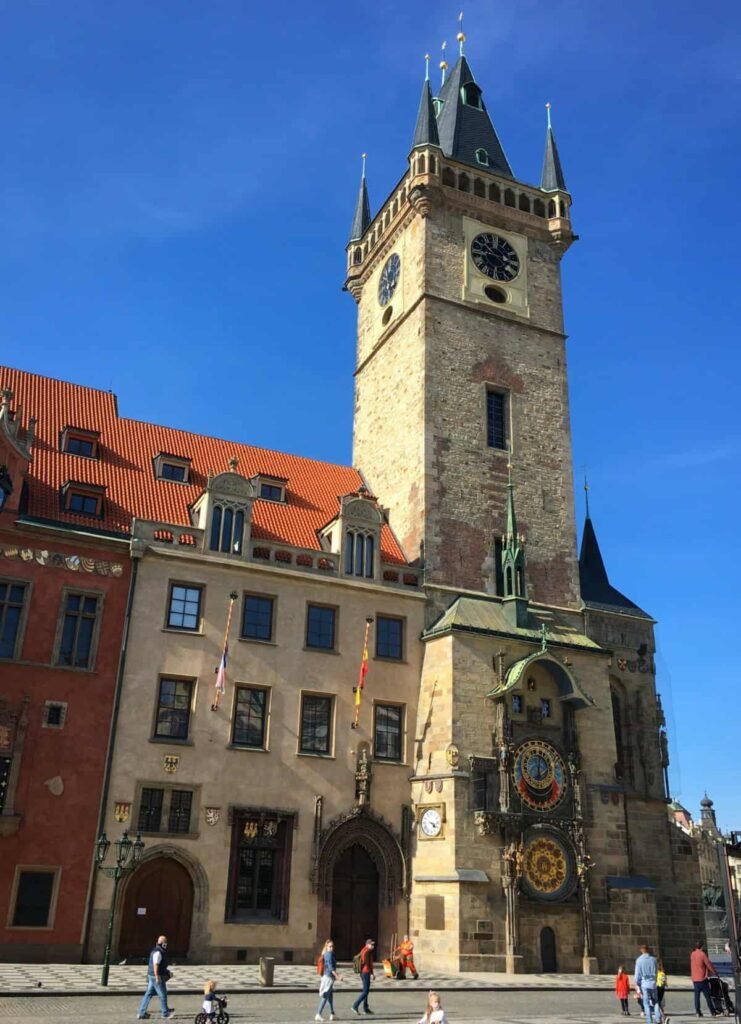
The Old Town Hall is one of the most important historic buildings in Prague. It sits right in Old Town Square, so you cannot miss it when you visit. It was founded in 1338 as the seat of self-government for the Old Town of Prague. That makes it one of the oldest institutions of its kind in the Czech Republic. The complex is not just one building. It is made up of several medieval houses that were gradually joined together over time. The most famous part is the south wing with its Gothic tower and beautiful chapel. This is also where you will find the Astronomical Clock, which has been telling the time since 1410.
The town hall has also seen some very difficult moments. During the Prague Uprising in May 1945 at the end of World War II, part of the eastern Neo-Gothic wing was destroyed and was never rebuilt. The underground areas even served as part of the resistance during the fighting.
Today, the Old Town Hall is a national cultural monument. It is used for ceremonies and visitors can explore its historic interiors. You can walk through decorated halls, visit the chapel of the Virgin Mary, and go down into the medieval underground.My personal tip is to go inside, not just look at it from the outside. Many people only watch the clock, but the interior is just as impressive. And if you can, take the lift or climb the tower. The view from the top is one of the best in Prague. You see the whole Old Town spread out below you.
The Astronomical Clock (Orloj)
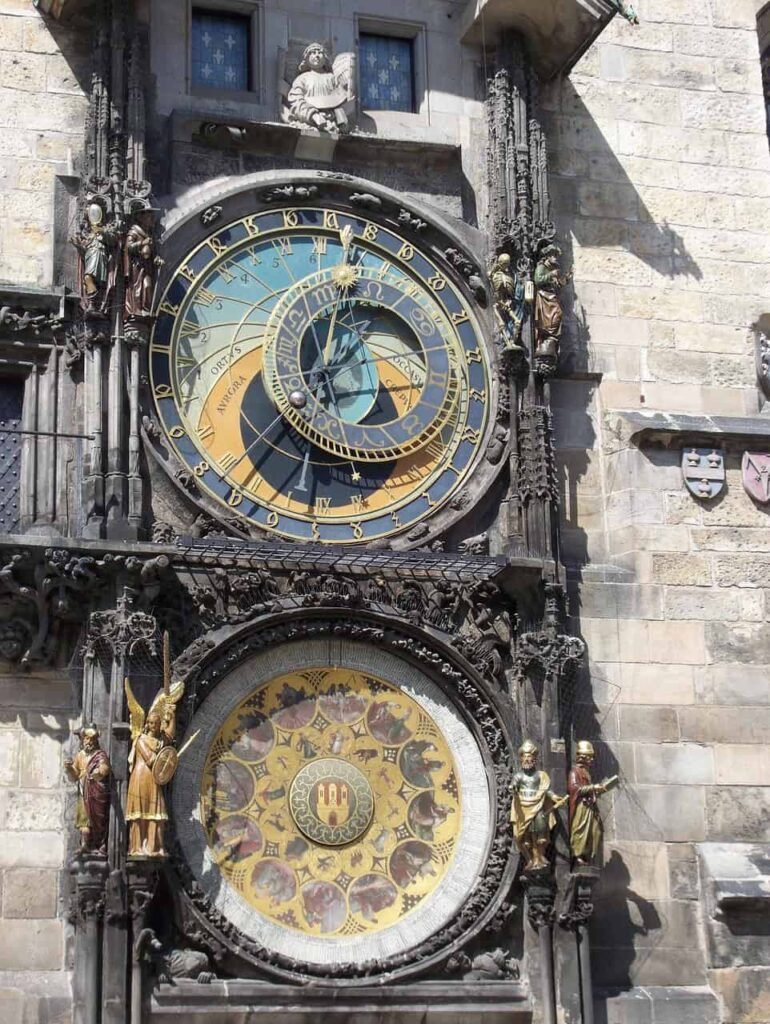
The Orloj is one of the oldest working astronomical clocks in the world. It has fascinated visitors for more than 600 years and it is one of the symbols of Prague.
What makes it special is that it does much more than tell the time. It was built in the early 15th century and combines art, science, and craftsmanship. There are also many legends about the clock. The most famous story says that the craftsman who improved it was blinded so he could never build another one.
If you look closely, you will see many interesting details. The clock shows the movement of the sun and moon. Below it is a beautiful calendar with artwork representing the months of the year. Every hour, crowds gather to watch the famous show of the Twelve Apostles. Small figures appear in the windows above the clock while statues move and bells ring. It only lasts a few minutes, but people come from all over the world to see it.
My personal tip is to spend a little time looking at the clock after the show ends. Many visitors watch the apostles and then leave right away. The clock itself is full of beautiful details that are easy to miss.
Charles Bridge ( Karlův most)
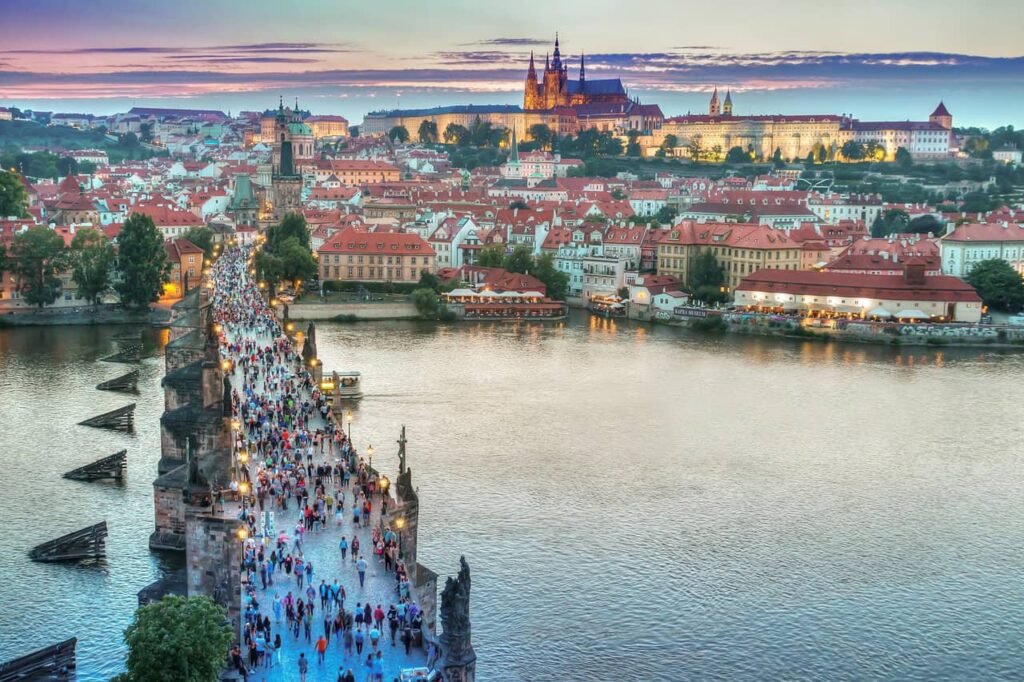
Charles Bridge connects Old Town (Staré Město) and Lesser Town (Malá Strana). It stretches over the Vltava River. It is one of the most famous landmarks in Prague.
The bridge was built in the 14th century. Construction started in 1357 under king Charles IV and it was finished in the early 15th century. It was first called the Stone Bridge, the name Charles Bridge came later in 1870. For many years, it was an important trade route, it helped connect eastern and western Europe. It played a big role in Prague’s history.
One of the best things about the bridge is the view. On one side, you see Prague Castle. On the other side, you see the rooftops of Old Town. It is especially beautiful at sunrise. My personal tip is to go very early in the morning. It is much quieter, you can enjoy the bridge without crowds. It is also the best time for photos.
Prague Castle ( Pražský Hrad)
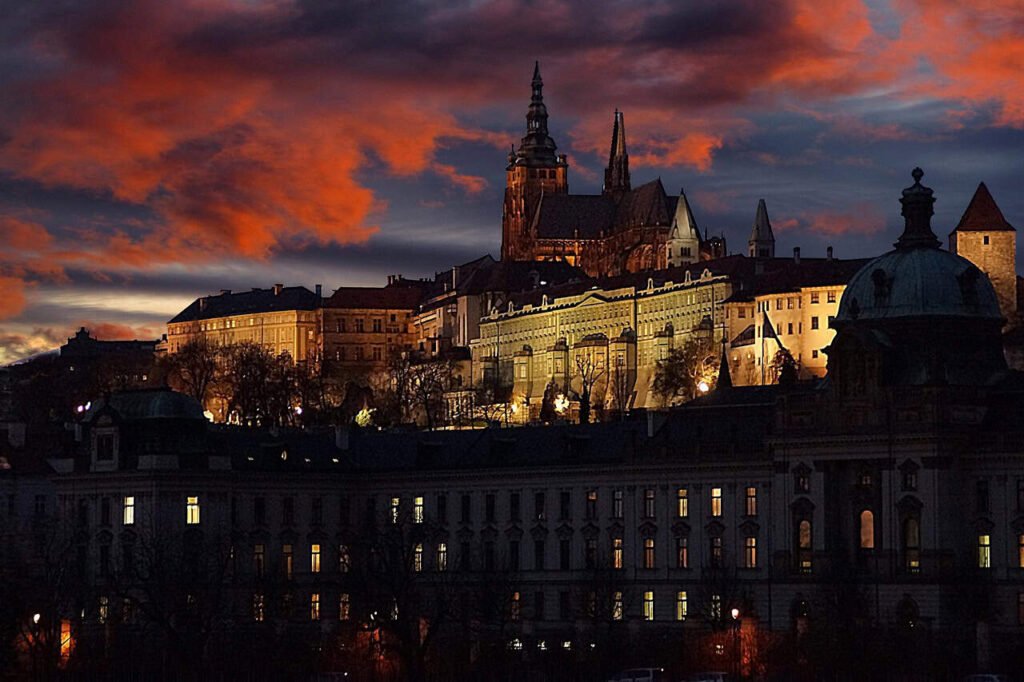
Prague Castle is one of the first places I recommend to anyone visiting the city. It sits high on a hill above Prague. From there, you get amazing views of the whole city. Prague Castle is not just one building. It is a large complex, it feels like a small town. You will find palaces, churches, towers, gardens, and museums all in one place. It is also the largest ancient castle complex in the world.
This place has been important for more than 1,000 years. The first royal palace here was built in the 980s by Prince Bořivoj. Since then, it has been home to Czech kings, Holy Roman emperors, and today’s presidents. It has always been a center of power and history in the Czech lands.
The castle was not built all at once. It grew over many centuries. Each period added something new. Because of that, you can see Romanesque, Gothic, and Baroque elements side by side. When you walk through the complex, it really feels like traveling through time. Every corner tells a different story. You can spend hours just exploring without rushing.My personal tip is to visit early in the day or later in the afternoon. It is much calmer then. You will enjoy the views and courtyards more without big crowds.
St. Vitus Cathedral
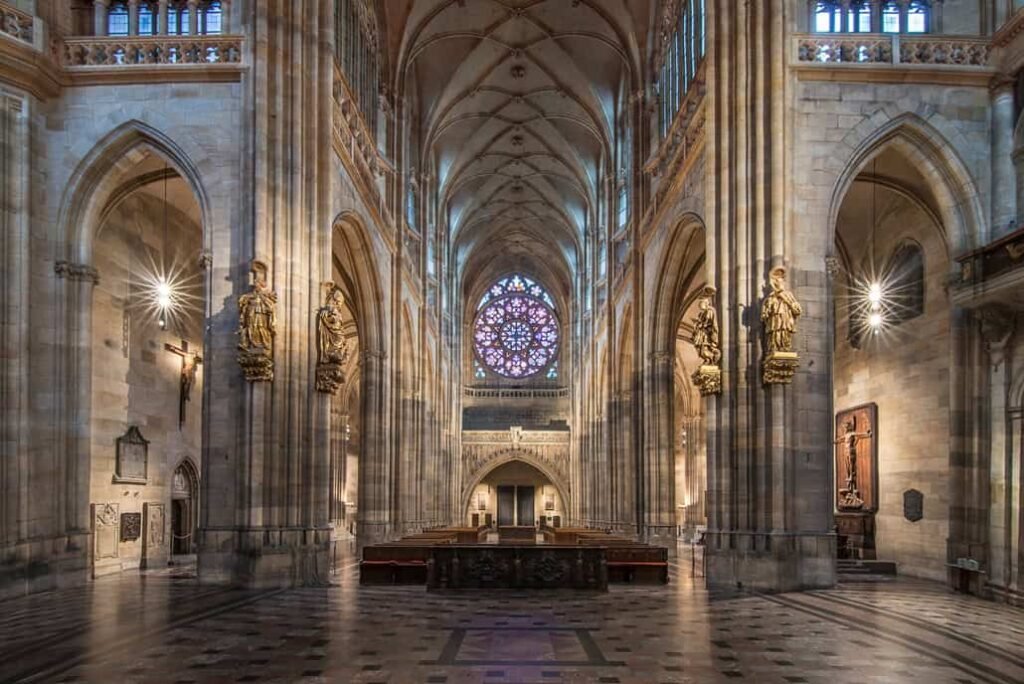
St. Vitus Cathedral is the largest and most important church in Prague. For centuries, it has been the spiritual heart of the Czech lands. Czech kings and queens were crowned here, and many of the country’s most important rulers, saints, and archbishops are buried inside.
The cathedral stands on a site that has been important for more than 1,000 years. In the 10th century, Saint Wenceslas built a small rotunda here. Later, it was replaced by a Romanesque basilica. Parts of these earlier buildings can still be seen beneath the cathedral today. The Gothic cathedral that we see now was started by king Charles IV in 1344. Some of the most famous medieval architects worked on it. They built many of its most beautiful parts, including the stunning St. Wenceslas Chapel.What many visitors don’t realize is that the cathedral took almost 600 years to finish. Construction stopped during the Hussite Wars and the building remained unfinished for centuries. It was finally completed in the late 19th and early 20th centuries in the original Gothic style. The cathedral was officially consecrated in 1929.
One highlight is the beautiful St. Wenceslas Chapel, dedicated to the patron saint of the Czech Republic. The cathedral is also home to the Czech Crown Jewels, including the famous Crown of Saint Wenceslas, one of the country’s most important national treasures.
Golden Lane ( Zlatá ulička )
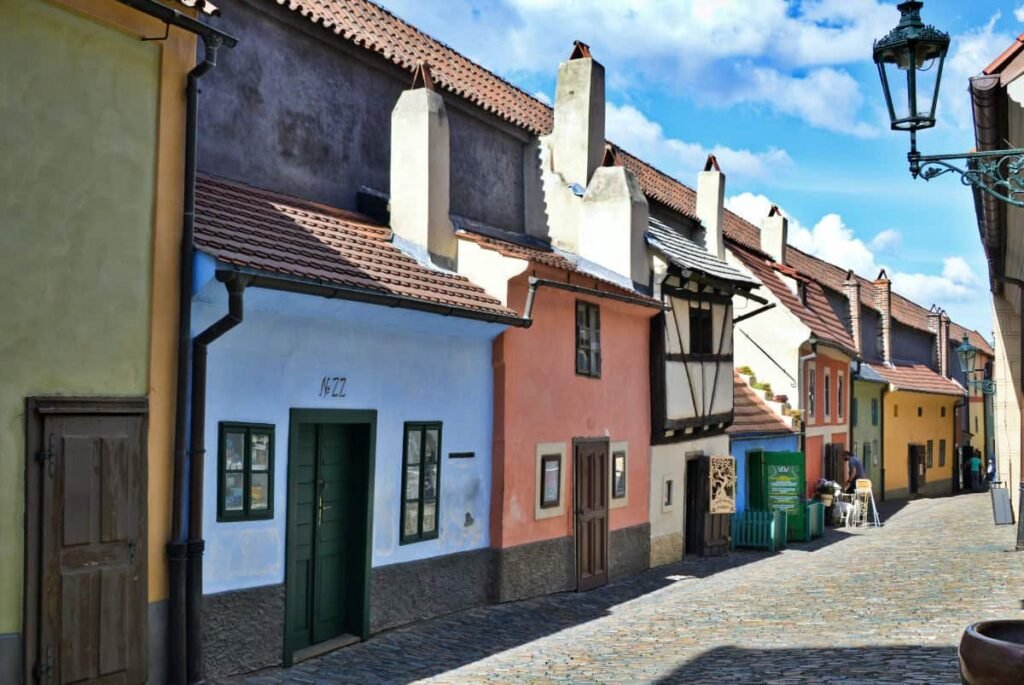
Coming to Golden Lane feels like stepping into a small fairytale street. You will find it inside the Prague Castle complex, between the White Tower (Bílá věž) and Daliborka Tower. The little colorful houses line the old castle walls. They look almost like something from a storybook.
Golden Lane was created at the end of the 16th century. Small homes were built directly into the defensive arches of the castle wall. At first, it was very simple housing. Soldiers, craftsmen, and later poorer residents lived here. People lived in these tiny houses until the 20th century. Over time, the street changed a lot. Today, it looks mostly like it did after the 1950s reconstruction. Now it is a protected historical site. Inside many of the houses, you will find small exhibitions about life in Prague over the past centuries. Some houses show everyday life of the past. You can see a blacksmith’s workshop, a tavern, or a herbalist’s home. Others tell more unusual stories, like fortune tellers or people hiding forbidden films during World War II.
One of the most famous residents was writer Franz Kafka. He worked in house number 22 for a short time between 1916 and 1917. There is also a small bookshop dedicated to him and his work. Golden Lane is also full of small shops today. You can buy handmade souvenirs like wooden toys, puppets, ceramics, jewelry, and books connected to Prague’s history. Golden Lane is not just a pretty street. It shows how people lived, struggled, and worked inside the walls of Prague Castle for centuries.
Jewish Quarter ( Josefov)
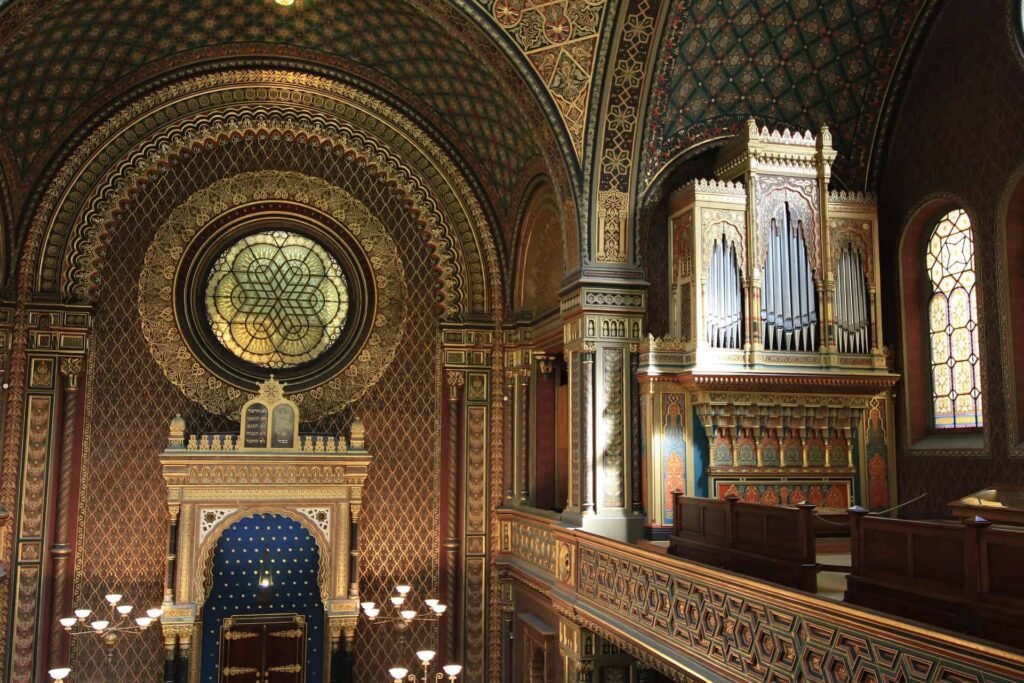
Josefov is one of the most meaningful parts of Prague. It sits between Old Town Square and the Vltava River. This area is Prague’s historic Jewish Quarter. Its roots go back to the 10th century. By the 17th century, it was home to thousands of Jewish families. Life here was often very difficult – the community faced persecution, fires, and destruction many times over the centuries.
In the 18th century, Emperor Josef II introduced reforms that changed the area. The ghetto walls were removed. Living conditions slowly improved. Because of him, the district got its name, Josefov. Even so, full civil rights for the Jewish community weren´t granted until 1848.The darkest period came during World War II. Many Jewish residents from Bohemia and Moravia were deported and killed under Nazi occupation. It is a very heavy part of Prague’s history, and you can still feel its weight today.
What makes Josefov so special is how much of it still remains. You can visit several old synagogues, including the Old-New Synagogue, one of the oldest in Europe. There is also the Old Jewish Cemetery, which is one of the most powerful and emotional places in the city.
Read more Top 16 Unmissable Landmarks and Attractions in Prague
Prague Hidden Gems: Secret Places Beyond the Crowds (2026)
Unusual Things to See in Prague: Unique & Unexpected Places
History of Prague: Complete Timeline From Ancient Times to Today
Ultimate Prague Travel Guide in a Nutshell (2026)
Prague tourist information : official visitor centres
Where To Next?

Czech Pub Etiquette: How to Order Beer Like a Local
The Best Beer Gardens in Prague to Visit This Summer
20 Most beautiful historic cafés in Prague (2026)
The Oldest Pubs in Prague: Where History Meets Great Czech Beer
Prague´s Hidden Historic Pubs to Taste Authentic Czech Beer