Can You Drink Tap Water in Prague? Everything You Need to Know
If you are visiting Prague, the Czech capital, you may wonder if tap water is safe to drink and brush your teeth with. The short answer is yes.
Prague has excellent drinking water. It is clean, safe, and goes through rigorous testing every day. The quality meets strict safety standards, and most locals drink it at home instead of buying bottled water.
If you bring a reusable water bottle, you can save money and reduce plastic waste during your trip.
Is Tap Water Safe in Prague?
Tap water in Prague is completely safe to drink and is considered high quality.
By law, cold tap water must be drinkable in buildings connected to the public water supply. It must meet strict Czech and European Union safety standards and is regularly tested for bacteria, chemicals, and minerals.
The water is checked many times a day by Prague Water and Sewage (PVK). It often undergoes more testing than bottled water.
You can safely drink tap water in your hotel room, apartment, restaurants, hostels, public buildings, and drinking water fountains across the city.
Can Tourists Drink Prague Tap Water? Will They Get Sick?
Yes, tourists can safely drink Prague tap water.
You do not need time to adjust to the local water. Visitors drink it every day without issues.
Most stomach problems tourists experience are not because of water. They are usually linked to travel stress, new food, alcohol, or viruses—not Prague tap water.
Can Babies and Small Children Drink Prague Tap Water ?
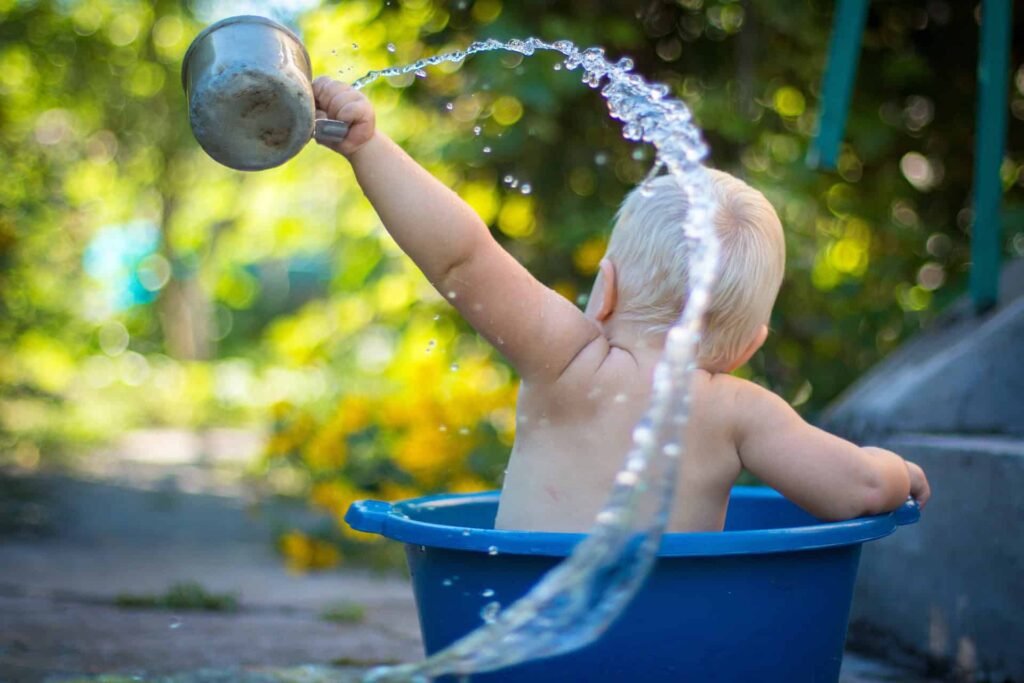
Tap water in Prague is safe for babies and small children.
Most families in the Czech Republic use tap water every day for drinking and cooking.
If you are preparing baby formula for a newborn, especially a baby under 6 months old, some health experts recommend using boiled tap water. Others suggest bottled water that is suitable for babies. This is simply an extra precaution, not because Prague’s tap water is unsafe.
If you are travelling with a baby, it is always a good idea to follow the advice of your doctor or paediatrician.
For older babies and children, Prague tap water is perfectly safe to drink.
Does Prague Tap Water Taste Good?
Most visitors think Prague’s tap water tastes fresh and pleasant.
However, the taste can be slightly different depending on where you are staying. This is because Prague uses several different water sources. In some parts of the city, you may notice a light chlorine taste. This is completely normal. A small amount of chlorine is added to keep the water free from harmful bacteria while it travels through the pipes. In many areas, you will not notice the chlorine taste at all.
Prague’s water is also slightly hard. This means it contains natural minerals such as calcium and magnesium. These minerals are harmless and are actually good for your health.
What If I Don’t Like the Taste of the Water?
If you are sensitive to the chlorine taste, there are several easy ways to improve it.
The simplest method is to pour the water into a glass or jug and leave it for about 10 minutes. The chlorine naturally evaporates, and the water usually tastes much better.
Another option is to boil the water and let it cool before drinking it. Boiling can also reduce the chlorine taste and make the water taste softer.
If you travel with a reusable water bottle, you can also use one with a charcoal filter. It removes most of the chlorine taste and makes the water taste even fresher.
Even if you notice a slight chlorine taste, Prague’s tap water is perfectly safe to drink.
When Shouldn’t You Drink Tap Water?
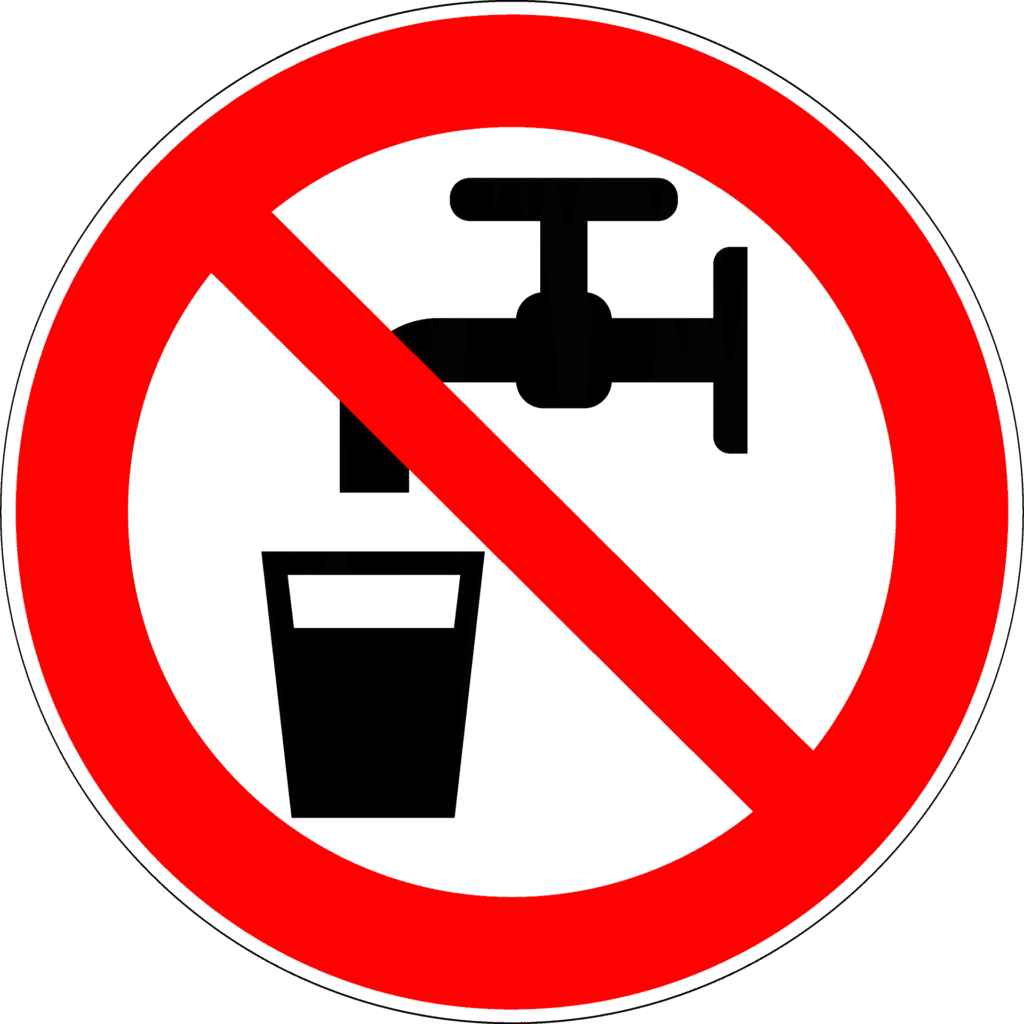
Prague’s tap water is very safe. However, there are a few situations when it is better not to drink it.
1. Don’t Drink Hot Tap Water
Hot water from a water heater or a central hot water system is not safe to drink. Warm water that sits in pipes and passes through boilers can grow bacteria, including Legionella. Hot water can also pick up harmful substances, such as heavy metals, from the pipes.
Always use cold tap water for drinking. If you want a hot drink, fill the kettle with cold water and heat it yourself.
2. Be Careful in Old Buildings
Prague has many beautiful old buildings, lot of them are more than 100 years old.
Most have safe drinking water, but some still have old plumbing. This can affect the taste, smell, or colour of the water. In very old buildings, the pipes may even contain lead, which is harmful to your health.
If the water looks unusual, let the cold tap run for a minute. If it is still discoloured or has a metallic taste, choose bottled water instead.
3. If the Water Is Brown or Rusty
Sometimes tap water may look brown, yellow, or rusty.
This usually happens because of old pipes or plumbing work nearby. It is unlikely to make you sick, but it is better not to drink it.
Let the cold water run for a minute. When it becomes clear again, it is usually fine to drink. If not, use bottled water.
If the water looks slightly white or cloudy, there is no need to worry. This is caused by tiny air bubbles. They disappear after a few seconds and the water is perfectly safe.
Places You Should Also Avoid Drinking Water
Decorative Fountains
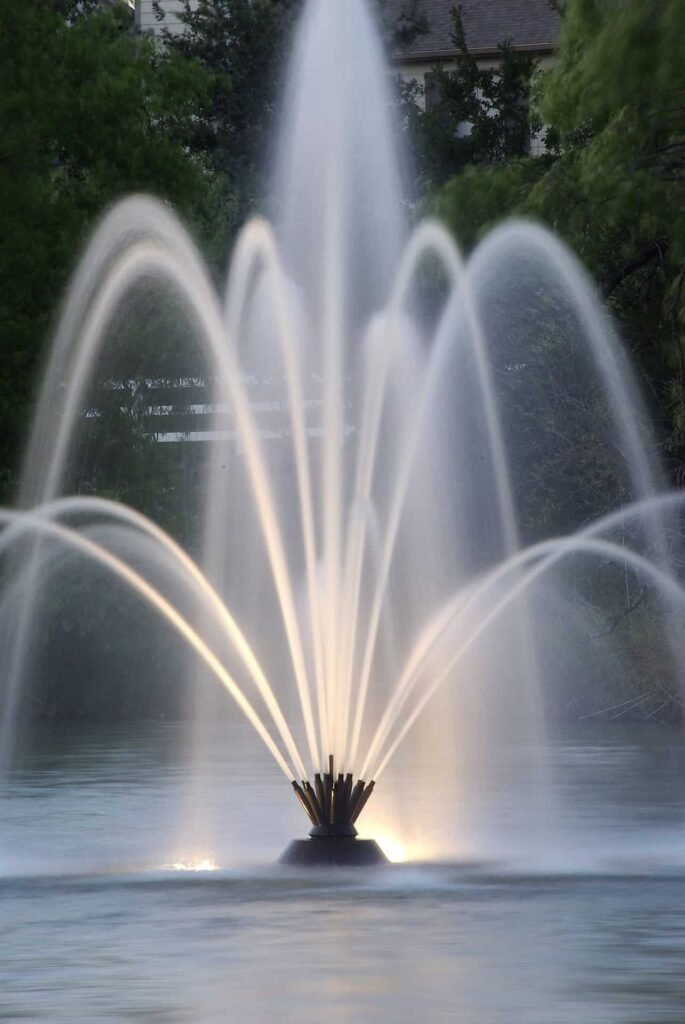
Do not drink water from decorative fountains.
These fountains are different from official drinking fountains. The water circulates continuously and can become dirty. Birds, especially pigeons, can contaminate the water with bacteria.
You should also not bathe or wash in decorative fountains. In some places, you can even be fined for doing so.
Instead, use one of Prague’s official drinking fountains.
Private Houses in Rural Areas
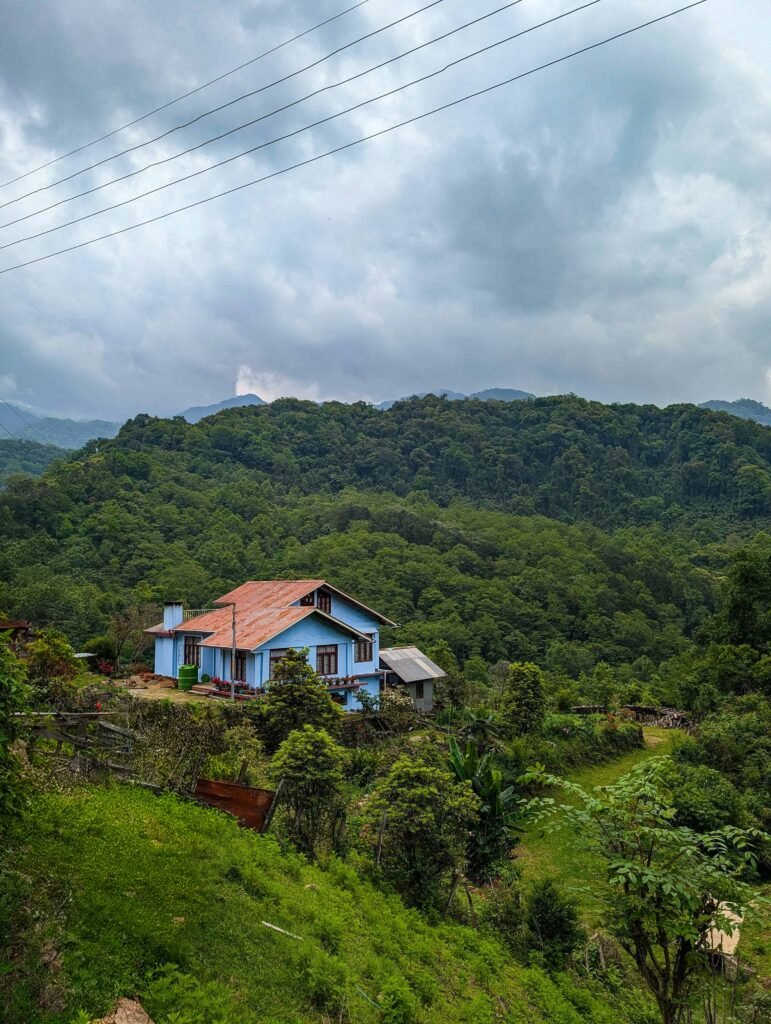
If you stay in a private house outside Prague or in rural areas, ask where the water comes from.
Some homes are connected to the public water supply, but others use a private well. The water may still be safe, but it is not always tested as often as municipal water.
If you are unsure, it is better to drink bottled water.
Public Drinking Fountains in Prague
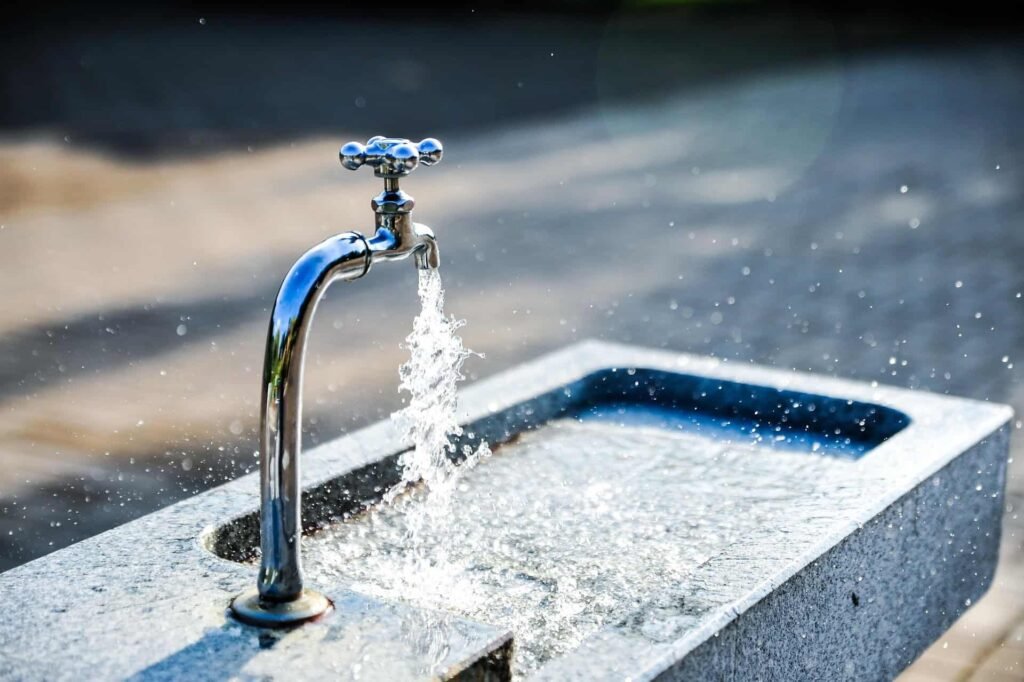
In Prague, you can find many public drinking fountains where you can refill your bottle for free.
These public drinking fountains are common in the city centre and in tourist areas. They give clean drinking water and are checked regularly. Many modern ones are made of stainless steel. Some also have a small bowl for dogs.
Most fountains work during the warm season. This is usually from spring to autumn. In winter, many are turned off to protect them from frost.
How to find drinking fountains
You can easily find them using a mobile app like Mapy.cz. It works like Google maps.
In the app, search for:
- “pitná voda”
- “pítko”
This will show public drinking fountains near you.
List of Drinking Fountains In the City Centre
| Name | Address / Location | Area |
|---|---|---|
| Pítko Jilská | Jilská 236 | Old Town (Staré Město) |
| Pítko Havelské tržiště | Havelská 5 | Old Town (Staré Město) |
| Pítko Kozí plácek | Haštalská 793/5 (near Kozí plácek) | Old Town (Staré Město) |
| Pítko Jungmannovo náměstí | Jungmannovo náměstí 758/21 | New Town (Nové Město) |
| Pítko Vodičkova | Vodičkova Street | New Town (Nové Město) |
| Pítko Náměstí Republiky | Náměstí Republiky 1078/1 | New Town (Nové Město) |
| Pítko Masaryčka | Na Florenci 110/00 | Near Masaryk Railway Station |
| Pítko Senovážné náměstí | Senovážné náměstí | New Town (Nové Město) |
| Pítko Slovanský ostrov | Slovanský ostrov 250/1 (Žofín) | Riverside / New Town |
| Pítko “Boy with Shell” (Chlapec s mušlí) | Karlovo náměstí park area | New Town |
| Pítko Újezd / Petřín | U Lanové dráhy 609/3 | Malá Strana |
| Pítko Hellichova | Hellichova 535/22 | Malá Strana |
| Pítko U Sovových mlýnů | U Sovových mlýnů 503/2 | Kampa |
| Pítko Kampa playground | Na Kampě | Kampa |
| Pítko Za Haštalem | Za Haštalem | Old Town |
| Pítko Petrská | Petrská 1136/12 | Petrská quarter |
| Pítko Park Lannova | Park Lannova | New Town / River area |
| Pítko Vrchlického sady | Vrchlického sady (near Main Station) | New Town |
| Pítko Petřín | Petřín gardens area | Petřín |
Old Pumps
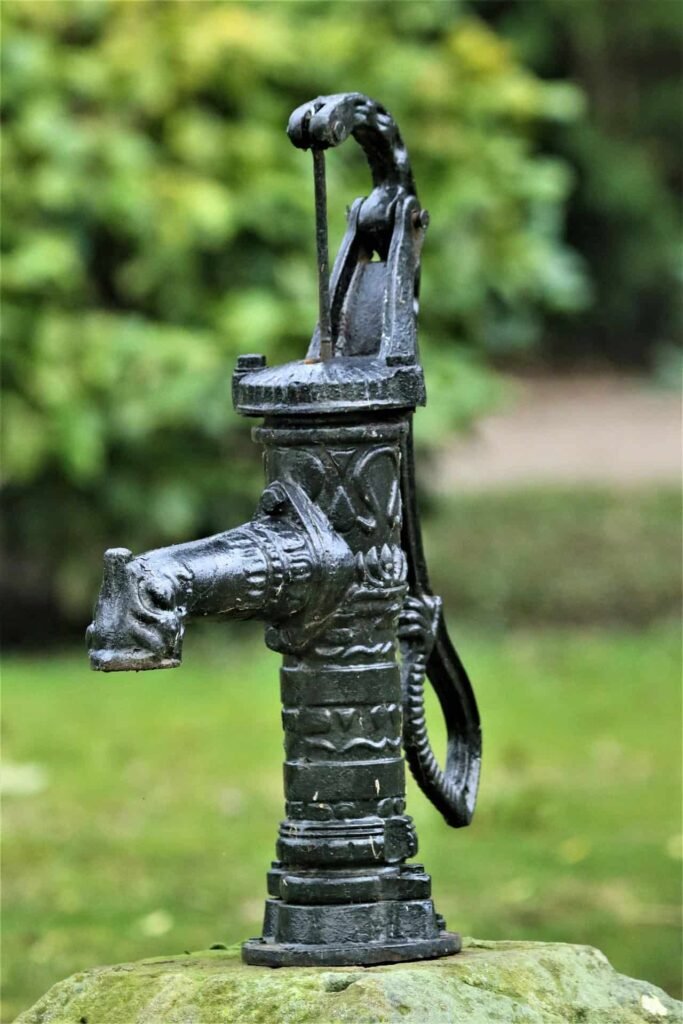
You may also see older hand pumps in the city. Some of them still provide drinking water, but not all.
Always check the sign:
- “pitná voda” = safe drinking water
- “nepitná voda” = not safe to drink
If you see “nepitná voda”, do not drink
Tap Water in Restaurants
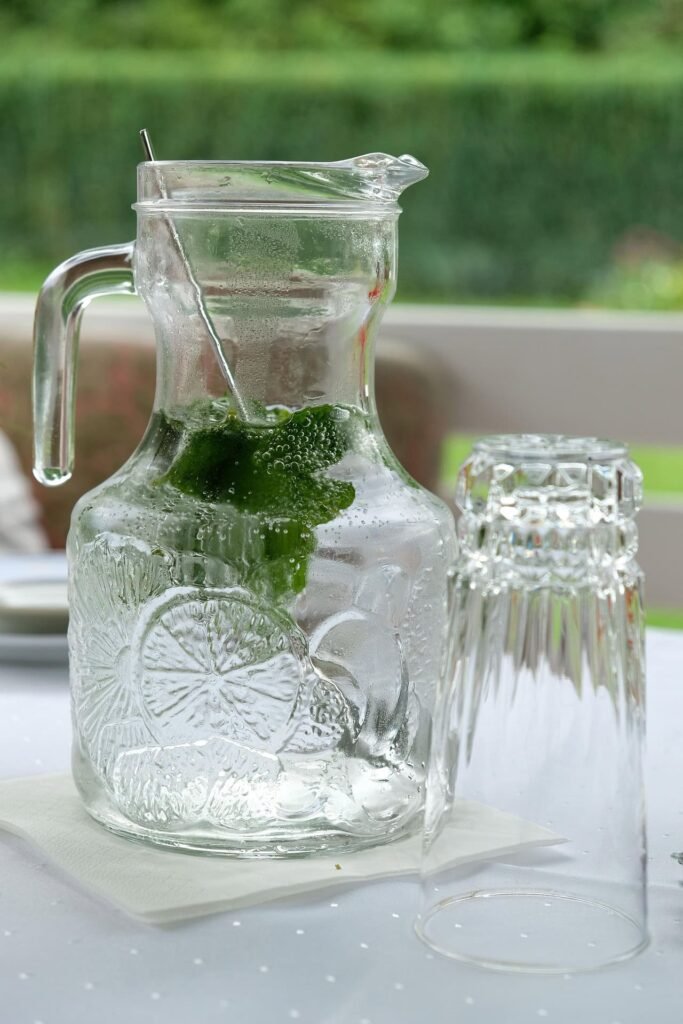
Free tap water is still not common in Czech restaurants. Some modern cafés and restaurants are happy to serve it, but in many places it is not a normal part of the service.
If you would like tap water, ask for “kohoutková voda” or “voda z kohoutku”.
In most restaurants, you will receive a jug or carafe with ice, lemon, or mint. There is usually a small charge for this service, so do not expect it to be free.
If you are eating in an expensive or fine dining restaurant, it is better to order bottled water. Asking for tap water in these places can sometimes be seen as poor etiquette, and some restaurants may not be happy to serve it.
Is tap water safe everywhere in the Czech Republic?
In the Czech republic, tap water is generally safe to drink in cities and towns. You can drink it in most public places. This includes schools, offices, and government buildings. They all use safe municipal water.
Look for a sign that says “Nepitná voda”. This means the water is not safe to drink. The sign is usually clear and has a simple symbol.
In small villages and rural areas, water can come from different sources. Some homes use the public water supply. Others use private wells. Most private wells are safe. But they are not checked as often as the public water supply.
If you are not sure about the water quality, do not drink it. Use bottled water if you can. If not, boil the water first. Then let it cool before drinking.
Is It Safe to Drink Water in Nature While Staying in Czechia?
In general, it is not a good idea to drink water from rivers, streams, wells, or natural springs.
The water may look clean, but it can contain bacteria, parasites, or other things that may cause health problems.
Only drink water if it is clearly marked “pitná voda” (potable water). You will usually see a sign or a pictogram showing that the water is safe to drink.
If there is no sign, it is best not to drink the water.
When hiking in the Czech countryside, always carry enough drinking water or refill your bottle at places marked pitná voda.
Drinking Mineral Water in Spa Towns
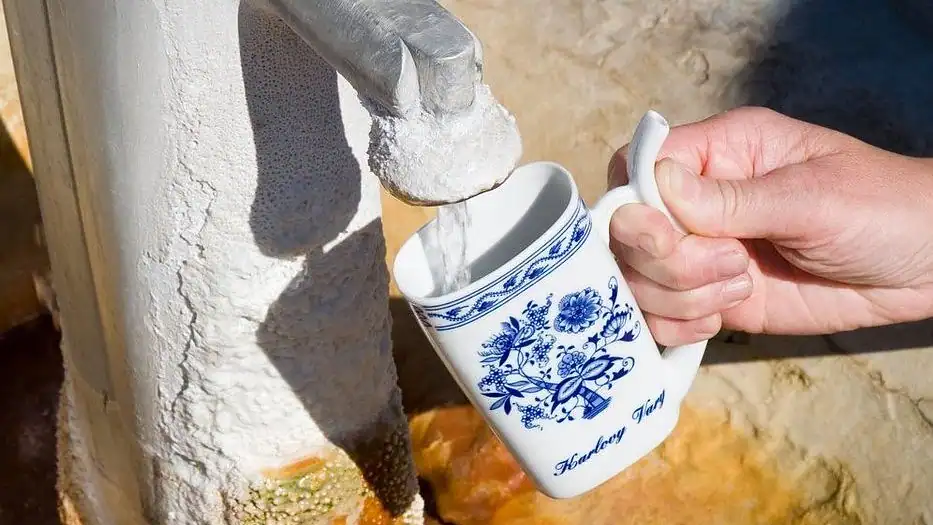
If you visit spa towns in the Czech republic, like Karlovy Vary or Mariánské Lázně, you can usually drink the local mineral water from springs.
People often drink it directly from the fountains. It is part of the spa tradition.
Should I Buy Bottled Water in Prague?
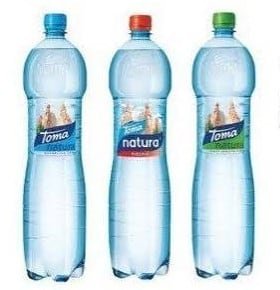
You usually do not need to buy bottled water in Prague. Prague tap water meets high EU standards. It is safe, clean, and free. Most locals drink it every day. You may still choose bottled water for taste or convenience. This is common in restaurants or older buildings where you are unsure about the pipes. It is also fine if you simply prefer it.
Where to buy bottled water
If you decide to buy it, go to large supermarkets. Prices are much lower than in small tourist shops or minimarkets. You can also find it in places like small convenience stores, metro kiosks, or fast-food chains, but supermarkets are usually the cheapest. Avoid tourist traps where water can be very expensive !
Types of bottled water
In the Czech republic, you will see four main types:
- Neperlivá – still water ( blue bottle cap )
- Jemně perlivá – lightly sparkling water ( green bottle cap )
- Perlivá – sparkling water ( red bottle cap)
- Ochucená – with flavor ( various cap color)
Czech bottled water brands
Czech brands such as Dobrá voda, Aquila, Toma, and Rajec are widely available and considered high quality. The Czech republic is also known for mineral waters like Mattoni, Poděbradka, Korunní, and Ondrášovka. These are usually slightly sparkling and have a stronger taste, so they may not suit everyone who prefers plain water.
Find Out More About Prague Tap Water
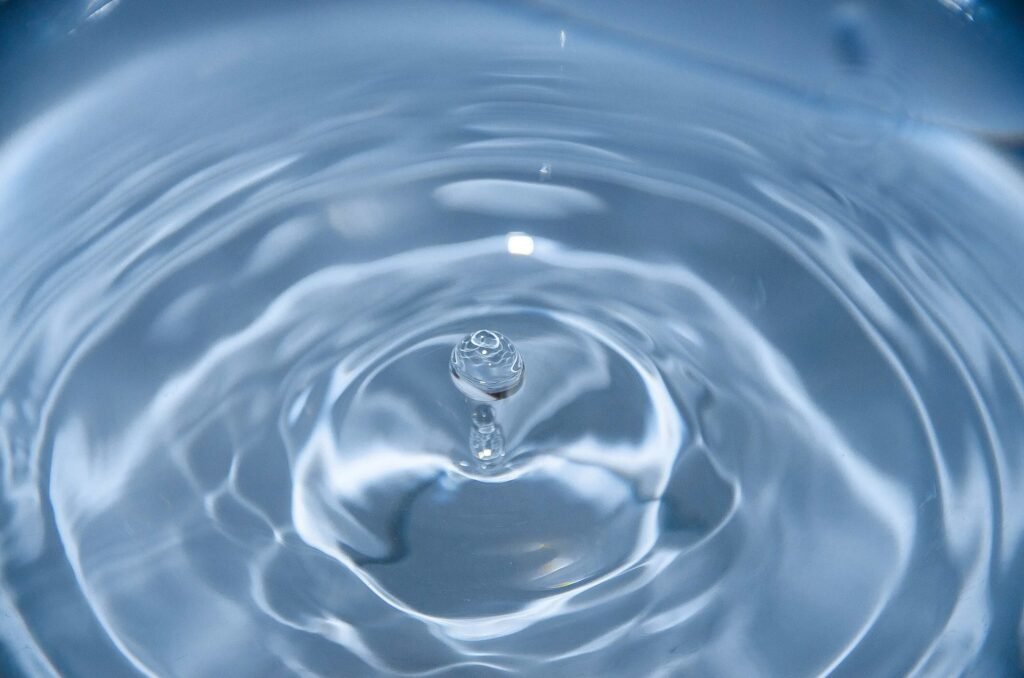
How Is Prague Tap Water Tested ?
Prague’s tap water goes through strict testing every day to make sure it is safe to drink.
The quality is controlled by Prague Water and Sewage (PVK). The water is tested from the moment it leaves the treatment plant until it reaches your tap at home, your hotel, or a restaurant. Experts collect water samples from many places across the city. They also use modern equipment to check the water all the time.
Every year, laboratories analyse more than 15,000 water samples. They carry out more than 100 different tests. These tests check for bacteria, chemicals, minerals, chlorine levels, iron, water clarity, temperature, and many other quality indicators.
Prague’s drinking water must meet strict Czech and European Union standards. In fact, tap water is often tested more frequently than bottled water. Thanks to these regular checks, you can confidently drink tap water anywhere in Prague.
Where Does Prague’s Water Come From?
Prague’s water comes from three main water sources.
Most of the city’s drinking water (about 65–75%) comes from the Želivka Water Treatment Plant. It uses water from the Švihov Reservoir, which is around 50 kilometres southeast of Prague. The treated water travels to the city through a 52-kilometre underground tunnel.
About 25% of Prague’s water comes from underground water near Káraný. The remaining part comes from the historic Podolí Waterworks, which takes water from the Vltava River.
Because Prague uses three different water sources, the taste of the water can be slightly different in different parts of the city. However, the quality is the same everywhere.
Before the water reaches your tap, it goes through several treatment processes. These remove bacteria and other impurities, making the water clean and safe to drink.
Final Tips from a Local on Drinking Water in Prague and Czechia
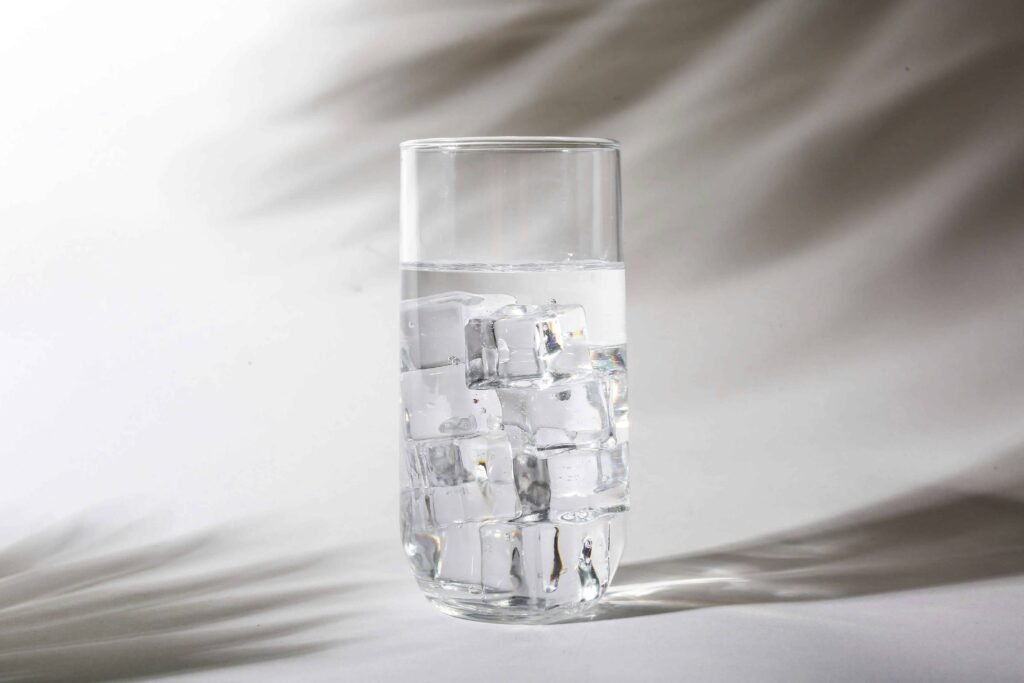
Bring a reusable bottle with you when visiting Prague. You can refill it easily and enjoy the city without worrying about drinking water. A bottle with carbon filtration can help improve the taste if you prefer it.
The Czech tap water is clean, safe, and regularly tested, and most locals drink it every day. You can refill from taps, cafés, hotels, and public fountains, and just avoid any water marked “Nepitná voda”. Do not drink hot tap water, tap water with rusty color and water from private wells, decorative fountains and natural streams. Some people choose filtered water or bottled water for taste or personal reasons, but for most visitors there is no real need to buy bottled water. In general, you can drink Prague tap water confidently.
Read more Ultimate Prague Travel Guide in a Nutshell (2026)
Prague tourist information : official visitor centres
Money in Prague: Currency, Exchange, Prices, ATMs
Czech republic Visa Rules and Entry Requirements (2026)
Where To Next?

Czech Pub Etiquette: How to Order Beer Like a Local
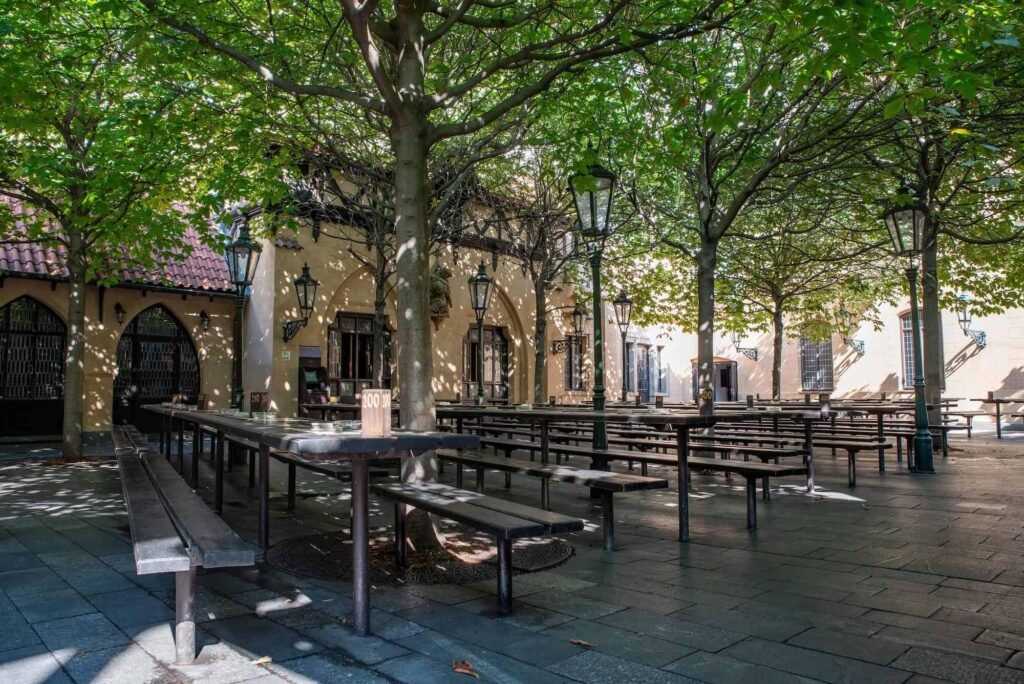
The Best Beer Gardens in Prague to Visit This Summer

20 Most beautiful historic cafés in Prague (2026)
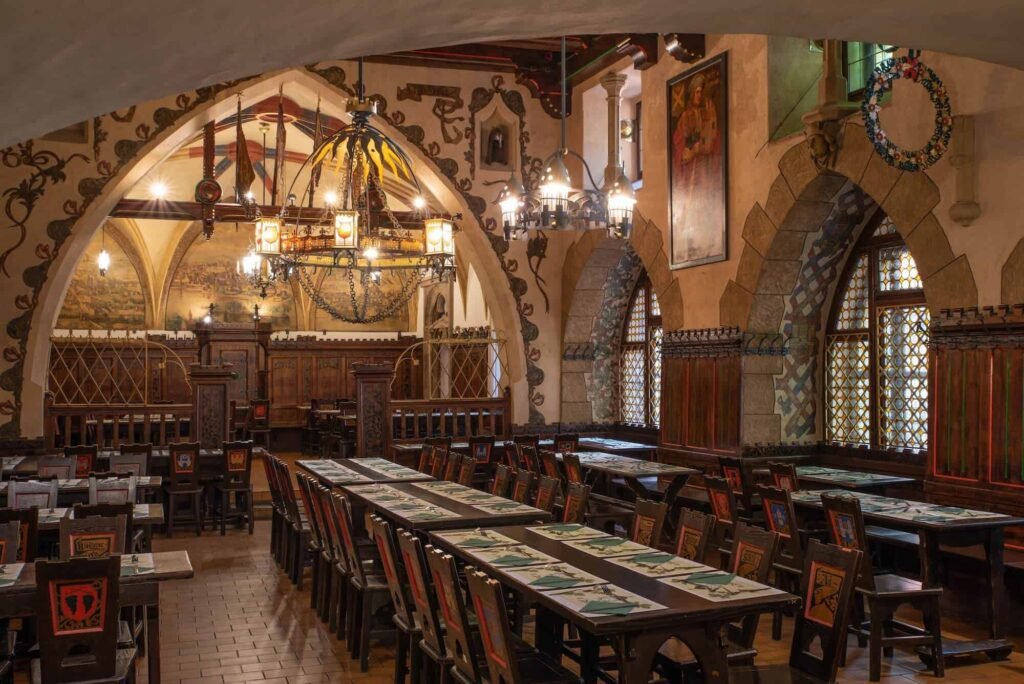
The Oldest Pubs in Prague: Where History Meets Great Czech Beer
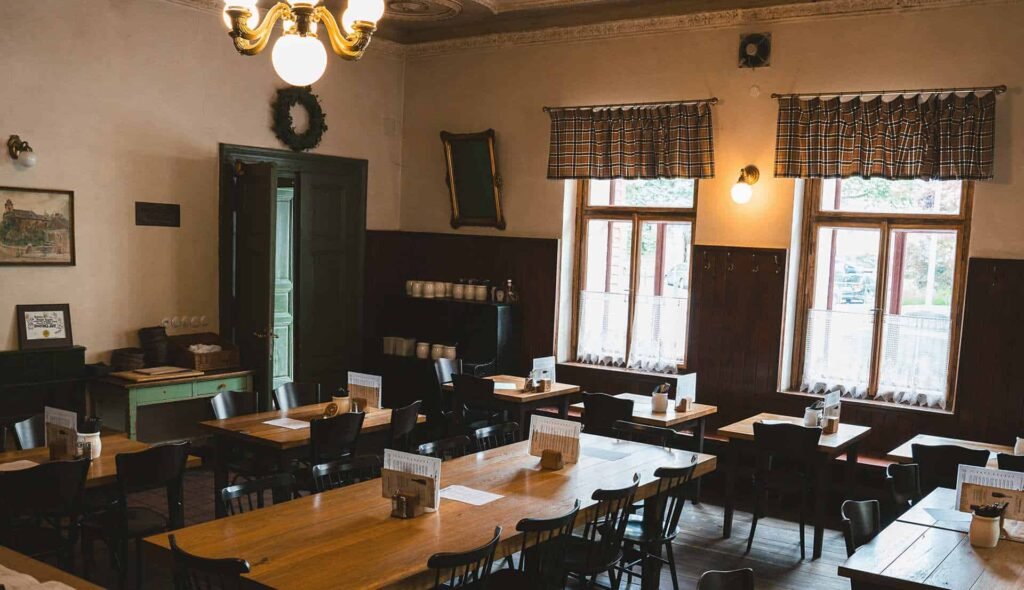
Prague´s Hidden Historic Pubs to Taste Authentic Czech Beer