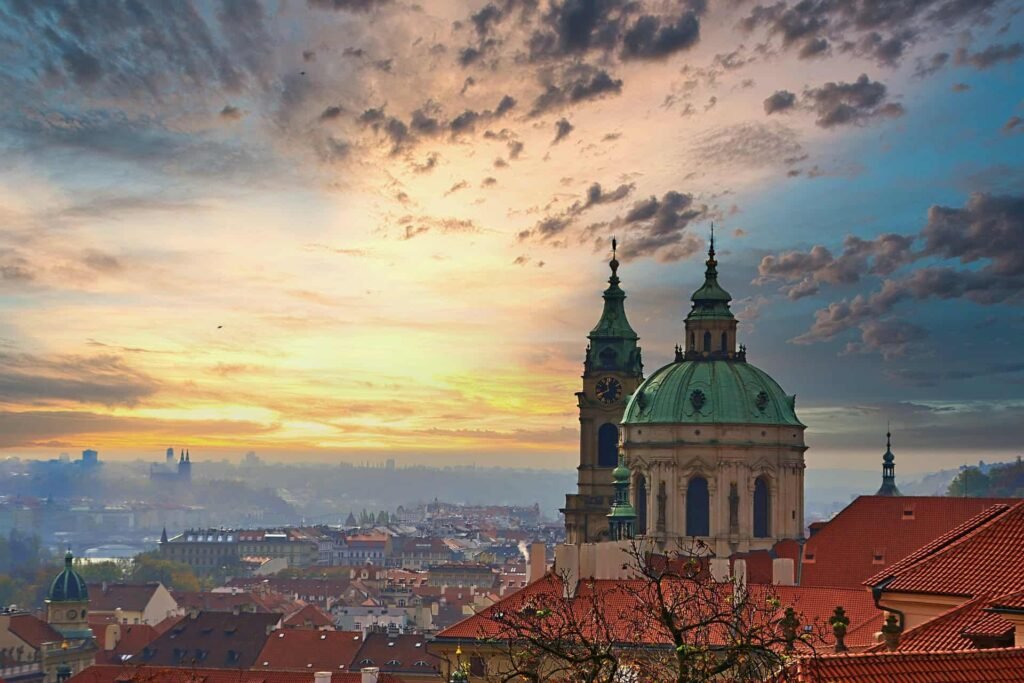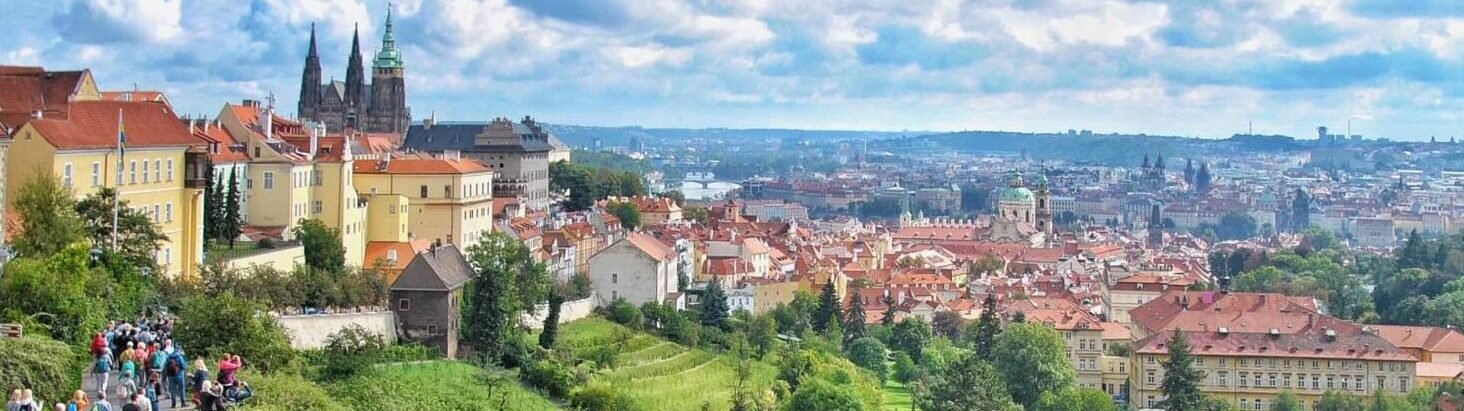
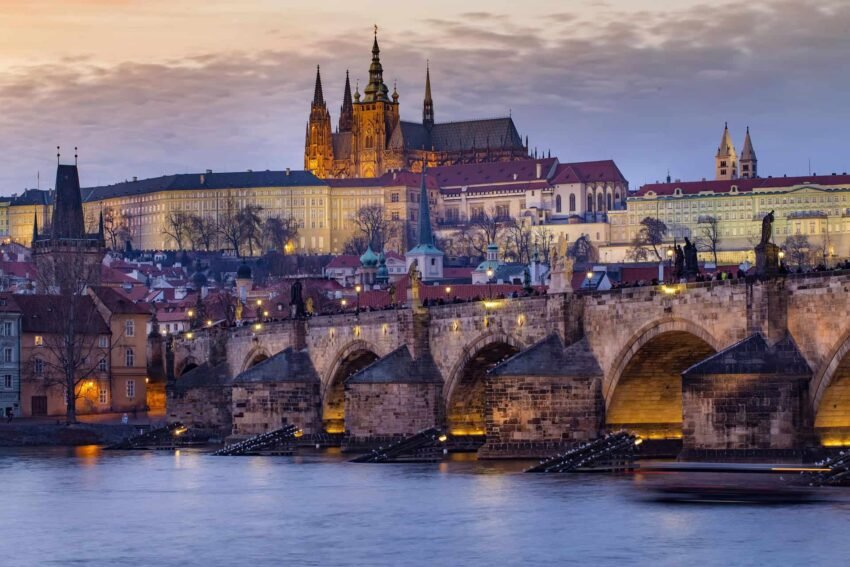
Prague is full of famous landmarks like Prague Castle and Charles Bridge, but the real magic is found in its hidden gems. This guide explores lesser-known places across the city, including quiet streets like Nový Svět or impressive sites like Břevnov Monastery, Emauzy Monastery, and Vyšehrad casemates. You will also discover unique spots like Jánský vršek, Jindřišská věž, Troja Castle, Karolinum, and the Žižkov TV Tower. While some of these hidden gems have already been discovered by visitors and are slowly becoming more popular, many still remain quiet and tourist-free, visited mainly by locals. These hidden gems in Prague offer rich history, beautiful architecture, and a calmer atmosphere away from the main tourist crowds, making them perfect for travelers who want a more authentic experience of the city.
Břevnov Monastery
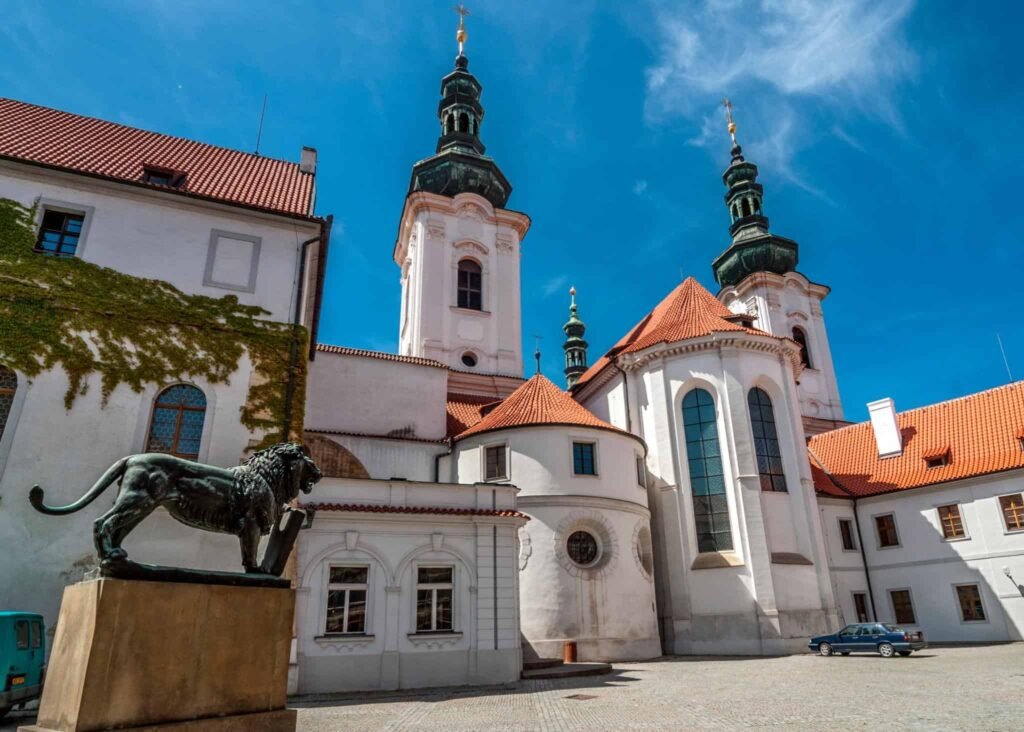
f you love history and hidden gems in Prague, I highly recommend Břevnov Monastery. It is the oldest men’s monastery in the Czech Republic. It was founded in 993. The complex feels peaceful and far from the busy city centre.
I especially love the beautiful Baroque architecture. The Basilica of St. Margaret is one of Prague’s most impressive churches. The monastery gardens are free to enter. They are perfect for a relaxing walk.
Břevnov Monastery is also known for its brewing tradition. Beer has been brewed here since the 13th century. You can still taste local craft beer at the monastery brewery today.
The monastery survived wars, destruction, and decades of communist rule. It was returned to the Benedictine order after 1990. Today, it is an active spiritual centre. It is also one of Prague’s most interesting historical attractions. If you want to see a different side of Prague, Břevnov Monastery is well worth a visit.
Church of Our Lady of Victory at White Mountain
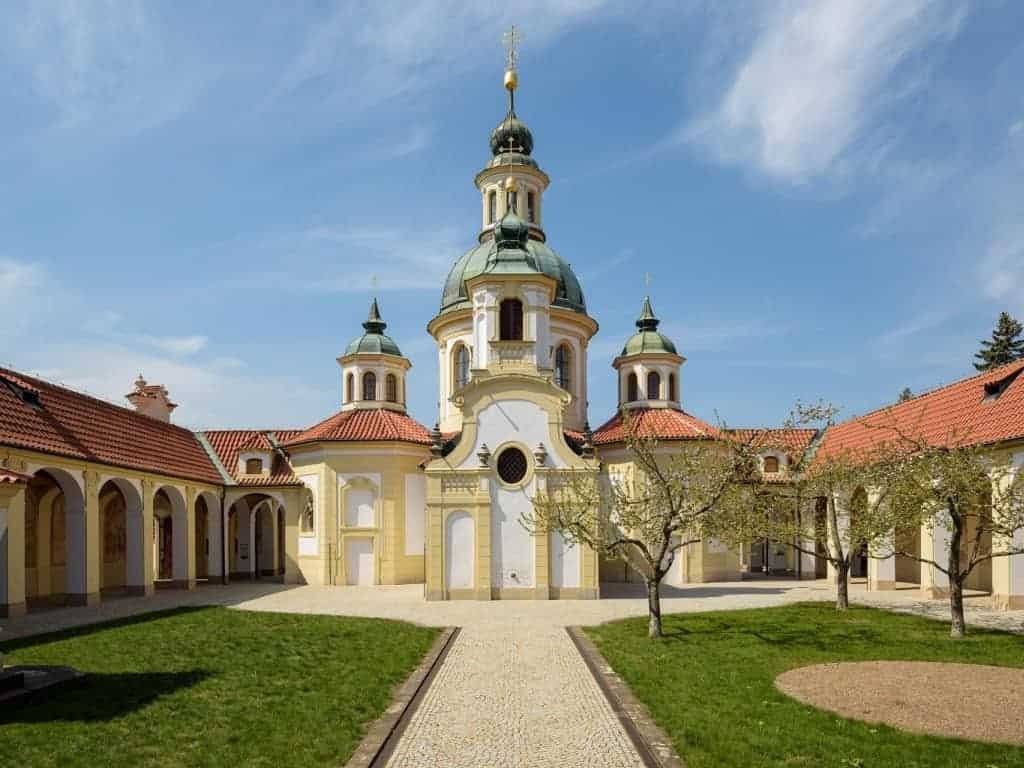
This beautiful Baroque pilgrimage site is in Prague 6. It stands close to the famous White Mountain battlefield.
The church was built between 1704 and 1730. The renowned architect Jan Blažej Santini designed it. The church is quite small, but the whole complex has a special atmosphere. It is one of Prague’s hidden gems. The site is closely linked to the Battle of White Mountain in 1620. This battle was one of the most important events in Czech history. Inside the church, you can see a historic image of the Virgin Mary. According to legend, it inspired the imperial army before the battle.
You will also love the peaceful Pilgrimage Garden. It is full of flowers, herbs, trees, and shrubs. There are plenty of places to sit and relax. Since 2007, a community of Benedictine nuns has lived here. Their presence adds to the calm and spiritual atmosphere.
Nový Svět ( New World )
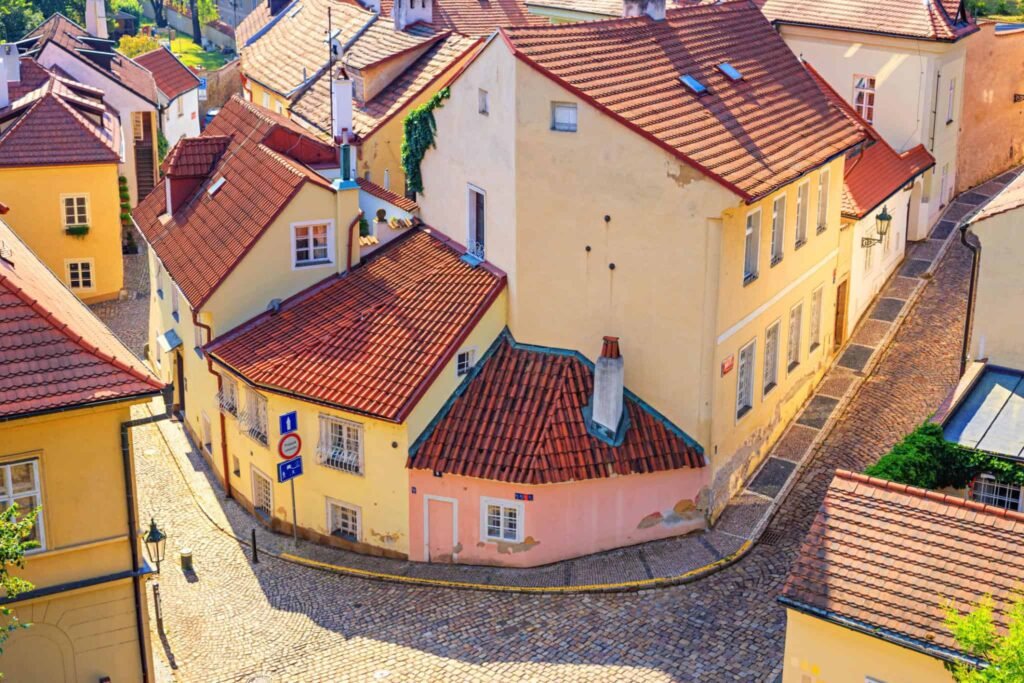
If you want to discover a hidden gem near Prague Castle, take a walk through Nový Svět, or the New World Quarter. This charming area is just a few minutes from the castle. Yet it feels like a completely different world.
The narrow cobbled streets, colorful cottages, and peaceful atmosphere make it one of the most picturesque places in Prague. It feels more like a small village than part of a capital city.
The area dates back to the 14th century. Most of the houses you see today were built in the 17th and 18th centuries. Many of them have unusual names such as The Golden Sun, The Golden Pheasant, and The Golden Lamb. Local residents gave their modest homes grand names to make them stand out.
Nový Svět has also been home to several famous people. The Danish astronomer Tycho Brahe lived here in 1600. The family of the celebrated Baroque architect Jan Blažej Santini also owned a house in the neighbourhood.
Today, Nový Svět remains one of Prague’s best-kept secrets. You will find quiet streets, beautiful historic houses, cosy cafés, and almost no tour groups. If you are looking for an authentic and peaceful side of Prague, this is one place you should not miss.
Karolinum
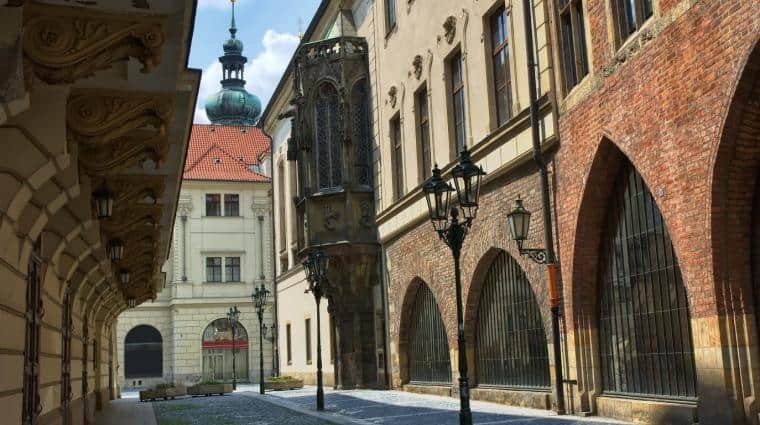
If you are interested in history, do not miss the Karolinum in Prague’s Old Town. This remarkable building has been part of Charles University since 1383. It is one of the most important university buildings in the Czech Republic.The building combines medieval, Baroque, and modern architectural elements. Its beautiful façade and elegant courtyard make it one of the most photogenic landmarks in the area.
Karolinum was originally a grand Gothic palace owned by a wealthy royal banker. It later became the seat of Charles University. For centuries, it served as a place for teaching, administration, and academic ceremonies.
The heart of the building is the Great Hall. Even today, it hosts student matriculations, graduation ceremonies, and important university events. The hall reflects the long academic tradition of Charles University, which was founded by King Charles IV in 1348.
Karolinum is located just a short walk from Old Town Square. Many visitors pass by without realising its historical importance. If you enjoy architecture, history, and hidden stories, this is a place well worth adding to your Prague itinerary.
Strahov Monastery
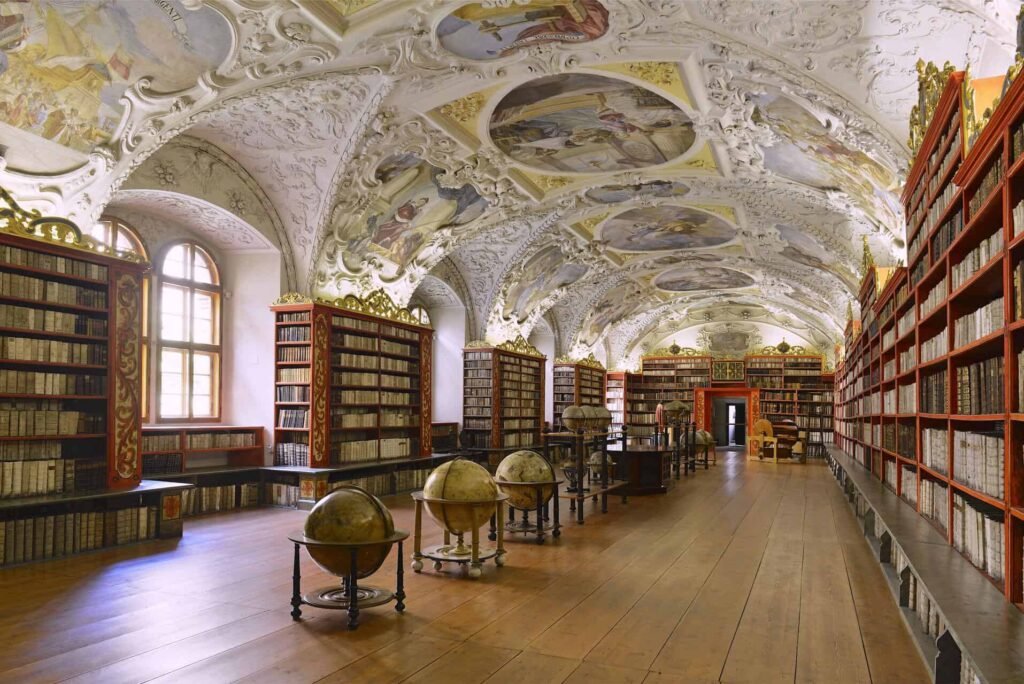
If you are looking for one of the most beautiful historical sites in Prague, visit Strahov Monastery. This impressive monastery dates back to the 12th century. It sits on a hill near Prague Castle and offers some of the best views of the city.
The highlight of any visit is the famous Strahov Library. It is often considered one of the most beautiful libraries in the world. The Theological Hall and the Philosophical Hall are decorated with stunning Baroque frescoes and lined with thousands of historic books.
The complex also includes an art gallery and a treasury with valuable historical collections. After your visit, I recommend stopping at the monastery brewery. You can relax with a traditional Czech beer while enjoying the peaceful surroundings and beautiful views.
Žižkov TV Tower
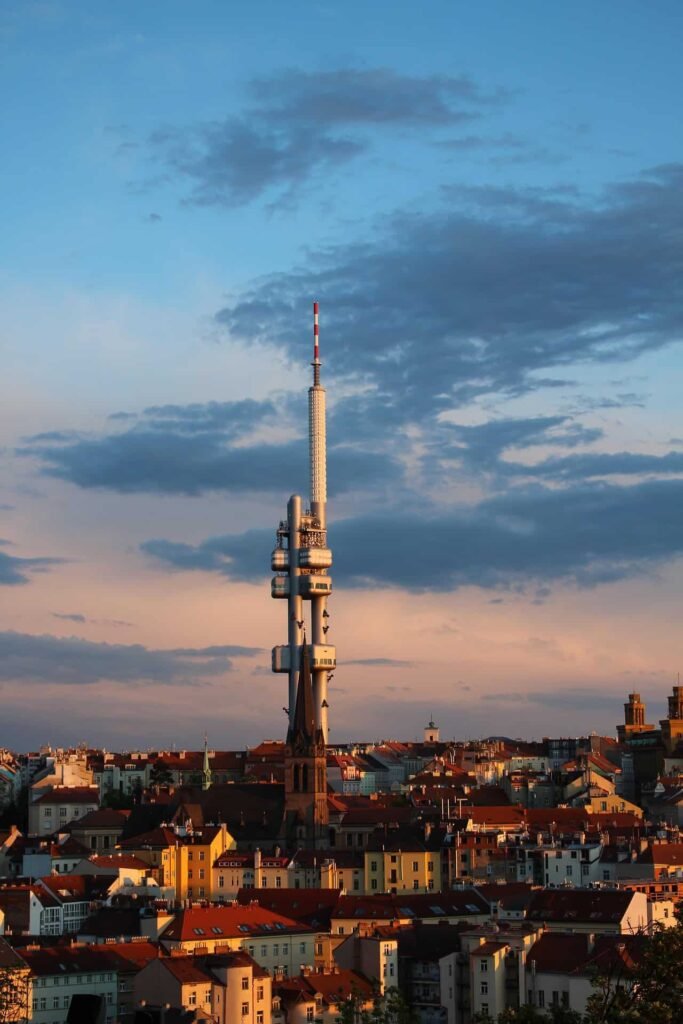
If you are looking for one of the best views in Prague, don’t miss the TV Tower in Žižkov. The Žižkov Television Tower is the tallest building in Prague and one of the city’s most striking landmarks. It rises 216 metres above the city skyline and is visible from almost anywhere.
I always tell visitors to go up to the observation deck for a completely different perspective of Prague. The viewing platform sits high above the city and offers a full 360° panorama. On a clear day, you can see up to 100 km into the distance. One of the most unusual features of the tower is the famous giant baby sculptures by Czech artist David Černý. These oversized crawling babies climbing the structure make the tower truly unique and slightly surreal.
If you want to make your visit extra special, you can dine at the stylish restaurant Oblaca located high above the city or stay overnight in the exclusive One Room Hotel for a once-in-a-lifetime experience.
Old Jewish Cemetery in Žižkov
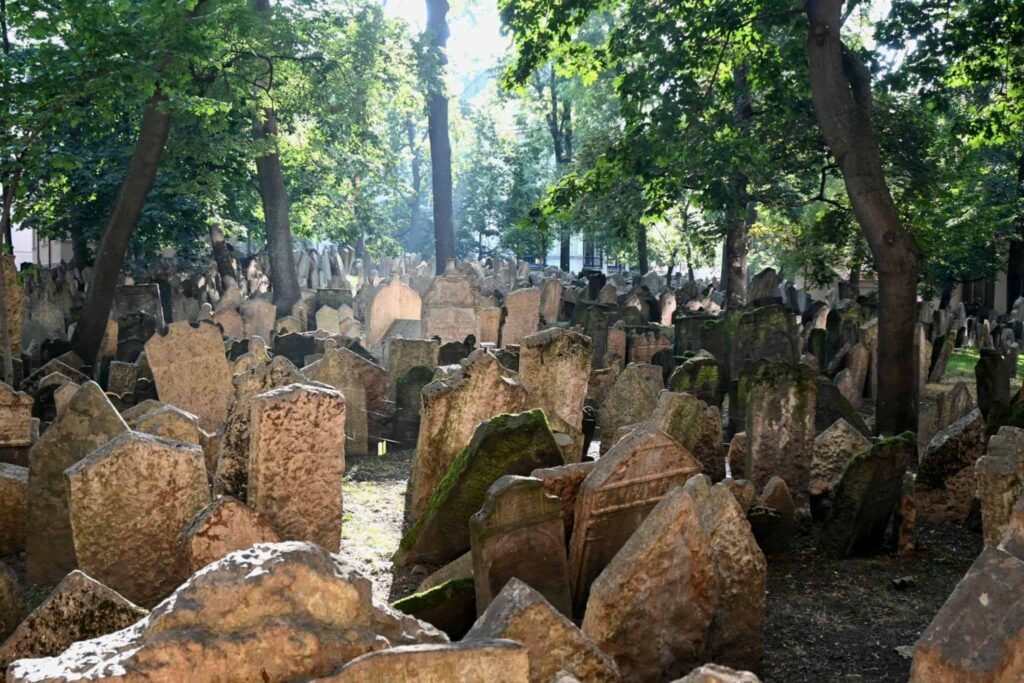
The Old Jewish Cemetery in Žižkov is located in Mahlerovy sady in Prague 3, close to the Žižkov TV Tower. This historic site is one of the most important Jewish monuments in the city.
The cemetery was founded in 1680 as a plague burial ground for Prague’s Jewish community. Over time, more than 40,000 people were buried here, including important rabbis, scholars, and early Jewish entrepreneurs. One of the most famous graves belongs to Rabbi Ezekiel Landau, known as the Noda Bi-Jehuda. His tomb is carefully restored and attracts many visitors.
The cemetery was partly destroyed during the 20th century and later turned into a park area. Today, the preserved section is managed by the Jewish Museum in Prague and is open to the public again after restoration. Next to the cemetery, you can also find a powerful modern memorial made from old tombstone fragments. These stones were once used in pavement on Václavské náměstí and later returned to their original meaning. It symbolizes memory, unity, and respect for history.
Jánský vršek
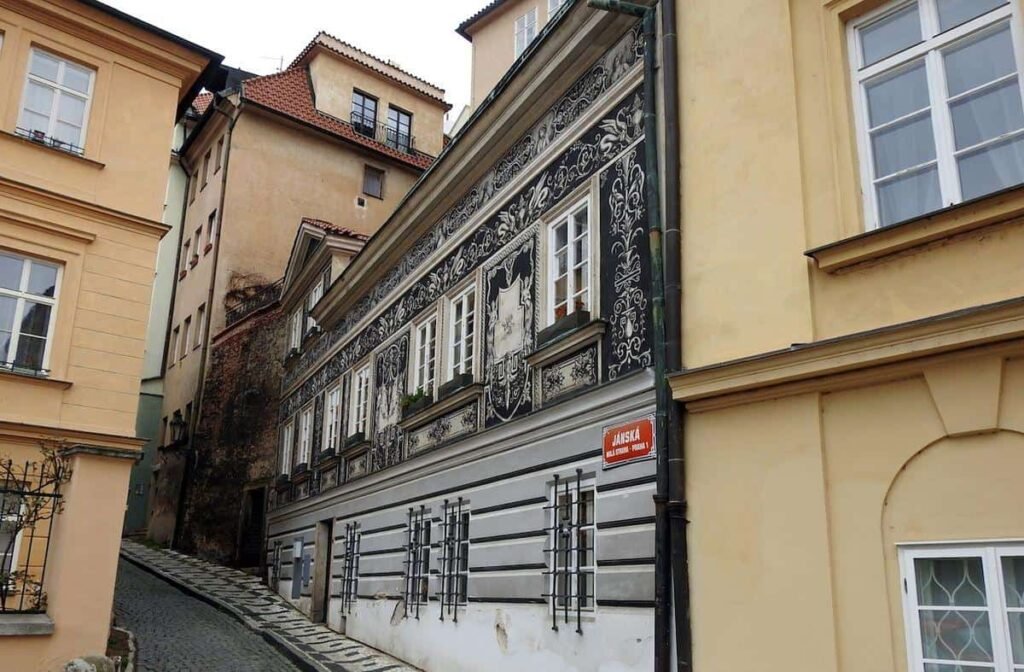
If you love wandering through quiet corners of Prague, don’t miss Jánský vršek in Malá Strana. This small, steep street and tiny square branches off from Nerudova Street and feels like a step back in time. The area already existed around the year 1100, when a small settlement called Obora stood here with two early churches.
One of the most interesting stories is connected to Edward Kelley, the famous alchemist from the time of Emperor Rudolf II. He lived and worked here in the house “U Osla v kolébce,” which you can still find today and which now relates to Prague’s alchemy legends.Another important name linked to this place is Jan Blažej Santini, one of the greatest Czech Baroque architects, who is said to be buried nearby. The atmosphere of Malá Strana makes it easy to understand why artists and builders were inspired here.
Jánský vršek is a quiet dead-end street, so there are no crowds or traffic. If you are exploring Prague Castle and Nerudova Street, take a small detour here. It is one of those places where Prague feels truly authentic and timeless.
Emauzy ( The Emmaus Monastery )
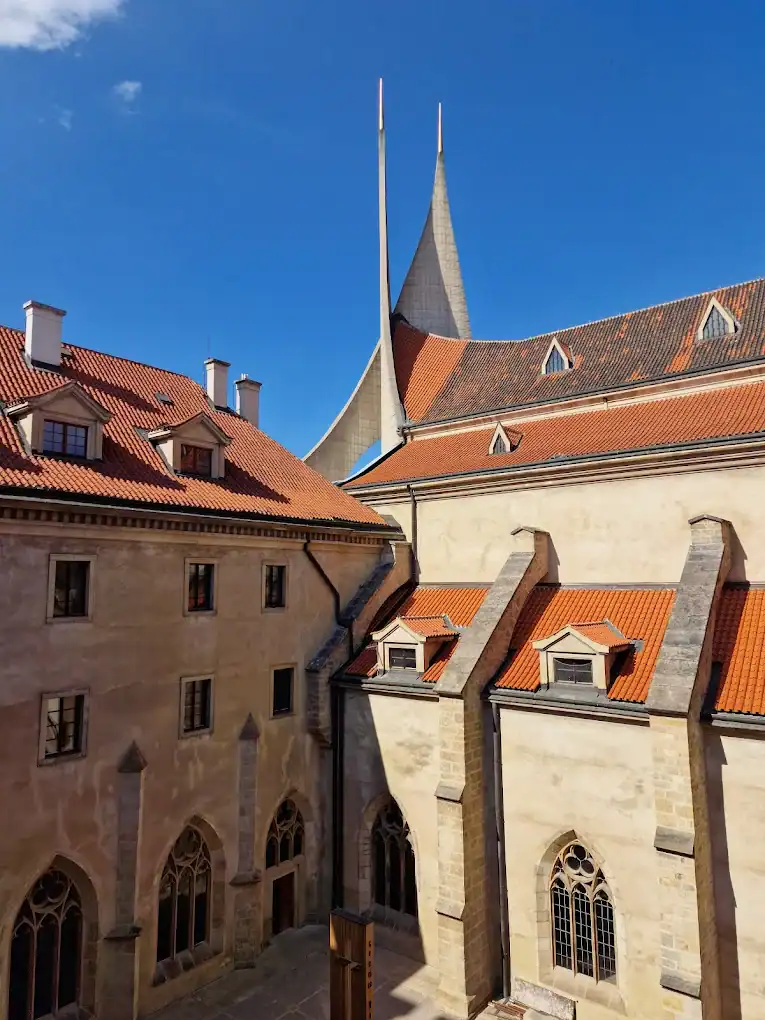
Emauzy (the Emmaus Monastery) is located near the river in New Town and offers a fascinating mix of medieval history, spirituality, and modern architecture.
It was founded by Emperor Charles IV in 1347 as the only Slavic Benedictine monastery of its kind in the Holy Roman Empire. It was created as a centre of learning, culture, and Slavic liturgy. Even reformers like Jan Hus studied here, which makes the site even more important in Czech history.
The monastery is closely connected to old manuscripts and illuminated books, including the famous Reims Gospel, which later became part of the French royal coronation treasury. Emauzy was a true intellectual hub of its time.
Over the centuries, the complex changed many times. It was Baroque, then Neo-Gothic, and later heavily damaged during an air raid in 1945. Today, the striking modern concrete towers above the church are a result of post-war reconstruction. They make Emauzy one of the most architecturally unusual sites in Prague.
I also love the peaceful monastery gardens. They were originally created in the time of Charles IV and are now slowly being restored. Today, they offer a quiet green space with plans for cafés, orchards, and relaxation areas.
Main Railway Station ( Hlavní Nádraží )
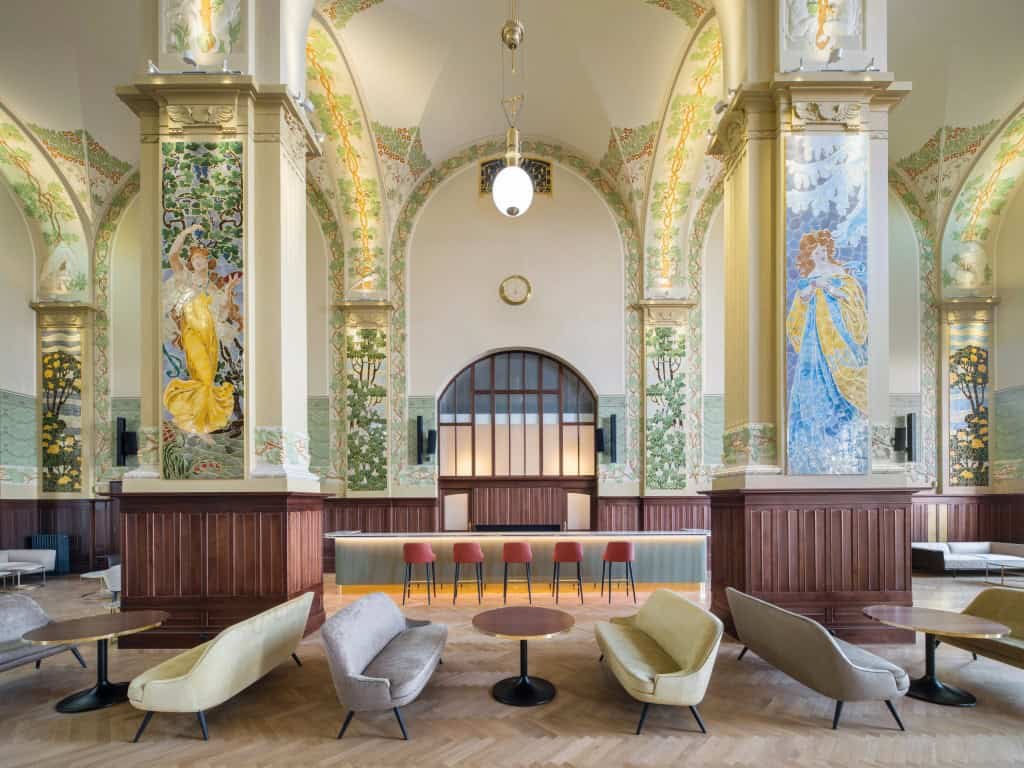
If you arrive in Prague by train, your first impression will most likely be Hlavní nádraží, the city’s main railway station. It is the largest and most important train station in the Czech Republic and one of the key transport hubs in Central Europe.
I always tell visitors not to rush out immediately, because the station itself is worth seeing. The highlight is the stunning Art Nouveau Fantova Hall and the Sloup Hall. Its elegant decoration, stained glass, and historic details make it one of the most beautiful station buildings in Europe.
In recent years, the station has been carefully renovated to restore its Art Nouveau beauty while improving services for modern travelers. Even international films have used it as a filming location thanks to its unique atmosphere.
Convent of St. Agnes (Anežský klášter)
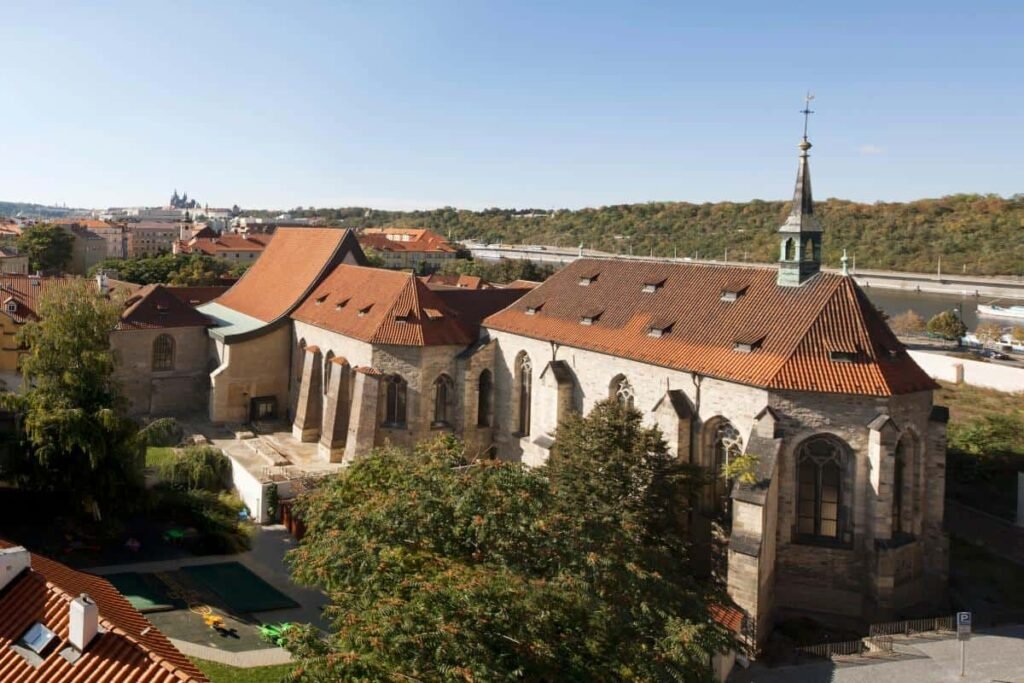
If you are exploring Prague’s Old Town, I highly recommend visiting the Anežský klášter, also known as the Convent of St. Agnes of Bohemia. It is one of the oldest Gothic complexes in Prague and one of the most peaceful places in the city centre.
The monastery was founded in the 13th century by Saint Agnes of Bohemia, daughter of King Přemysl Otakar I. It was the first convent of the Poor Clares in Central Europe and also included a male Franciscan community. This makes it a very important spiritual and historical site.
Walking through the complex, you can explore beautiful Gothic churches, quiet cloisters, and atmospheric courtyards. The whole area once played a key role in medieval religious life and even served as a burial place for the Přemyslid dynasty.
Today, the Anežský klášter is part of the National Gallery in Prague. Inside, you will find one of the most important collections of medieval art in Central Europe, including precious Gothic panel paintings and rare religious artworks.
Na Kocourkách Street, second Golden Lane
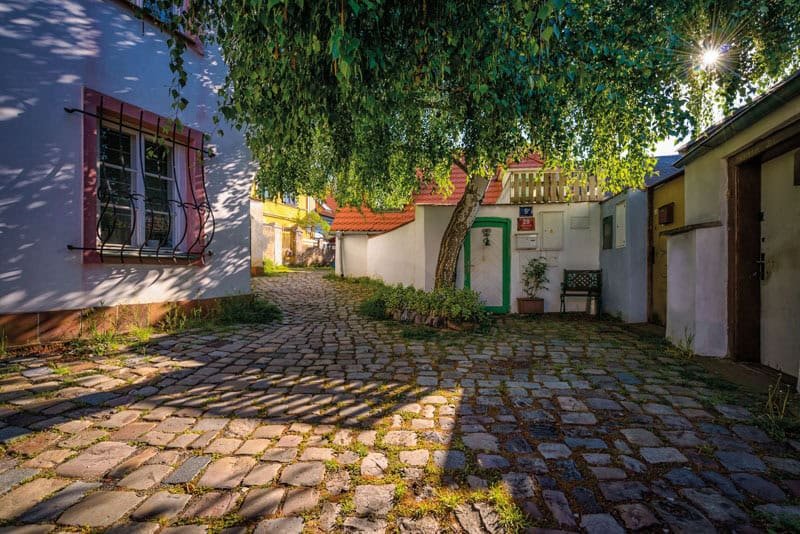
If you are looking for one of the most surprising hidden gems in Prague, visit Na Kocourkách Street in Střešovičky.
The street is only about 150 metres long, but it looks like a different world. Small colorful houses are tightly packed together, often built directly into the rock. It feels just as charming as the famous Golden Lane, but without the crowds.
It originally grew as a working-class colony, not as a traditional village. Some of the houses date back to the 18th and 19th centuries, and the atmosphere still reflects their simple, historical character. Over the years, the area has also attracted artists, filmmakers, and musicians. It has been used in Czech films and is loved for its authentic and almost timeless atmosphere.
Minorite Monastery
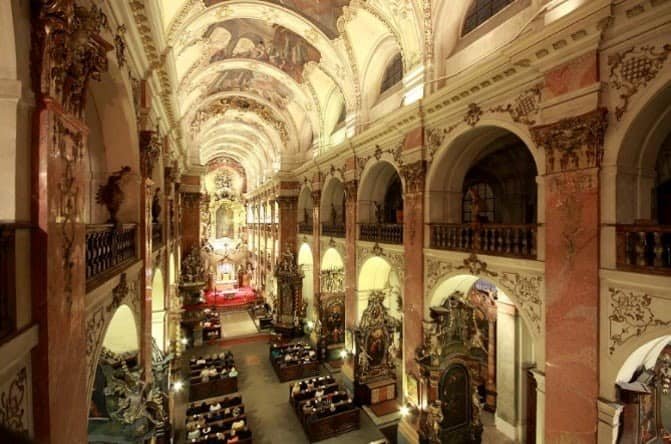
Minorite Monastery is one of the oldest Franciscan monasteries in Central Europe and has more than 800 years of history.
The monastery was founded after 1232 by King Wenceslas I, when the Minorites first arrived in Prague. Over time, it became an important spiritual and social centre. Even royal events took place here, including wedding celebrations of members of the Luxembourg dynasty.
One of the highlights is the impressive Gothic basilica, built in stages during the 14th century. It was once one of the largest churches in Prague, and it played an important role in royal ceremonies and state events.
Over the centuries, the complex changed many times. It survived fires, reconstructions, and political changes. After the monastery was closed in the 18th century, only part of the original complex remained, but it still preserves its unique atmosphere.
Today, visitors can explore beautiful Gothic arcades, Baroque halls, and peaceful courtyards. You can also see frescoes inspired by the life of St. Francis of Assisi and walk through spaces that once hosted kings and emperors. Since it has recently been opened to the public, the Minorite Monastery is still a bit of a hidden gem. If you are exploring Prague’s Old Town, it is definitely worth a stop.
Troja Castle ( Zámek Troja)
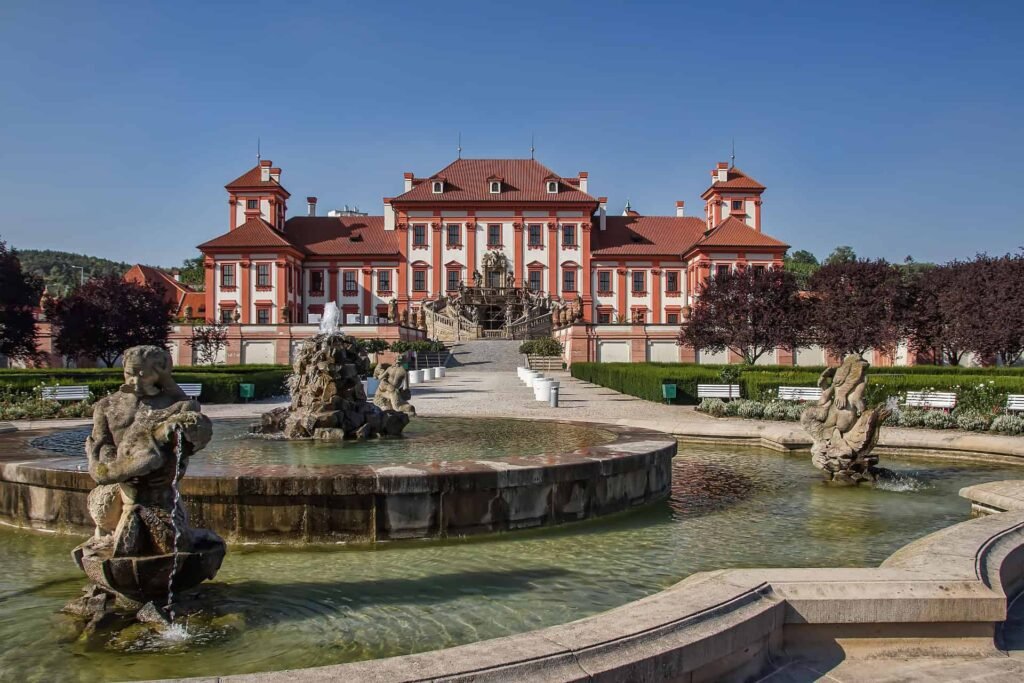
Troja Castle is a beautiful Baroque palace, located near the Vltava River. It was built in the late 17th century as a summer residence for the noble Sternberg family. The design was created by architect Jean-Baptiste Mathey, inspired by Italian villas. The palace is famous for its grand central hall and richly decorated staircase with mythological statues. Inside, visitors can see large frescoes showing ancient myths and Habsburg history. The castle is surrounded by a formal French-style garden with fountains, statues, and terraces. Today, it is part of the City Gallery Prague and is open for exhibitions and cultural events.
Jindřišská Tower ( Henry´s Bell Tower )
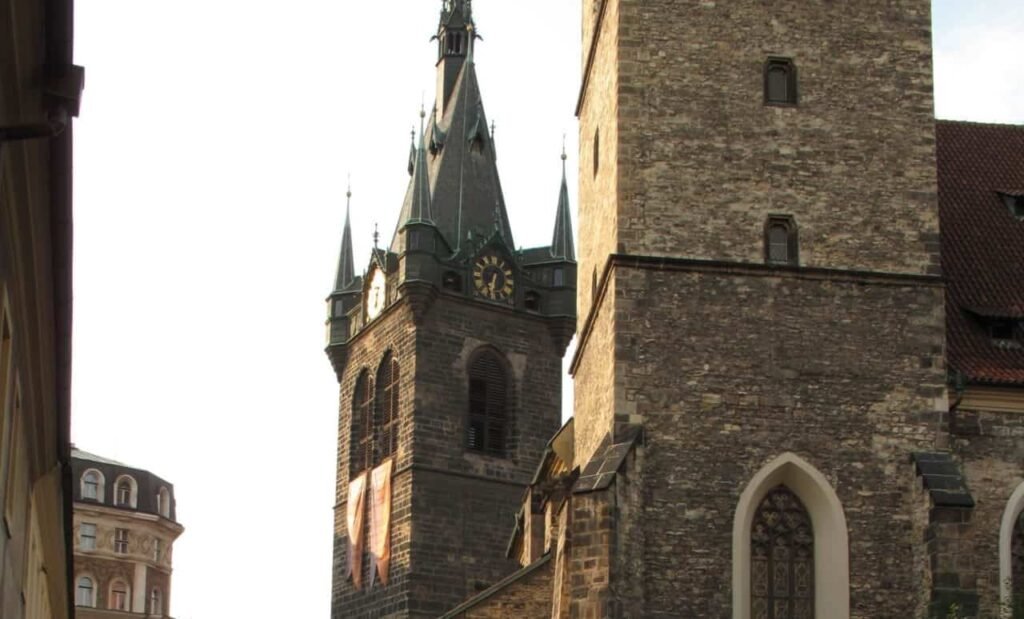
Jindřišská Tower ( also called Henry´s Bell Tower ) is a historic bell tower in the center of Prague. It was built in the 15th century from sandstone blocks. The tower once served as a military watchtower during the Thirty Years’ War. Today, it is known for its golden clock with symbols of the Old and New Town of Prague. Inside, visitors can see exhibitions, seasonal nativity scenes, and a restaurant. A special highlight is the carillon with 10 bells, which can play music inside the wooden roof structure. From the small windows, there are nice views of the city.
Vyšehrad Casemates and Gorlice Hall
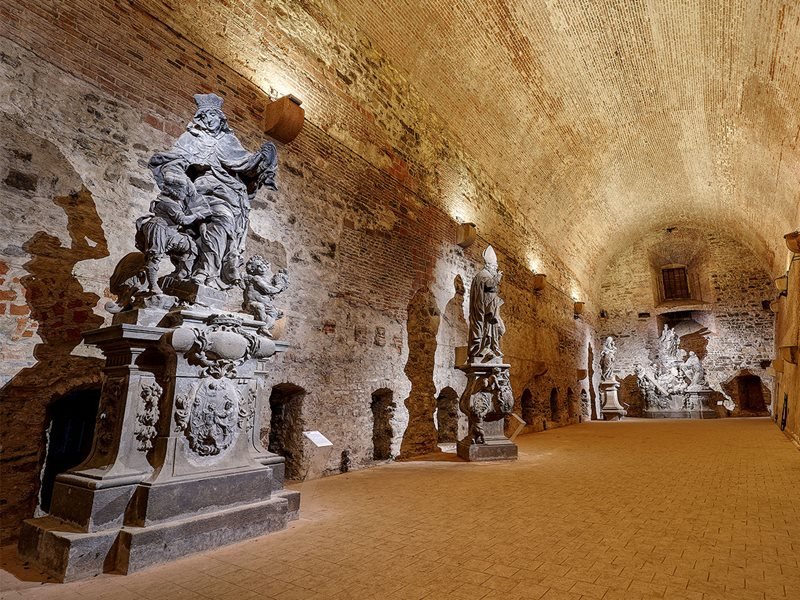
Vyšehrad casemates are a system of underground military tunnels in the historic fortress of Vyšehrad. They were built in the 17th and 18th centuries as part of Baroque defensive walls. The tunnels are over 1 km long and were used for fast and hidden troop movement, as well as storage for weapons and supplies.
At the end of the system is the large underground hall called Gorlice. This space was used for military gatherings and storage. Today, Gorlice is famous for housing original Baroque statues from Charles Bridge. The site was restored and opened to the public in the 1990s and is now part of guided tours of Vyšehrad fortress.
Franciscan Gardens ( Františkánská zahrada )
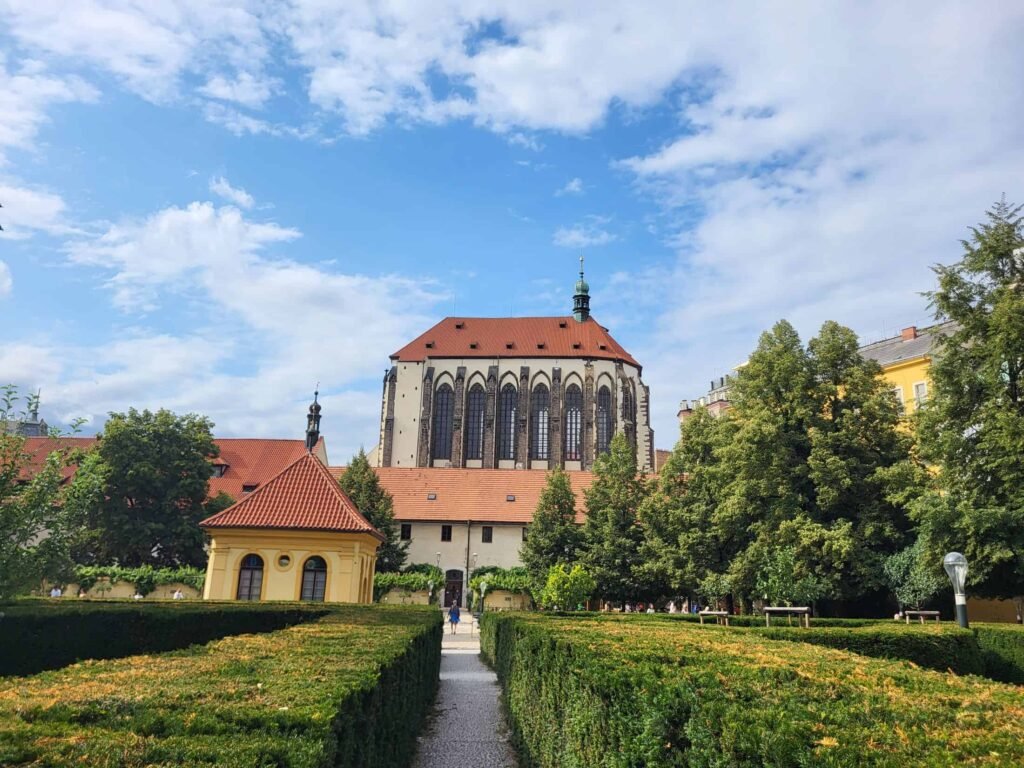
Franciscan Gardens is a peaceful green park in the center of Prague, located between Wenceslas Square and Jungmannovo Square. It was founded in the 14th century during the reign of Charles IV as part of a monastery garden. The garden was used for growing herbs, fruits, and flowers by different religious orders, including the Carmelites and later the Franciscans.
Today, it is a quiet public space with benches, rose-covered arches, a children’s playground, and a fountain with a sculpture of a boy holding a shell. The garden also features modern art sculptures and decorative gates with religious motifs. It is open all year and offers a calm escape from the busy city streets of central Prague.
Jerusalem Synagogue ( Jubilee Synagogue )
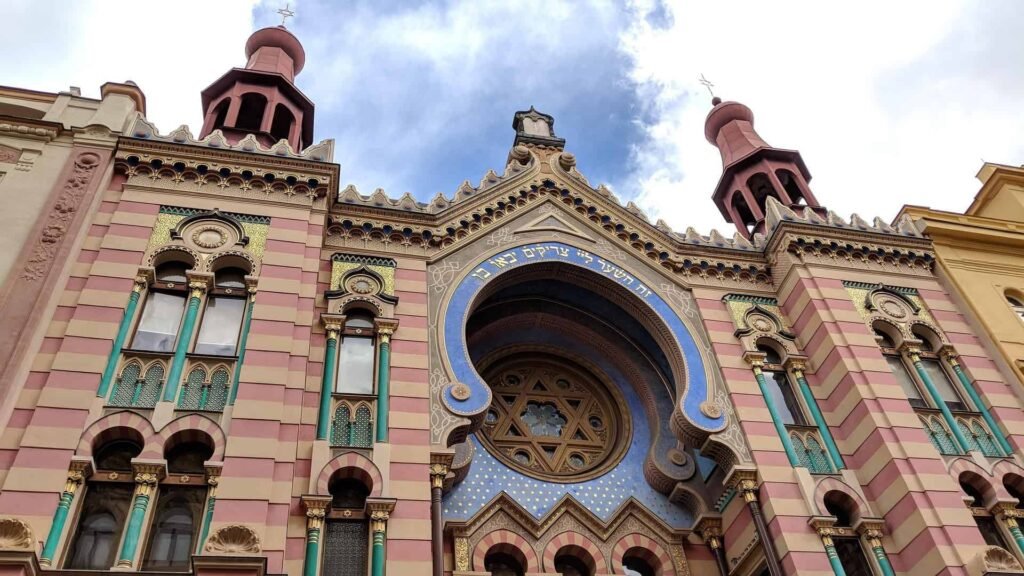
The Jerusalem Synagogue (Jubilee Synagogue) is one of the most beautiful and unique synagogues in Prague. You will find it in Jeruzalémská Street, close to the main train station.
It was built between 1905 and 1906. It was a replacement for older synagogues that were demolished during the redevelopment of Prague’s Jewish Quarter. The synagogue is named “Jubilee” in honour of Emperor Franz Joseph I’s 50th year of rule. The building mixes Moorish and Art Nouveau style. There are bright red and white stone stripes, decorative arches, and rich ornaments.
Inside, there is also a small exhibition about Jewish life in Prague after 1945. You can see lot of photos and documents from the post-war period. After restoration work in the 1990s, hidden Art Nouveau decorations were discovered under old layers of paint, making the interior even more special.
Today, the Jerusalem Synagogue is both a functioning place of worship and a hidden architectural gem that surprises many visitors walking through this quiet Prague street.
Read more Top 16 Unmissable Landmarks and Attractions in Prague
Prague Landmarks: The Top Attractions for First-Time Visitors
History of Prague: Complete Timeline From Ancient Times to Today
Unusual Things to See in Prague: Unique & Unexpected Places
Where To Next?

Czech Pub Etiquette: How to Order Beer Like a Local
The Best Beer Gardens in Prague to Visit This Summer
20 Most beautiful historic cafés in Prague (2026)
The Oldest Pubs in Prague: Where History Meets Great Czech Beer
Prague´s Hidden Historic Pubs to Taste Authentic Czech Beer