Prague: A City Shaped by More Than 1,100 Years of History
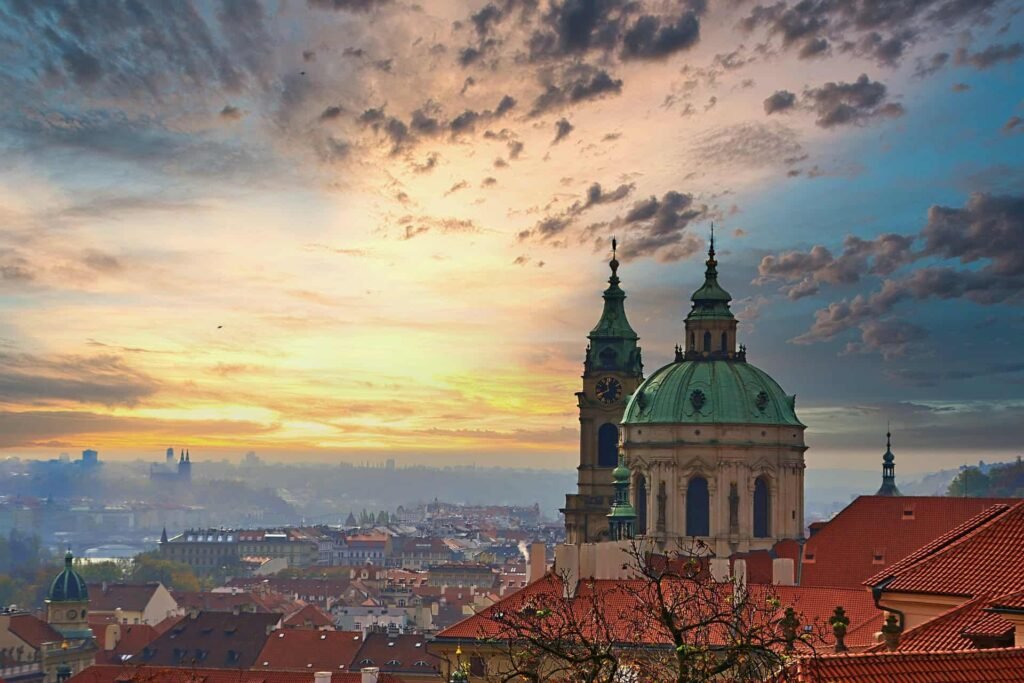
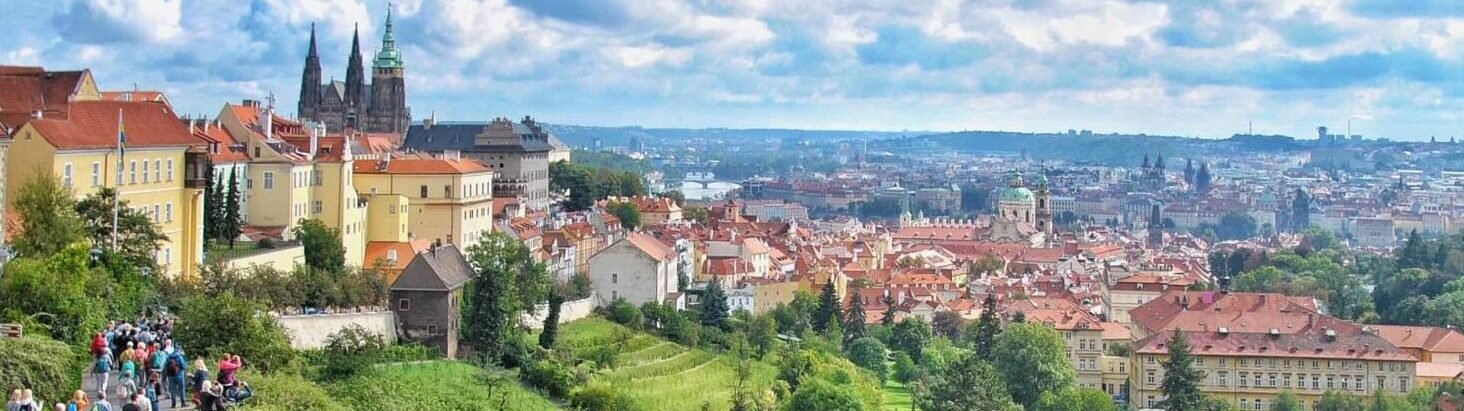
Prague is the capital and also the largest city of the Czech Republic. The city has developed into its current form over eleven centuries. It began as a settlement below Prague Castle, which was founded around the year 880. Today, it covers an area of 496 square kilometers and has about 1,408,000 inhabitants. The historic city center, with its unique panorama of Prague Castle, has been a UNESCO World Heritage Site since 1992.
In Czech we call it Praha, in other languages, the name is usually Praga, Prag, or Prague. The name “Praha” is traditionally connected to the word “práh,” meaning “threshold.” Historians often explain it as referring to a river threshold or ford that once existed near the site of today’s Charles Bridge. People crossed the river at this place. As the settlement grew above this river crossing, it was named Praha. Another legend says that Princess Libuše ordered the founding of the city where a settler was carving a threshold for his wooden house in the forest.
Prague is one of those cities where history is not hidden in museums but visible in everyday life. When you walk through the streets, you can easily pass from Romanesque foundations to Gothic towers, Baroque facades, and modern buildings in just a few minutes. Prague has always inspired many writers and poets, musicians, painters, sculptors, architects, graphic designers, photographers, and filmmakers to create works of art.
What makes Prague especially interesting is not only its age, but the fact that it has repeatedly changed its role in Europe. It has been a political center, a royal capital, a religious battleground, an industrial city, and now a modern European metropolis.
To understand Prague properly, it helps to look at how it developed step by step over the centuries.
Early Settlement: Before the City Existed
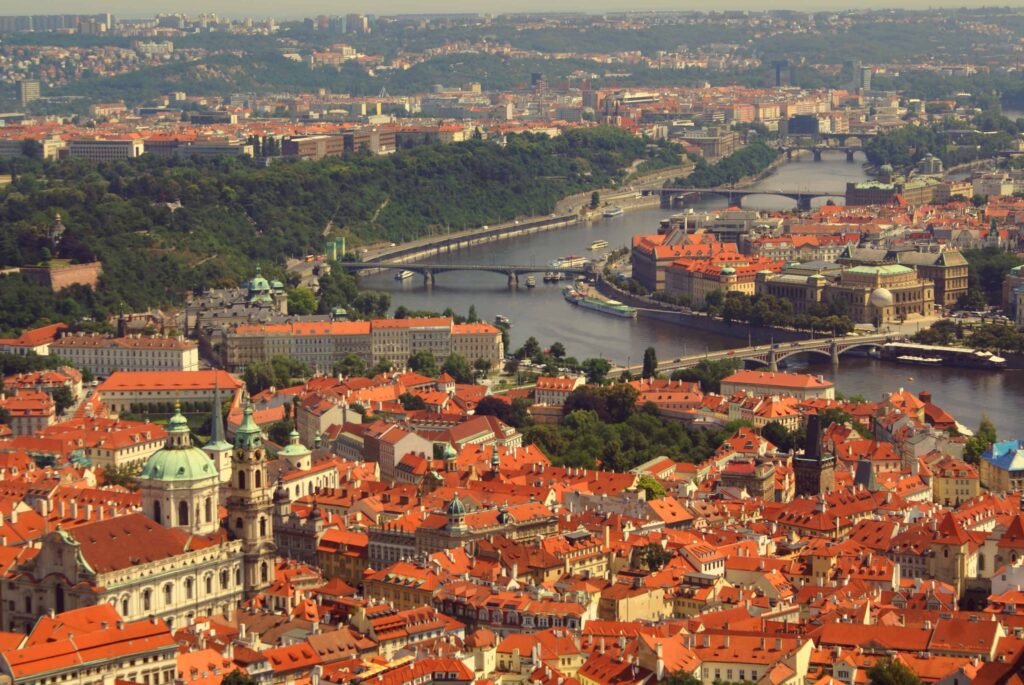
The area of today’s Prague has been inhabited for a very long time. Archaeological findings show human presence dating back hundreds of thousands of years. However, these early settlements were not permanent, as people moved depending on climate and resources.
More stable settlement began in the Neolithic period, when agriculture replaced hunting and gathering. From that point on, the Prague basin became a continuously inhabited area, although different groups came and went over time, bringing cultural change and occasional conflict.
This long period of gradual settlement created the foundation for later development, but at this stage there was still no city in the modern sense.
6th–9th Century: Slavs and the First Strongholds
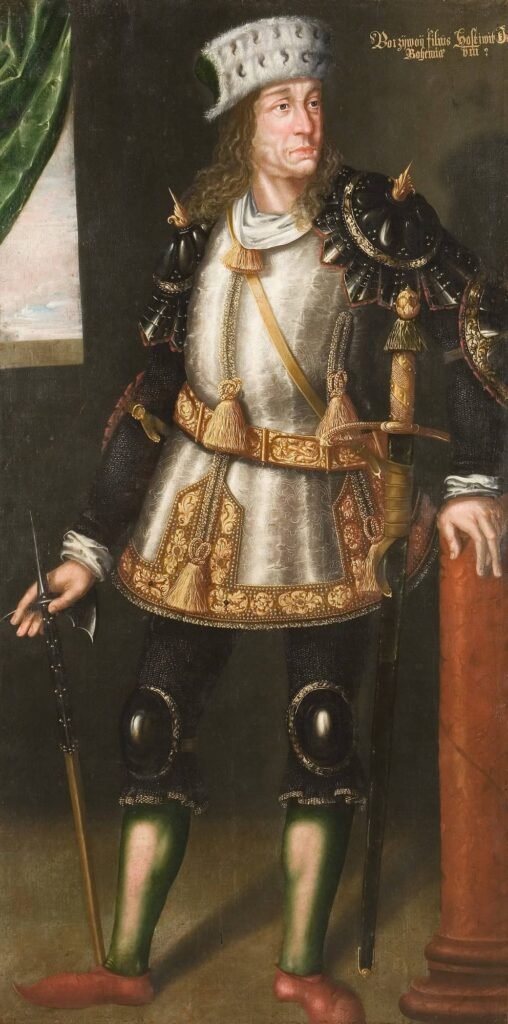
A major change occurred in the 6th century, when Slavic tribes settled in the region. They established small communities and fortified hill settlements in the surrounding landscape.Life was closely connected to the Vltava River, which served as an important trade and communication route. Settlements gradually concentrated near crossing points and safer riverbanks.
The name “Prague” is commonly linked to the word “práh”, meaning a river crossing or threshold. This likely refers to one of the early fords across the Vltava, which played a key role in local trade and movement.
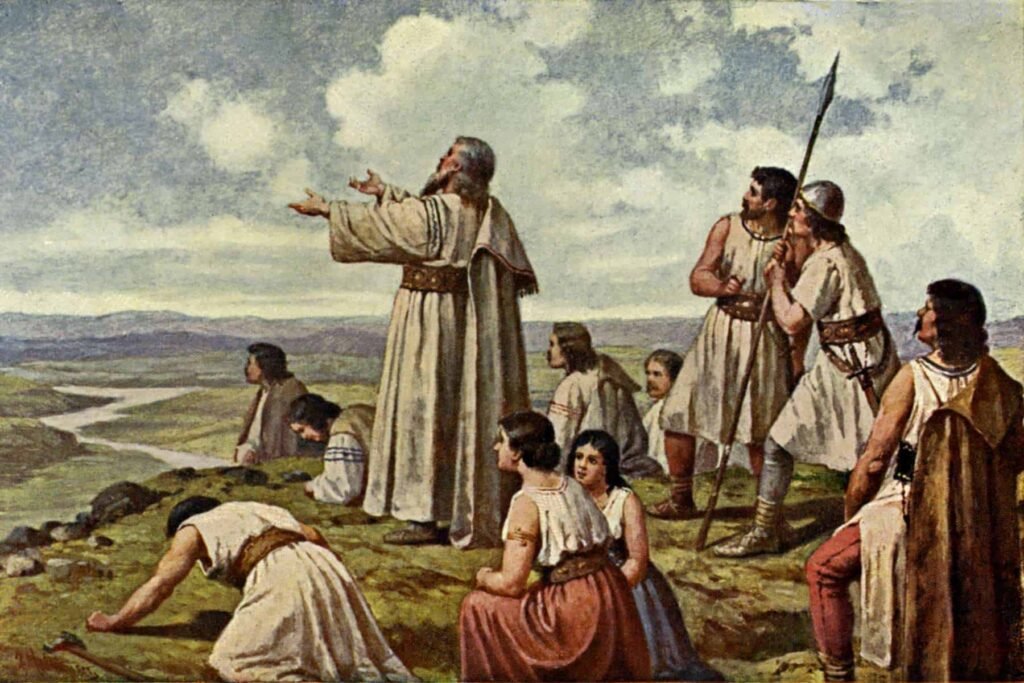
Around the year 880, Prince Bořivoj from the Přemyslid dynasty founded Prague Castle. This marked the beginning of Prague as an important political and religious center. This period is often seen as the foundation of Prague itself. The presence of the princely castle attracted craftsmen and merchants to the area below it. This is how a medieval town gradually began to develop.
During this time, some members of the Přemyslid dynasty also adopted Christianity. The new faith had been brought to the Slavic lands by Cyril and Methodius, who are known as the “Apostles of the Slavs.”
10th–12th Century: Formation of Early State and Growing Importance
During the 10th century, Prague became the central seat of emerging Czech rulers. The construction of the Prague Castle complex and later Vyšehrad helped define the political structure of the region.
In 973, the Prague bishopric was officially established. This was an important step in strengthening Christianity and the role of the Church in the region. It connected the region more closely with Western Europe.
The First Written Mention on Prague
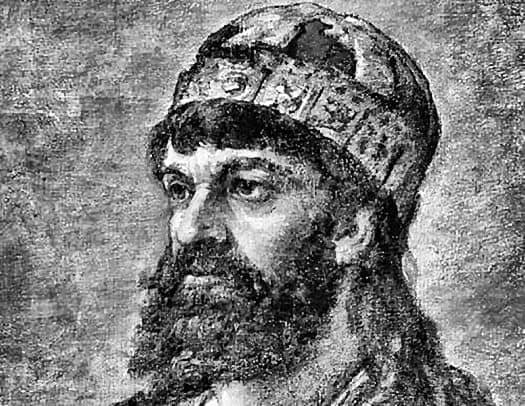
The first known written description of Prague comes from the Arab-Jewish merchant Ibrahim ibn Yaqub, who visited the city in the second half of the 10th century. He wrote:“The city of Fraga is built of stone and lime… In the city of Braha, they make saddles, bridles, and strong shields used in their country.” (Arabic does not have the sound “P,” which is why he referred to Prague as “Fraga” or “Braha.”)Another interesting part of Ibrahim’s account describes the route into Prague:“From the forest to the wooden bridge across the marsh is about two miles, and after crossing that bridge you arrive in the city of Braga.”
Vratislav II became the first King of Bohemia in 1085. However, his position was not fully independent. He still remained under the authority of the Holy Roman Empire and the German king.
In the 12th century, development continued. In 1172 the first stone bridge over the Vltava, known as Judith Bridge, was built. Around this time, settlements on both sides of the river began to grow more rapidly, supported by trade and crafts.By the end of this period, Prague was already one of the most important centers in Central Europe, although it was still not a unified city. It was mainly located in the area that is now the Old Town.
13th Century: Prague Becomes a Real City
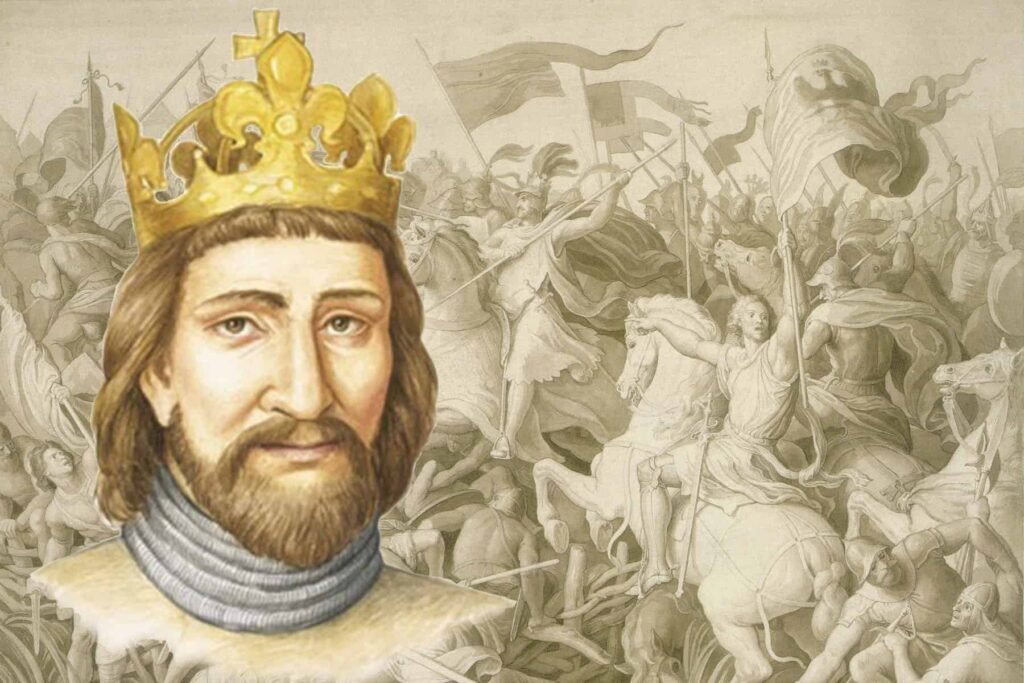
The 13th century is when Prague clearly transformed into an urban center. In 1257 the king Přemysl Otakar II granted city rights to the settlement below the castle. It was later called the Old Town, or “Greater Town of Prague,” As a result of this decision, a new part of the city was created on the opposite bank of the river. This became the Lesser Town (Malá Strana). This period also saw a significant arrival of merchants and craftsmen, especially from German-speaking regions, which contributed to economic growth and cultural diversity.
Stone architecture gradually replaced wooden buildings, and the construction of churches, marketplaces, and fortified structures increased. By this time, Prague was no longer just a settlement around a castle. It had become a structured medieval city with growing economic importance.
14th Century: The Golden Age Under Charles IV
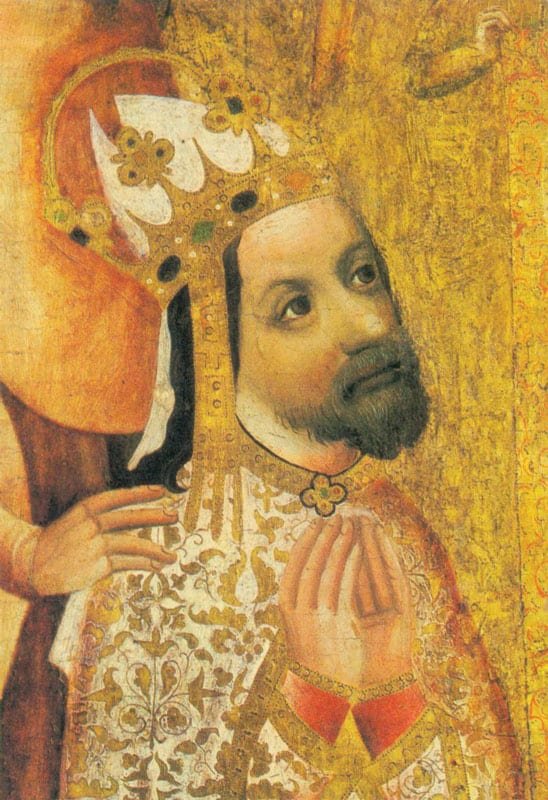
The 14th century represents the peak of Prague’s medieval development. During this period, Prague became one of the largest and most developed cities in Europe, comparable to cities such as Paris and Rome.
John of Luxembourg ruled the country from 1310 to 1346. His son Charles IV began his rule in 1346 and reigned until 1378. He is remembered as one of the most important and popular Czech kings. Under his rule, Prague became one of the richest cities in Europe and an important cultural center of Central Europe. In 1355, Charles IV was elected Holy Roman Emperor, and Prague became the capital of the Holy Roman Empire, which significantly increased its political and cultural importance.
Creation of New Town
The area inside the city walls soon became too small for the growing population. Because of this, the ruler made a major decision. In 1348 he founded the New Town of Prague. With this step, he turned Prague into one of the great cities of medieval Europe. This new district was gradually filled with large town houses, wide marketplaces, and impressive churches and monasteries.
Charles IV enriched Prague with following :
- In 1342, the Judith Bridge collapsed during a major flood. Construction of the famous Charles Bridge began in 1357, replacing the earlier Judith Bridge.
- The Prague bishopric was raised to an archbishopric, increasing the city’s religious importance.
- The Old Town Hall was founded in 1338, becoming a key center of city administration.
- Construction of St. Vitus Cathedral also began during this period.
- Charles University was established. It became the first university in Central Europe.he founded the first university in Central Europe, making Prague an important center of education and culture in a region north of the Alps and east of France.
- In 1348, Charles IV founded the New Town of Prague. With this step, he turned Prague into one of the great cities of medieval Europe equal to Rome, Paris or Florence.
15th Century: Religious Conflict and the Hussite Wars
The 15th century brought major political and religious tensions. The teachings of Jan Hus, who criticized the church, led to a growing reform movement. After his execution in 1415, these tensions escalated into the Hussite Wars.
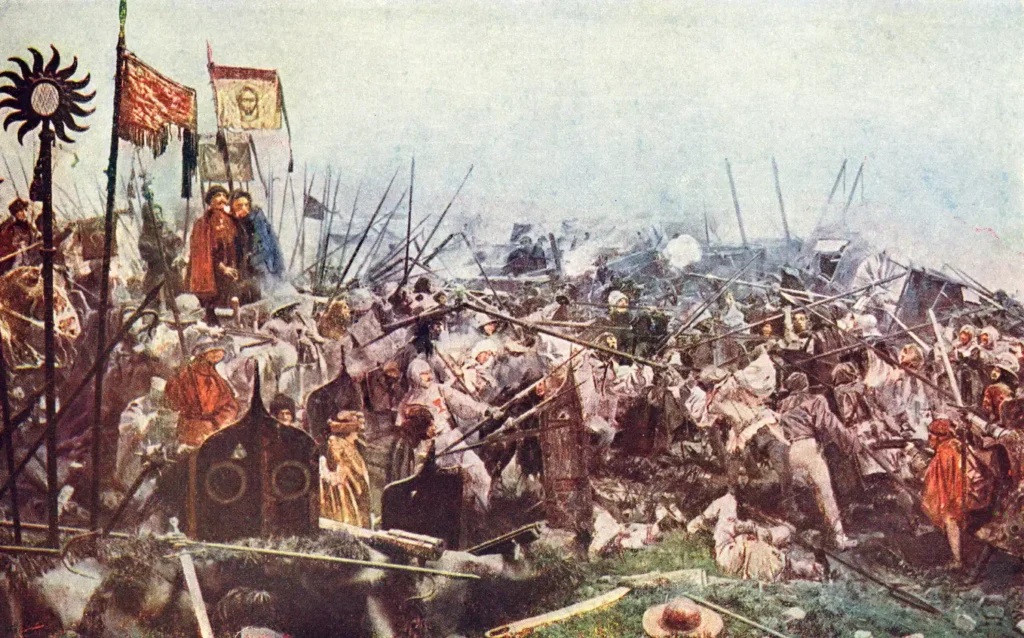
The Hussite Wars took place from 1419 to 1437. They were caused by religious conflict between the Hussite reform movement and the Roman Catholic Church. These wars had a major impact on the country. Many historical buildings, churches and monasteries were damaged. Political structures were weakened, and society became deeply divided.
Prague Castle also suffered damage and fell into decline during this difficult period. which significantly affected Prague and the entire region.
Although the Hussite movement eventually declined, this period left a lasting impact on Czech religious and national identity.
16th Century: Renaissance Prague and Rudolf II – the Second Golden Age
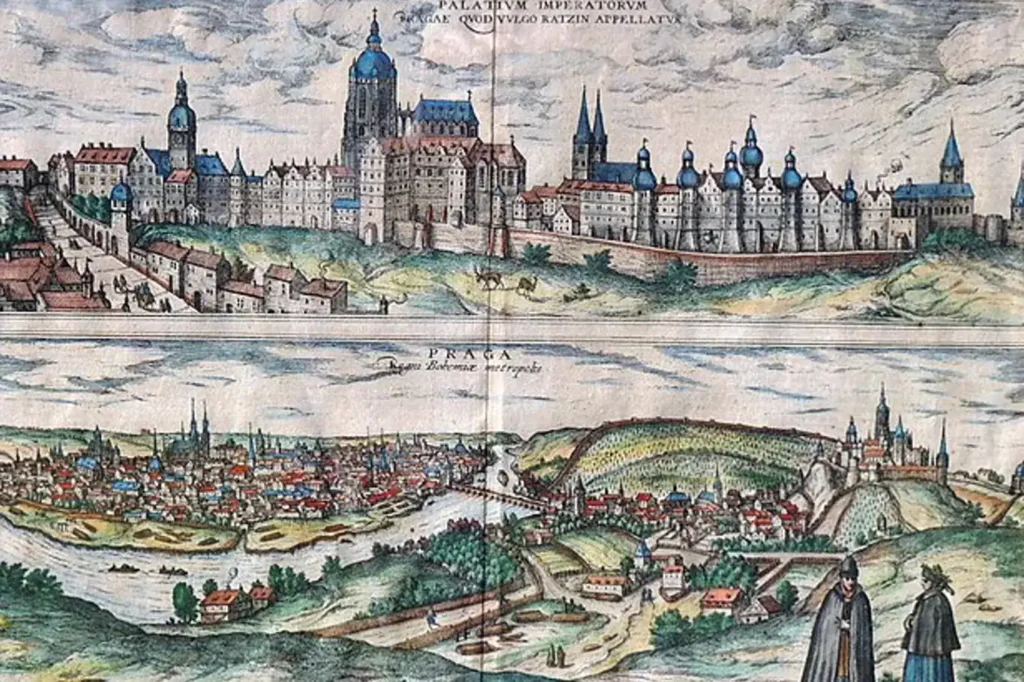
In 1526, the Habsburg dynasty took control of the Czech lands, marking a new political era. At the same time, the main center of power moved to Vienna, which reduced Prague’s political importance.
Despite political changes, Prague experienced cultural and architectural development during the Renaissance period. A major fire in 1541 caused significant damage, especially on the Lesser Town and Prague Castle area, but reconstruction followed. Prague Castle was rebuilt in the Renaissance style. New leisure and garden areas were added, including the Royal Garden, the Belvedere, and the Ball Game Hall.
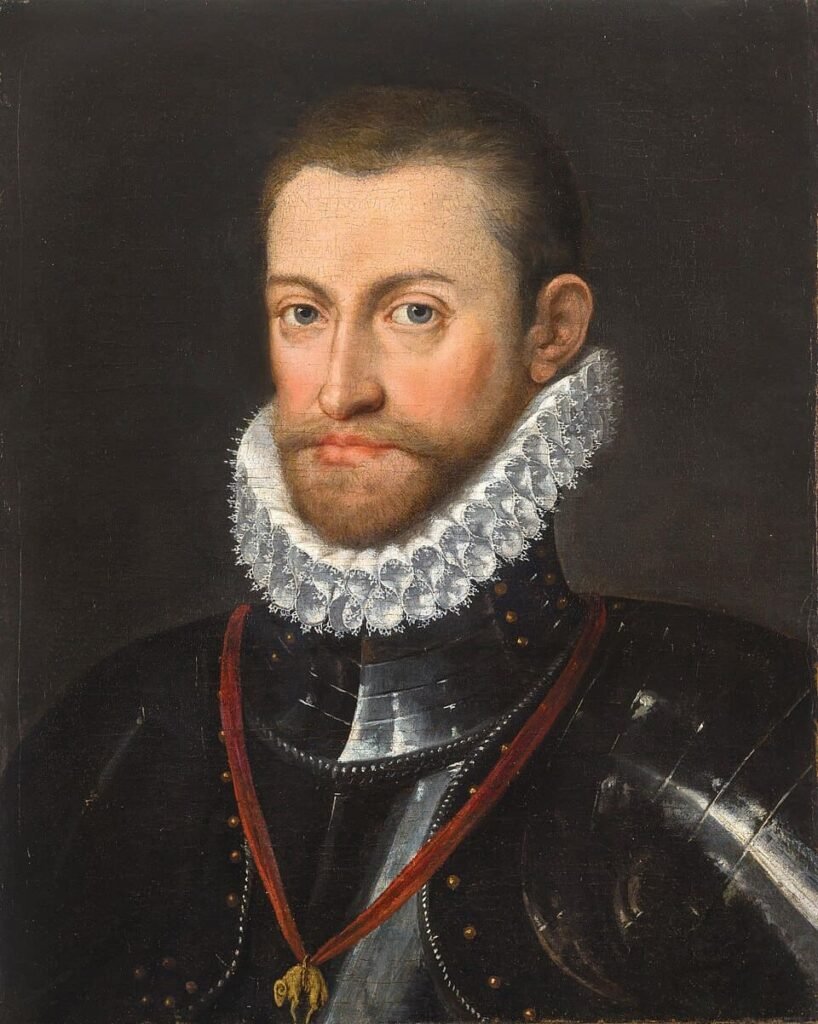
A particularly important period began when Emperor Rudolf II of the Habsburg dynasty chose Prague castle as his permanent residence. He was crowned King of Bohemia in 1575 and decided to move his court to Prague in 1583. Under his rule, Prague became a European center of science, art, intellectual activity, and especially alchemy. The city gained the nickname “Magic Prague.” Many famous scientists and scholars came to Prague, including astronomers Tycho Brahe and Johannes Kepler.
17th Century: Decline, War and Baroque Transformation
The end of Prague’s period of prosperity came with the Bohemian Estates’ Revolt between 1618 and 1620. The Protestant uprising began in 1618. This was a conflict between Protestant nobles and the Catholic Habsburg rulers. This conflict marked the beginning of the Thirty Years’ War.
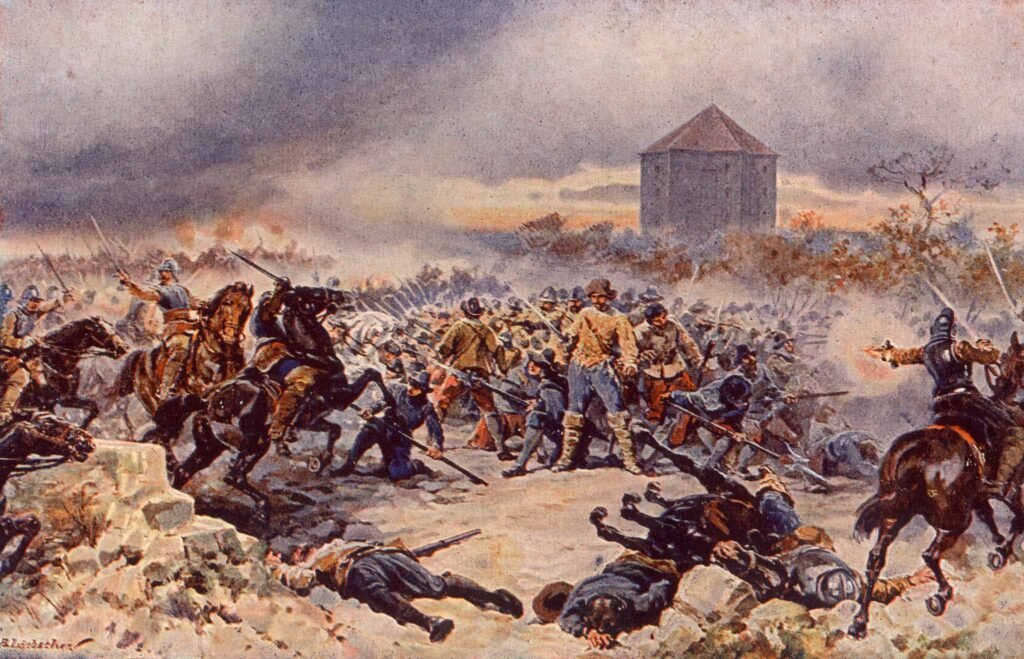
After the Battle of White Mountain in 1620, Protestant forces were heavily defeated. This was a very important moment in Czech history. After this defeat, a period often called the “Dark Age” of Czech history began. During this time, many changes happened in religion, politics, and society under strong Habsburg control. Prague lost much of its political importance, and Prague Castle slowly fell into decline.
After the war, Prague became a provincial city. It was strongly re-Catholicized, and its population decreased because of war losses and emigration.
However, this period also marked the beginning of Baroque architecture, which gradually reshaped the city. Churches, palaces, and public spaces built in this style still define much of Prague’s appearance today.
18th Century: Unification and Cultural Revival
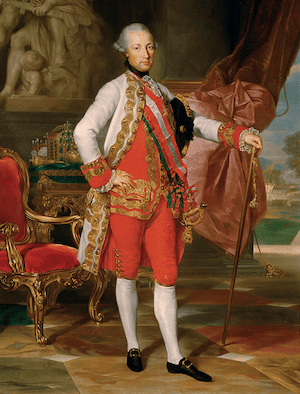
n 1784, Emperor Joseph II united the four independent parts of Prague: the Old Town, Lesser Town, Hradčany, and New Town. He merged them into one single city, creating Prague as a unified capital. This unification created the foundation of modern Prague.
Earlier, in 1781, Joseph II had also issued the Edict of Tolerance. This law gave more religious freedom and political rights to religious minorities, improving conditions for people who were not part of the dominant Catholic Church.
At the same time, cultural and intellectual life began to grow again. A Czech national movement called the National Revival began. Its goal was to bring back and strengthen the Czech language, culture, and national identity, which had been weakened over time.
19th Century: Industrial Revolution and Modernization
The 19th century brought rapid industrialization and population growth. Railways connected Prague with Vienna and other European cities, and new factories were established. As industry grew, more jobs became available in the city. Many people moved from the countryside to Prague in search of work, which caused the population to increase significantly.
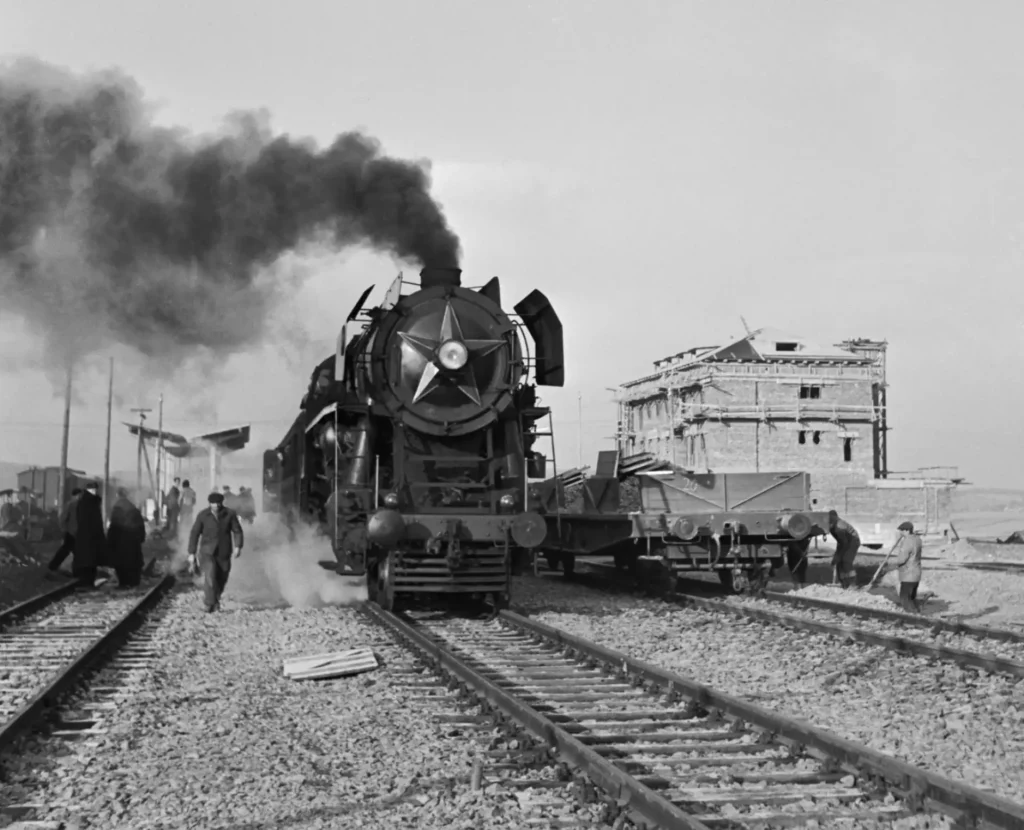
As the city expanded beyond its historic center, new districts such as Karlín, Smíchov, and Holešovice developed.In 1850, the historic Jewish district, Josefov, was officially added to the city’s structure as part of Prague’s administrative changes.
At the same time, the Czech National Revival continued to grow. Important cultural institutions were created during this period, including the opening of the National Theatre in 1868 and the National Museum in 1890.
In 1893, major rebuilding works began in Josefov, and electric tram lines started to develop. By the end of the century, Prague had become a modern industrial and cultural capital.
20th Century – Wars, Communism, and Freedom
In 1893, Prague approved a major redevelopment plan for the city center. The project continued until the start of World War I and changed the face of the city. The goal was to create a modern business and administrative district similar to those in other European capitals. City leaders also wanted to improve poor living conditions and public health in the overcrowded old neighborhoods.
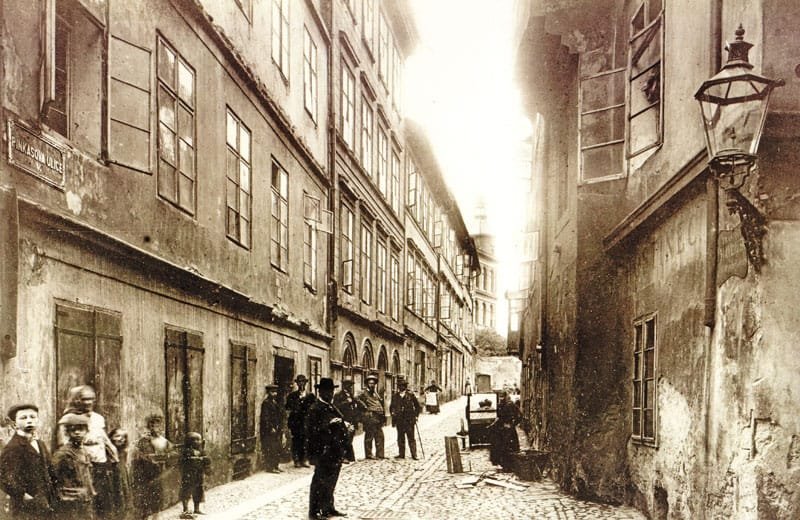
As a result, most of Prague’s historic Jewish Quarter was demolished. In its place, wider streets and elegant new buildings were constructed. One of the most famous examples is Pařížská Street, which was designed in the style of the grand boulevards of Paris. It remains one of Prague’s most prestigious streets today.
At the same time, Art Nouveau from the turn of the century was still very visible, with buildings like the Municipal House, the main railway station, the Hotel Central, the Petřín Lookout Tower, the Industrial Palace in Holešovice, and the Jan Hus monument on Old Town Square. The First World War ended this Art Nouveau period.
World War I
World War I (1914–1918) brought major changes to Prague and the Czech lands. At the time, Prague was part of the Austro-Hungarian Empire, and many Czech men were sent to fight in the war. As the conflict continued, food shortages, economic problems, and growing dissatisfaction spread throughout the city.
Between wars
In 1918, the Austro-Hungarian Empire collapsed, and Prague became the capital of the newly independent country of Czechoslovakia. Prague Castle became the official seat of the first president, Tomáš Garrigue Masaryk.
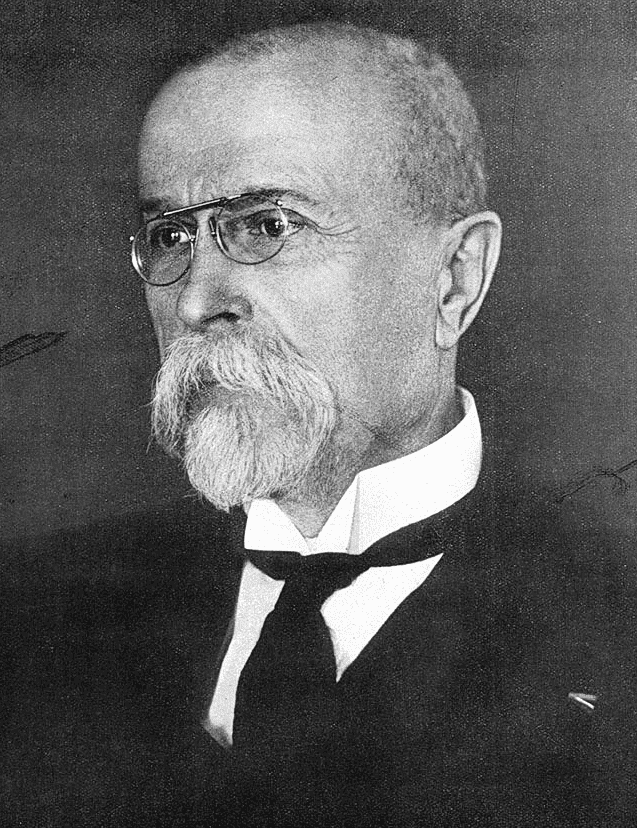
During the period between the First and Second World Wars, Prague developed quickly and became closer in style and importance to major European capitals such as Paris. The city became an important cultural center where Czech, German, and Jewish communities lived side by side.
By the late 1920s, a new style called Functionalism began to appear in Prague architecture. Prague is also known for its unique Cubist architecture. It is the only city in the world where Cubism moved from painting into building design.
World War II
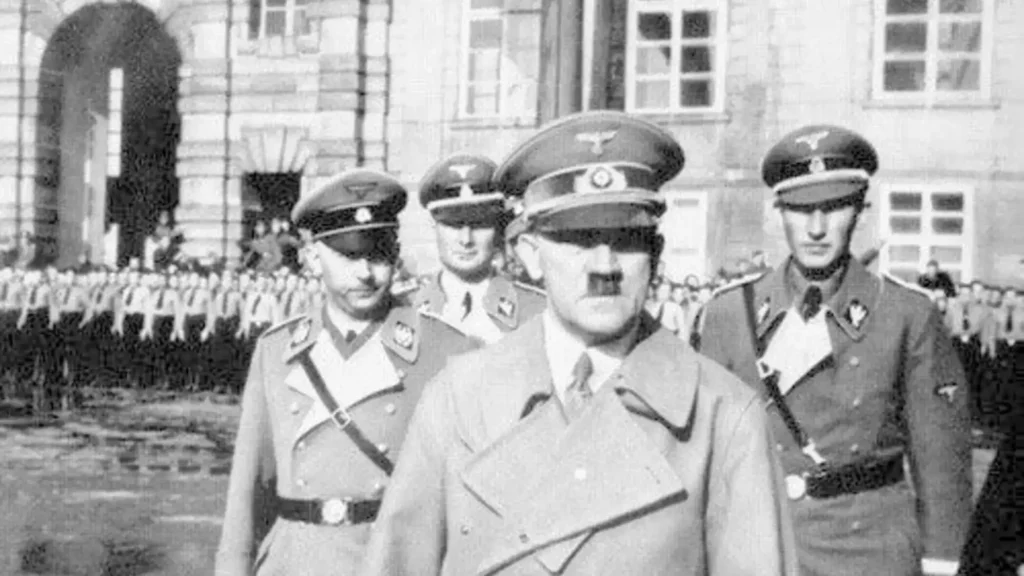
From 1939 to 1945 Prague and the rest of the country were occupied by Nazi Germany. During the war, Jewish residents of Prague were deported to concentration camps, as well as Roma people (then commonly called “Gypsies”) and other groups the Nazis considered part of so-called “inferior races.” Many people who opposed the Nazi regime were arrested, imprisoned, or executed.
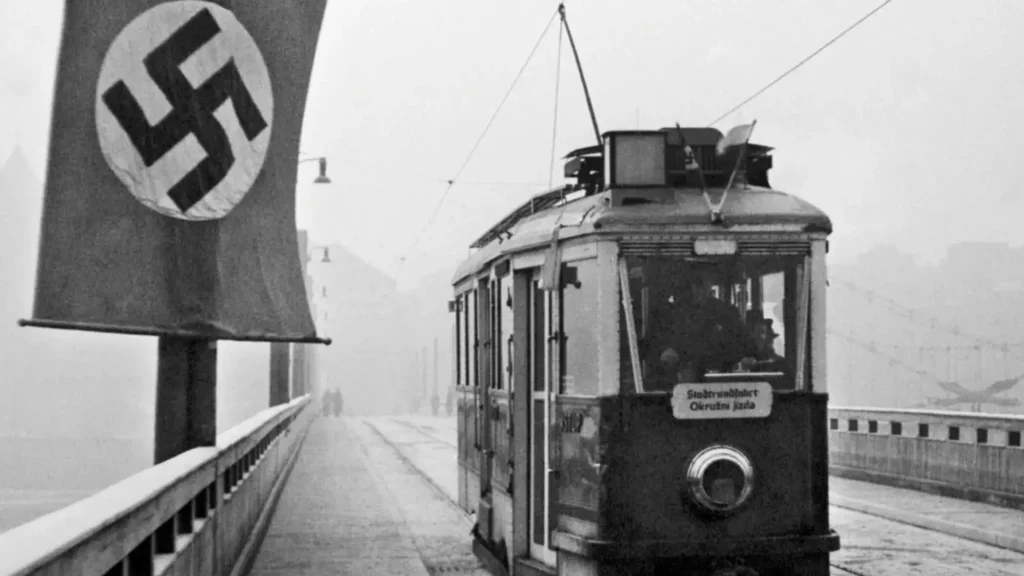
Damage to Prague’s buildings during the war was relatively small. Only minor damage happened at the very end of the war during American air raids. The Nazi regime did not manage to carry out any large planned destruction of the city.
On 5 May 1945, the Prague Uprising began. However, according to agreements between the Allied forces, the American army stopped near the town of Plzeň and did not enter Prague. The Soviet Red Army arrived in Prague later, on 9 May 1945.
Prague Under Communist Rule
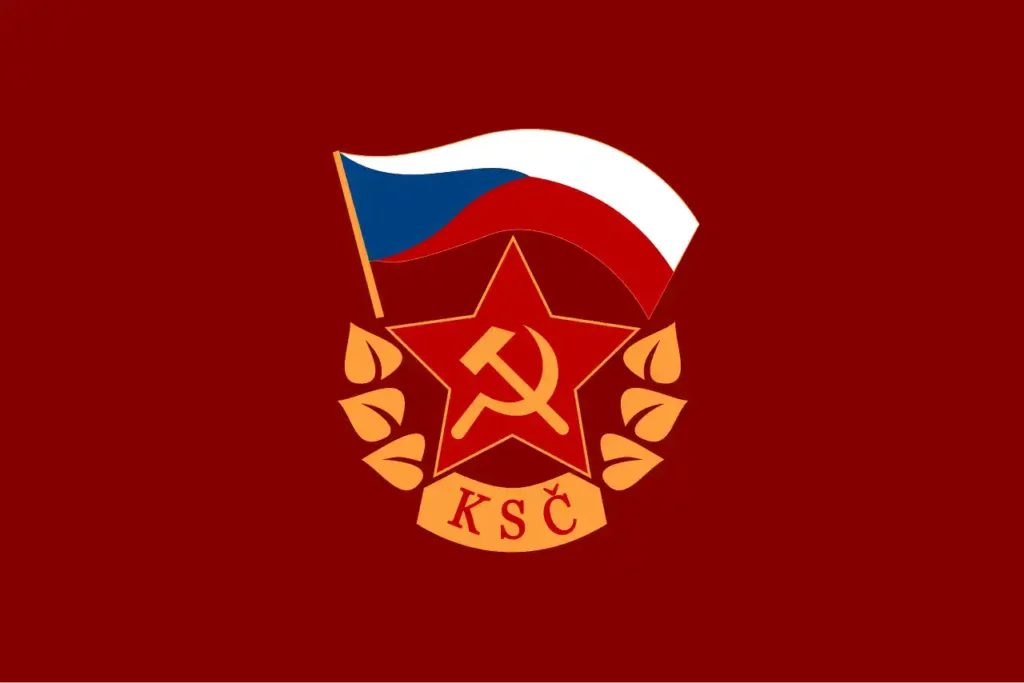
In February 1948, the Communist Party of Czechoslovakia took power. The country entered a long period of communist rule.
A major attempt to reform the system came in 1968, led by Alexander Dubček, who tried to create “socialism with a human face.” This period, known as the Prague Spring, brought hope for political freedom. However, it ended when Warsaw Pact forces invaded Czechoslovakia on August 21, 1968.
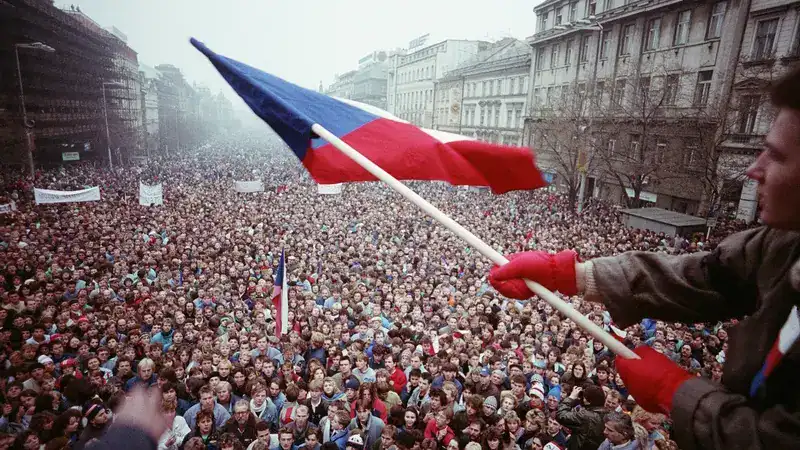
On November 17, 1989, the Velvet Revolution began in Prague. This peaceful movement ended communist rule and restored democracy in the country.
Prague in the Modern Era
After the revolution, Václav Havel, a former dissident, was elected president in the first free elections in 1990.
On January 1, 1993, Czechoslovakia peacefully split into two independent countries: the Czech Republic and Slovakia. Prague became the capital of the Czech Republic, and Václav Havel became its first president.
In 1999, the Czech Republic joined NATO, strengthening its position in Europe. Later, in 2004, the country became a member of the European Union on May 1.

Final Thoughts
Prague is much more than a collection of beautiful landmarks. Behind every square, bridge, and church lies a story. Over the centuries, the city has witnessed the rise and fall of kingdoms, empires, and political systems, yet it has never lost its importance.
That is what makes Prague so special today. It is not simply a city with a long history—it is a city where history remains part of everyday life. Whether you visit for its architecture, culture, or atmosphere, understanding its past allows you to appreciate Prague in a completely different way.
Read more :
Prague Landmarks: The Top Attractions for First-Time Visitors
Top 16 Unmissable Landmarks and Attractions in Prague
Prague Hidden Gems: Secret Places Beyond the Crowds (2026)
Ultimate Prague Travel Guide in a Nutshell (2026)
Where to stay in Prague : A Guide to the Best Neighborhoods
Where To Next?

Czech Pub Etiquette: How to Order Beer Like a Local
The Best Beer Gardens in Prague to Visit This Summer
20 Most beautiful historic cafés in Prague (2026)
The Oldest Pubs in Prague: Where History Meets Great Czech Beer
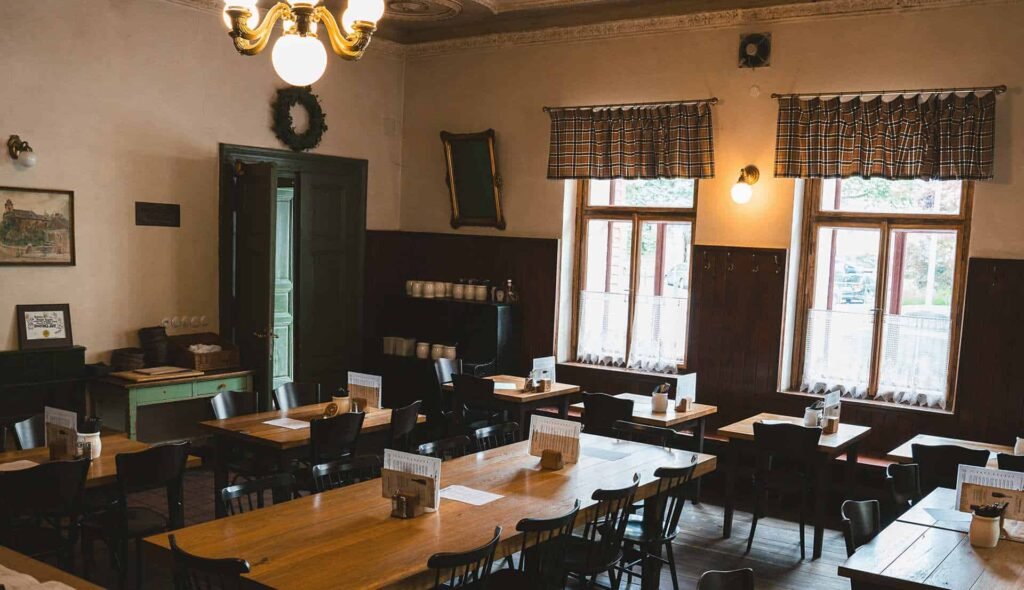
Prague´s Hidden Historic Pubs to Taste Authentic Czech Beer