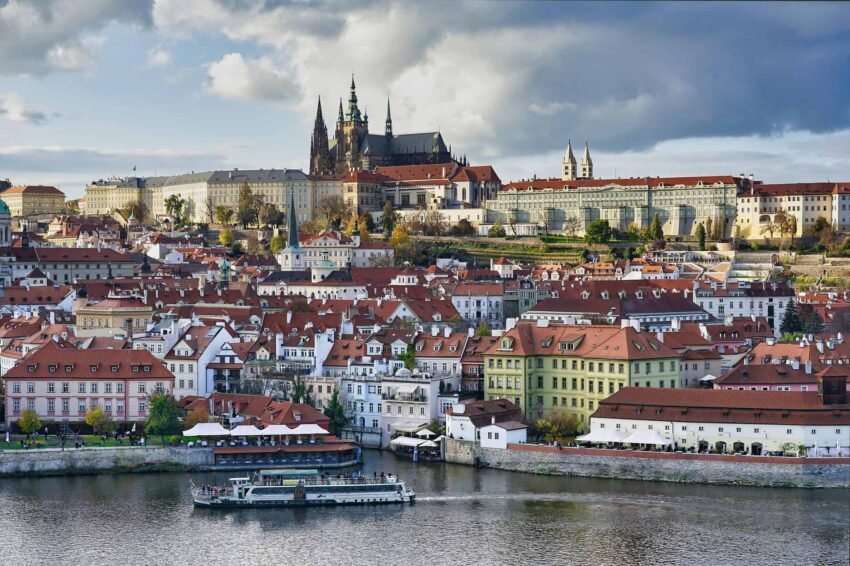
In the previous article, I introduced Prague’s most famous landmarks, such as Prague Castle, Charles Bridge and Old Town Square. Prague Landmarks: The Top Attractions for First-Time Visitors .If you are spending more than just a day or two in the city, there are many other places that deserve your attention as well. In this article, I’ll take you to some of Prague’s other must-see sights — from the peaceful paths of Petřín Hill and the romantic corners of Kampa Island to the historic Vyšehrad, Klementinum and much more. These are the places that help reveal a different side of Prague beyond the most popular tourist highlights.
Vyšehrad
Vyšehrad sits on a hill above the Vltava River and offers beautiful views of the city. It is also much quieter than the busy historic centre.
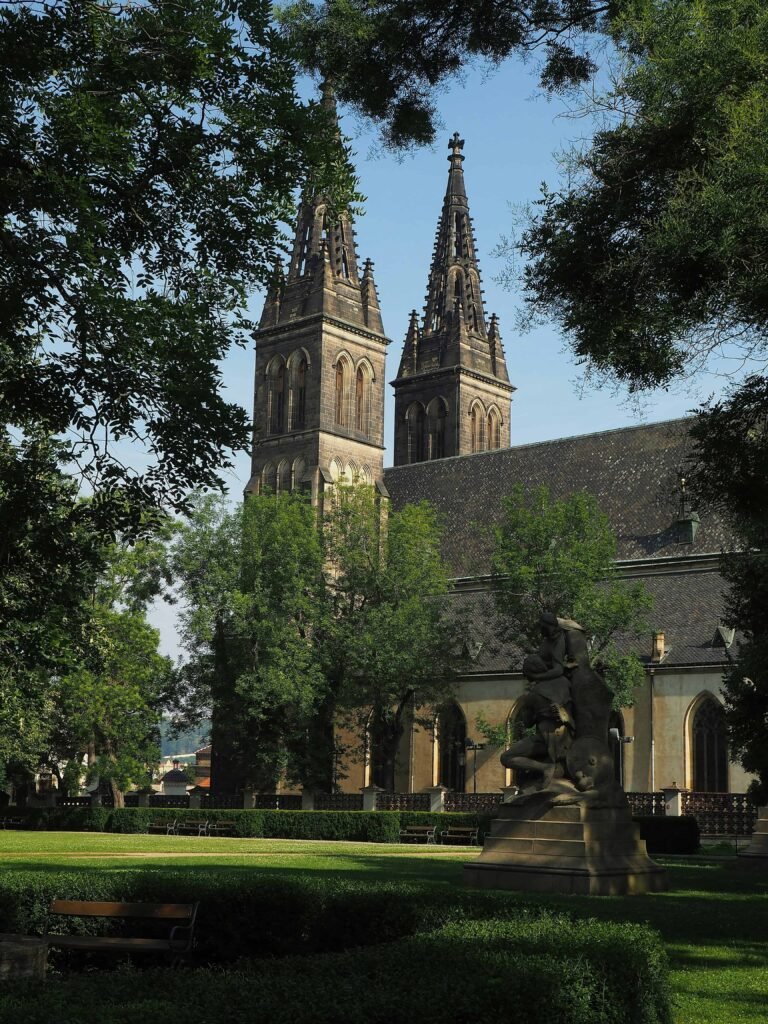
The first written records of Vyšehrad date back to 1070, although people lived here much earlier. It was once a royal castle and even served as the seat of the first Czech king, Vratislav II.
Today, visitors come to see the impressive Basilica of St. Peter and St. Paul, the old fortifications, and the famous Vyšehrad Cemetery. Many of the Czech Republic’s most important artists, writers, and composers are buried there. I also recommend visiting the Casemates. These underground tunnels were built as part of the Baroque fortress. They allowed soldiers to move safely through the fort and were used for military purposes. Today, you can walk through the tunnels and see several original statues from Charles Bridge. Vyšehrad was declared a National Cultural Monument in 1962 and remains one of the most rewarding places to explore in Prague.
Vyšehrad was declared a National Cultural Monument in 1962 and remains one of the most rewarding places to explore in Prague.
Old Town Bridge Tower
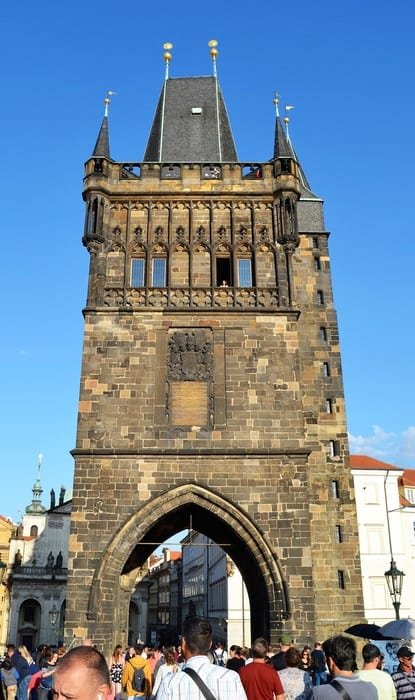
The Old Town Bridge Tower is one of the most beautiful Gothic towers in Prague. It stands at the Old Town end of Charles Bridge and was built in the 14th century during the reign of Charles IV.
The tower was designed by Petr Parléř, the architect behind many of Prague’s most important Gothic landmarks. It served as both a defensive gate and part of the Royal Route, which Czech kings followed on their way to their coronation.
I always recommend climbing the tower if you have the time. After 138 steps, you reach a viewing gallery with fantastic views of Charles Bridge, Prague Castle, and the rooftops of the Old Town. The tower is also known for its rich stone decoration, including statues of Charles IV, and king Václav IV
Petřín Hill
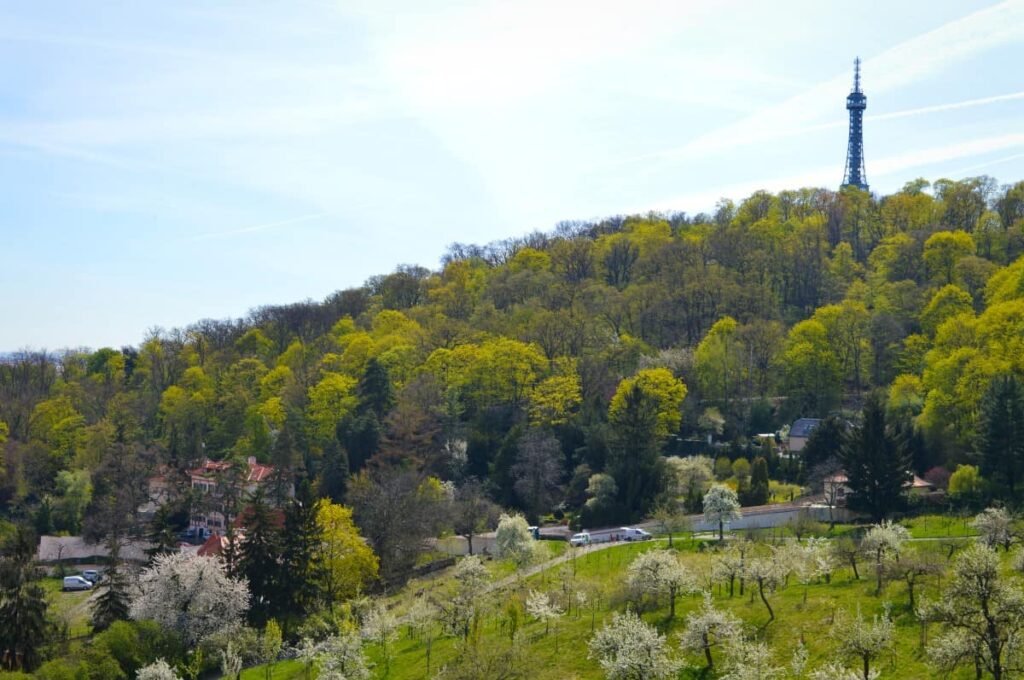
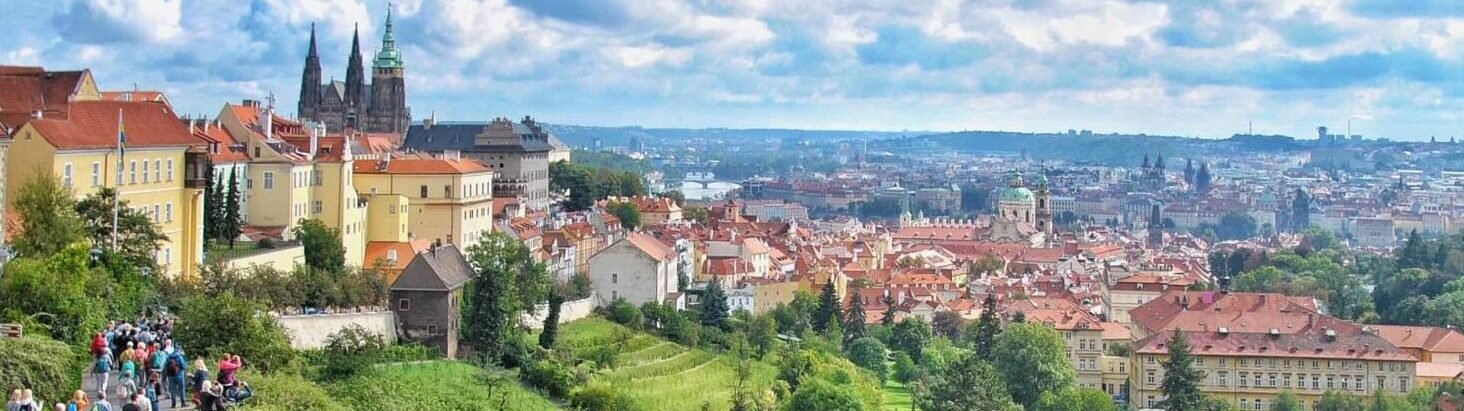
Petřín Hill is a large green hill close to the city centre, but it feels far away from the crowds. I often recommend it to visitors who want to slow down and enjoy a different side of Prague.
Petřín is known for its beautiful parks, gardens, and orchards. In spring, hundreds of fruit trees bloom, making it one of the prettiest places in the city. The hill is also home to several popular attractions, including the Petřín Lookout Tower, which is often called a small Eiffel Tower. From the top, you can enjoy wonderful views across Prague. Other highlights include the Mirror Maze and the Štefánik Observatory.
Petřín has long been known as Prague’s most romantic spot. On 1 May, many Czech couples come here to kiss under the blossoming trees, following a local tradition. It´s worth visiting for the views, the peaceful atmosphere, or a simple walk in nature,
Dancing House
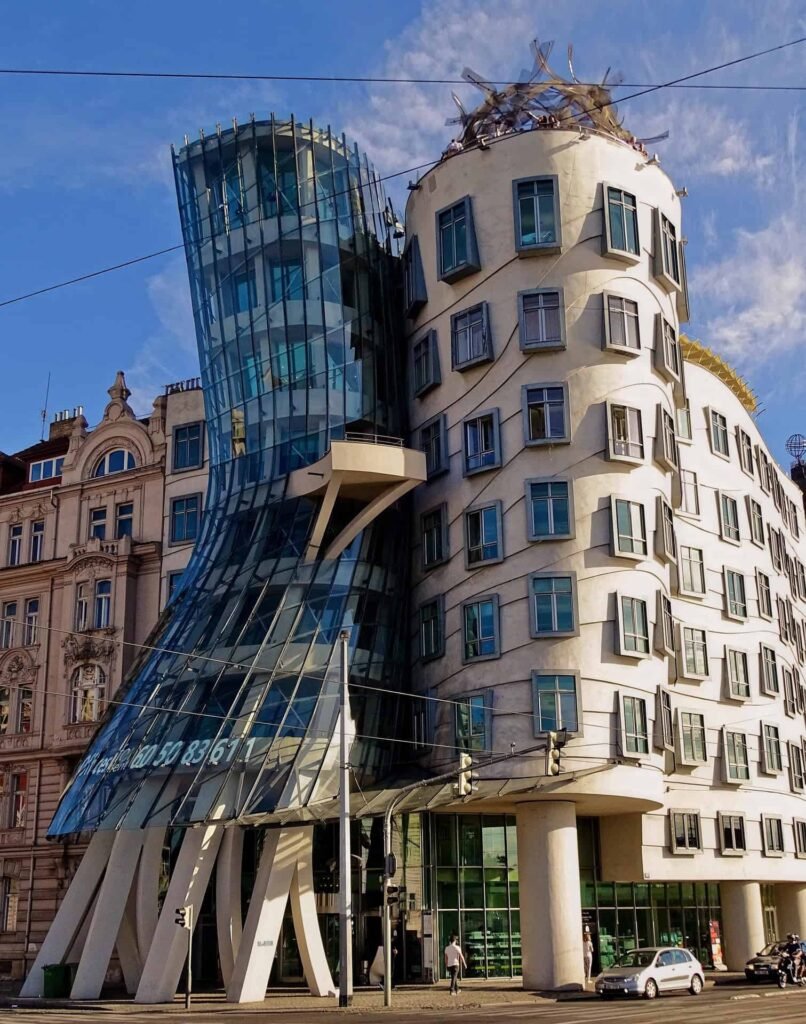
The Dancing House is one of the most famous modern buildings in Prague. I often recommend it to visitors who are interested in architecture. It was designed by Vlado Milunić and Frank Gehry and opened in 1996. Its curved shape looks like a dancing couple, which is why it is known as “Fred and Ginger”. The building stands on a site that was left empty for many years after the original house was destroyed during World War II. In 1996, the Dancing House won Time magazine’s Design of the Year award. In 2021, it was ranked as the 9th most beautiful building in the world. Today, you can visit the gallery, enjoy a drink or meal, and take in amazing views of Prague from the rooftop terrace.
Klementinum
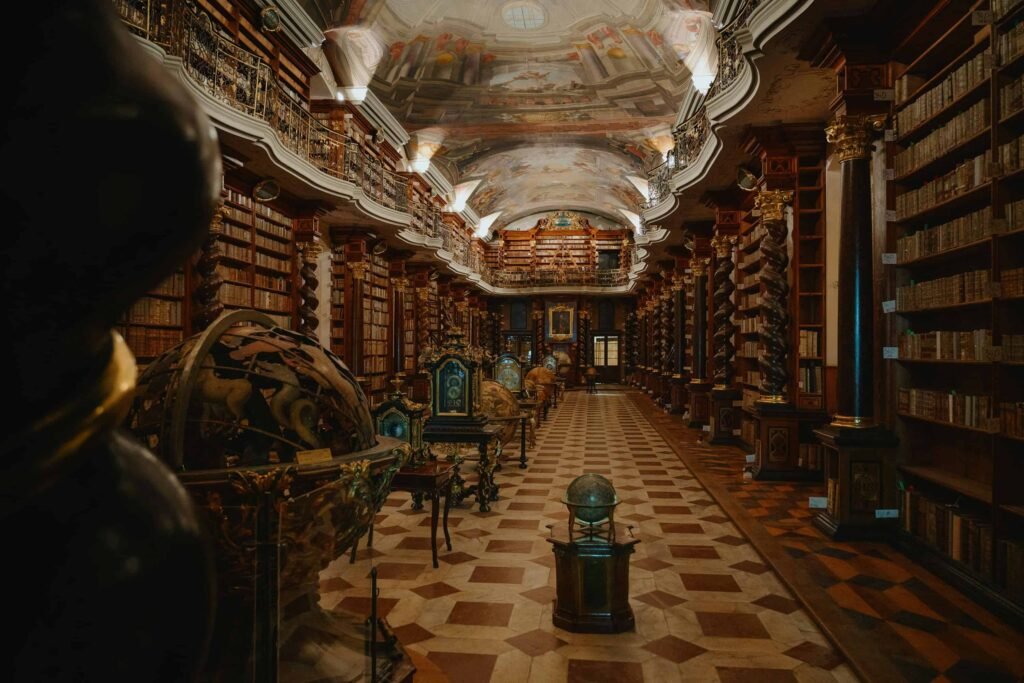
Klementinum is one of my favourite historic places in Prague. It is the second largest building complex in the city after Prague Castle and has been a centre of learning and culture for centuries. The complex was founded by the Jesuits in 1556 and today it is home to the Czech National Library. The highlights of a visit are the beautiful Baroque Library Hall, often called one of the most beautiful libraries in the world, the Astronomical Tower with wonderful views over Prague, and the stunning Mirror Chapel, known for its rich Baroque decoration and classical music concerts. Another interesting fact is that weather measurements have been recorded here continuously since 1775, making it one of the longest-running meteorological stations in Europe. Famous visitors included Albert Einstein, who taught here, and Wolfgang Amadeus Mozart, who performed here during his time in Prague.
St.Nicholas Church
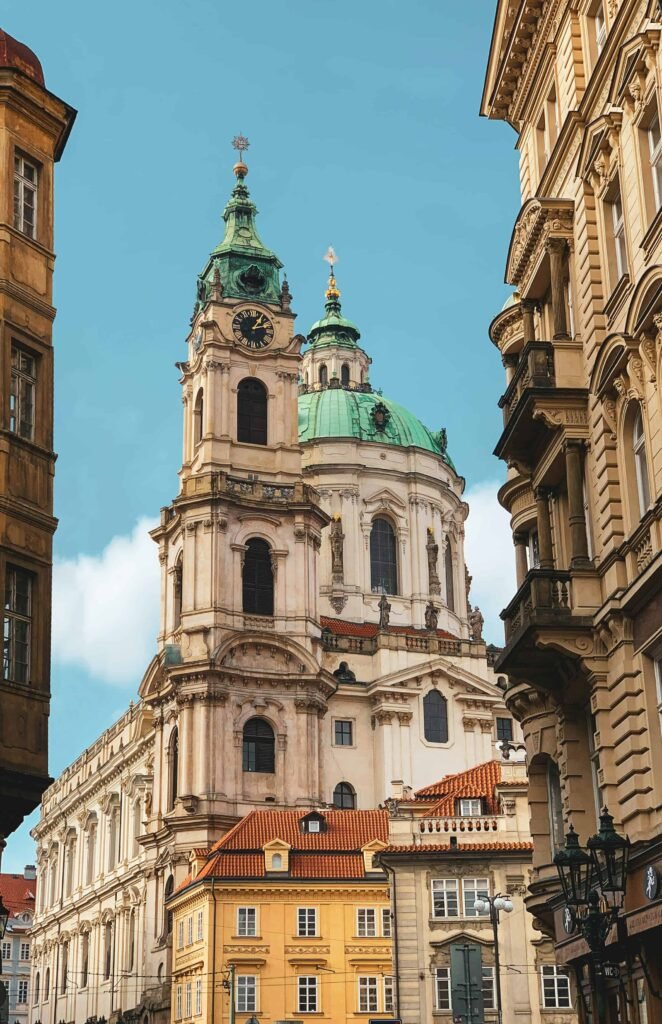
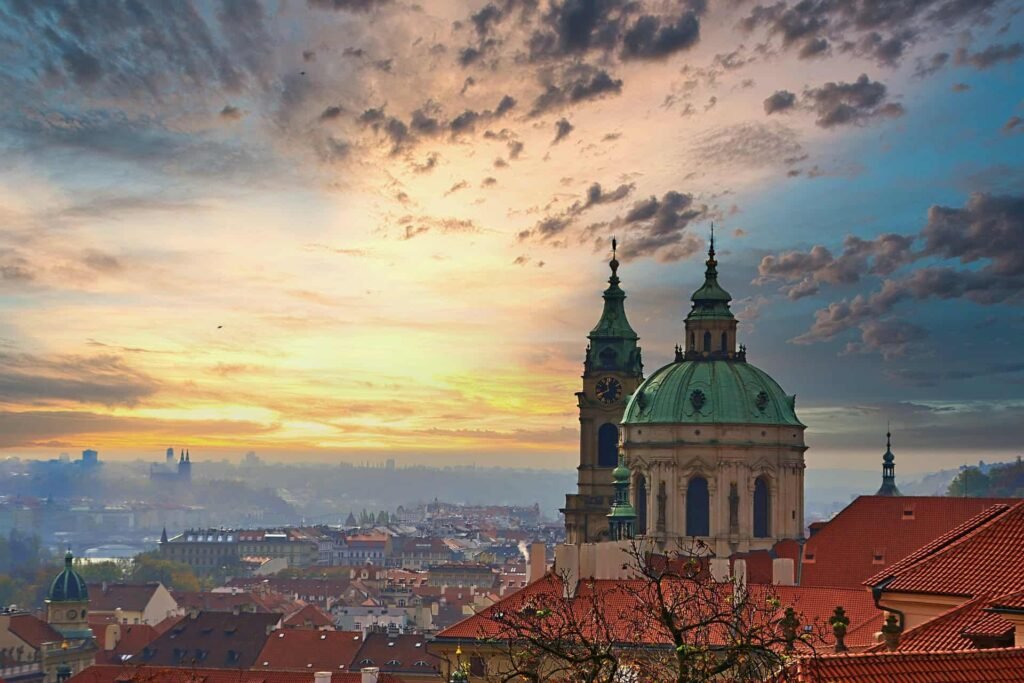
Church of St. Nicholas is one of the most beautiful churches in Prague and a landmark of the Malá Strana district. Its large green dome is easy to spot from many parts of the city. The church is considered one of the finest examples of Baroque architecture in Europe and is often described as the most beautiful Baroque building in Prague.
The church was built over several decades by three generations of architects from the same family. Inside, the space feels truly impressive. The huge dome rises almost 57 metres above the floor, creating the tallest church interior in Prague. Don’t miss the magnificent ceiling fresco, one of the largest in Europe, and the beautiful Baroque decoration throughout the church. Music lovers may also enjoy knowing that Wolfgang Amadeus Mozart once played the church’s famous organ.
If you have time, I recommend climbing to the gallery. From there, you get a closer look at the frescoes and a wonderful view of the church interior. You can also visit the bell tower, which was once used by the communist secret police to monitor nearby foreign embassies. Today, it houses a small exhibition and offers lovely views over Prague.
The Estates Theatre
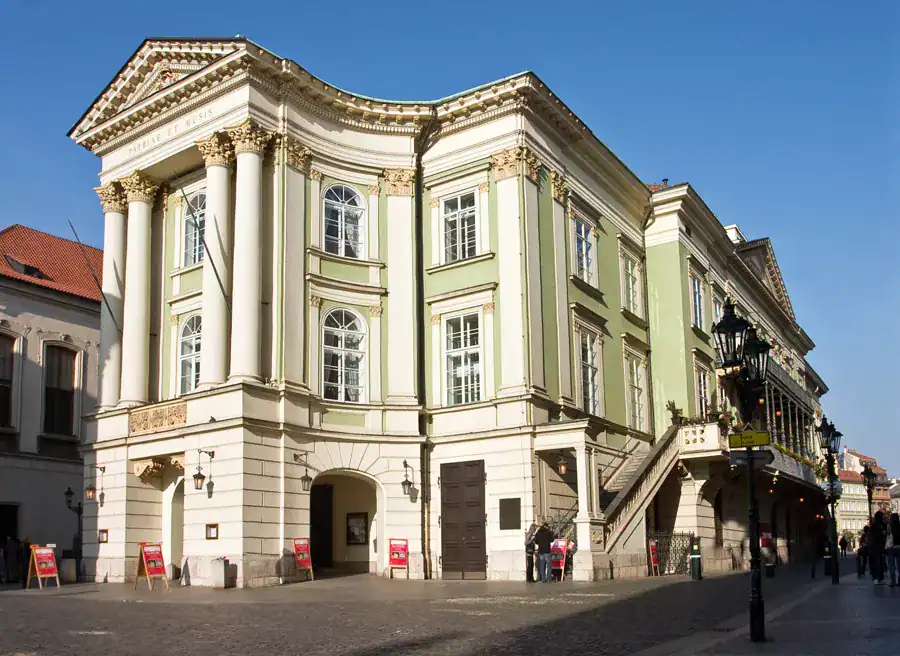
The Estates Theatre is famous for being one of the oldest theatres in Europe still in operation . It was built in the 18th century by Count František Antonín Nostitz as a theatre for the public. It opened in 1783 with a play by Lessing. The building is closely connected with Wolfgang Amadeus Mozart. He conducted The Marriage of Figaro here in 1787. In the same year, his opera Don Giovanni had its world premiere in this theatre, written especially for Prague.
Later, the theatre became known as the Royal Estates Theatre. It also played an important role in Czech culture. In 1834, the play Fidlovačka was performed here, and the song “Kde domov můj” was heard for the first time. This song later became the Czech national anthem.
The theatre is still active today. You can see opera, ballet, and drama performances here. I especially like the Mozart productions, which fit the history of the place so well. The theatre was also used in the film Amadeus by Miloš Forman, which made it even more famous around the world.
Čertovka ( Devil´s Chanel )
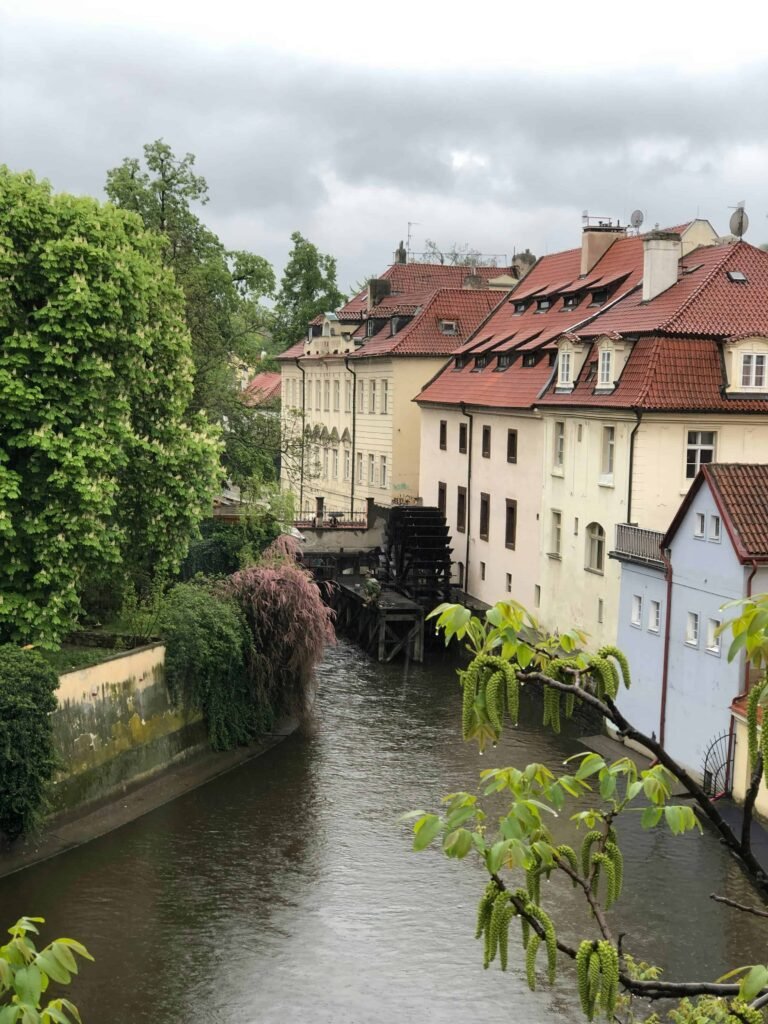
Čertovka, sometimes called Little Prague Venice, is a small and very charming canal in Prague’s Malá Strana. It was created in the Middle Ages by the Knights Hospitaller to bring water to local mills. The canal flows between the Vltava River and a small island called Kampa, which was formed by this diversion of water.
It is only a short walk from Charles bridge, on the left side towards Malá Strana. The area feels quiet and almost hidden, even though it is in the city centre. One old water mill is still visible today, the Grand Priory Mill, and it gives the place a special historic atmosphere. The canal is very photogenic, especially from Charles Bridge, and the views are perfect for a short stop and a few photos. It is one of those small Prague places that many people walk past too quickly.
Kampa
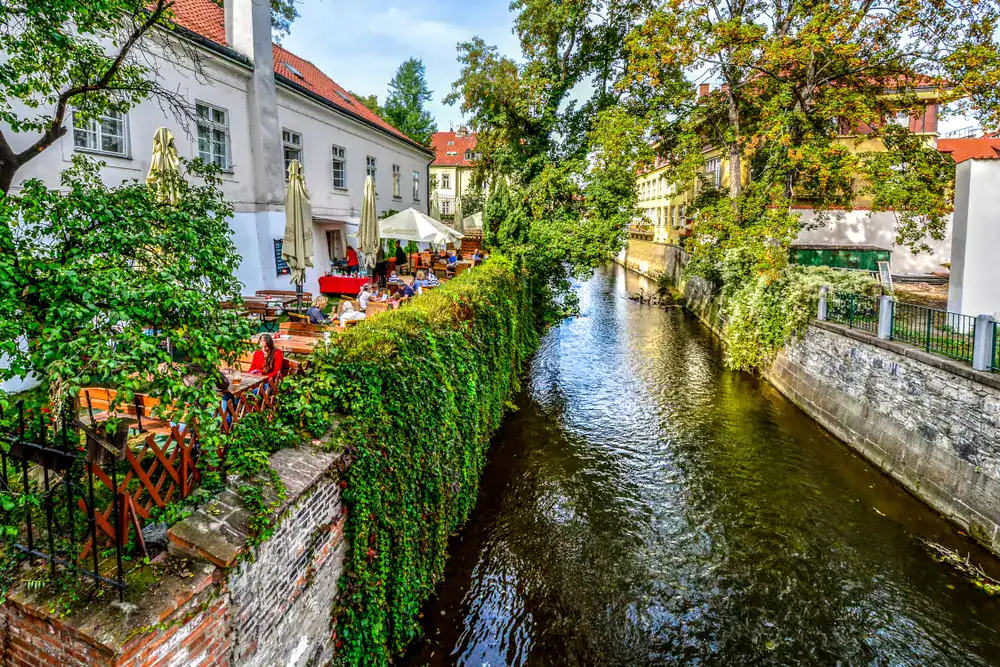
Kampa is one of the most charming places in Prague and a spot I often recommend to visitors. This small island lies between the Vltava River and the Čertovka canal in the heart of Malá Strana. It was created centuries ago when a water channel was built to power local mills, including the historic Grand Priory Mill, whose large water wheel can still be seen today.
Kampa is often described as the most mysterious island in Prague. Local legends say that water sprites, mermaids, and other magical creatures once lived here. Whether you believe the stories or not, the island has a special atmosphere that makes it a place you should not miss. In fact, a well-known travel website once ranked Kampa as the second most beautiful city island in the world, describing it as a place that looks “almost unreal.”
Today, Kampa is a wonderful place for a peaceful walk, a picnic, or simply a break from the busy streets of the city. The island offers beautiful views of the Vltava River, Charles Bridge, and Prague’s historic skyline. You will also find several popular attractions here, including the Kampa Museum, the famous Lennon Wall, and the giant Baby sculptures by Czech artist David Černý. The northern part of the island, along the Čertovka canal, is sometimes called Prague Venice because of its picturesque setting.
National Theatre
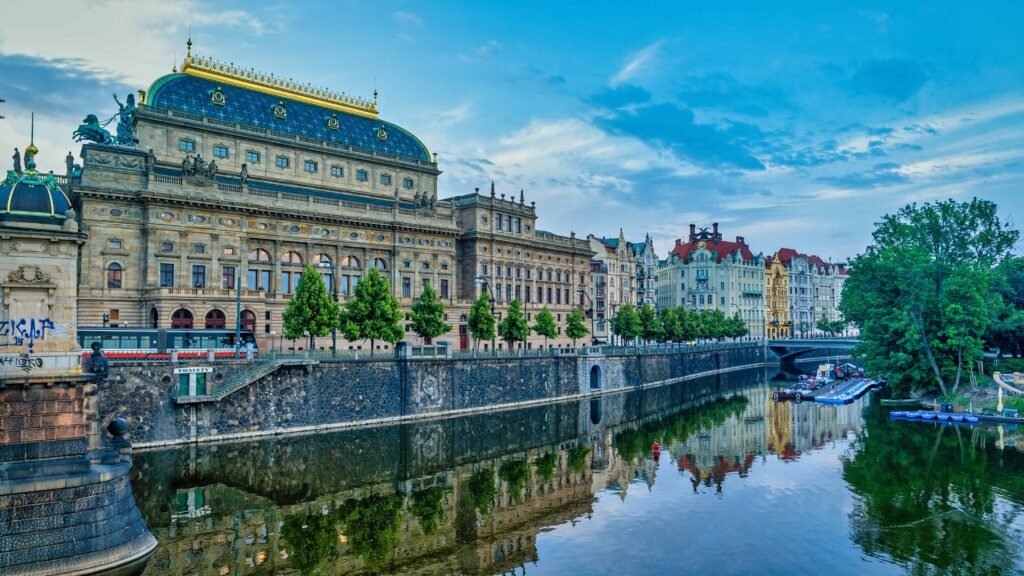
The National Theatre in Prague is one of the most important cultural buildings in the Czech Republic. It was founded in the 19th century by Czech patriots, and people from all over the country contributed money to build it. It was a true national project, supported by both rich nobles and ordinary citizens.
The theatre first opened with the opera Dalibor by Bedřich Smetana. Just two months later, a fire destroyed the roof, and it took two years to repair and reopen the building. The theatre you see today is a beautiful Neo-Renaissance landmark with rich decoration and many details on its façade. Statues and golden elements make it especially impressive in sunlight.
Inside, it remains an important stage for opera, ballet, and drama. The building also looks very different at night, when it is softly lit and reflected in the Vltava River. I always think it is one of those places where you really feel the pride and history of Czech culture just by standing nearby.
The Powder Tower
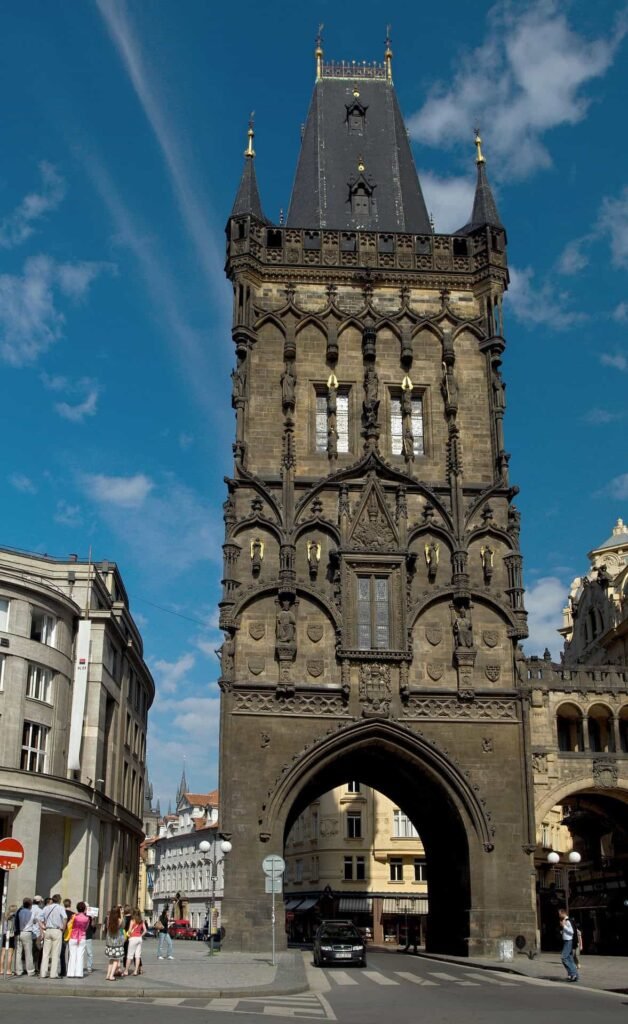
The Powder Tower ( Powder Gate ) is one of the most famous Gothic landmarks in Prague. It stands at the edge of the Old Town and was built in 1475 on the site of an older city gate. For centuries, it served as one of the main entrances to Prague. It is also known as the starting point of the Royal Route, the ceremonial path taken by Czech kings on their way to their coronation at Prague Castle.
I always recommend taking a closer look at the tower’s beautiful stone decoration. The façade is covered with statues of Czech kings, saints, and patron figures. If you don’t mind climbing stairs, you can walk up 186 steps to the viewing gallery. The views over the Old Town are well worth the effort. Inside, you can also learn more about the history of the tower and Prague’s medieval fortifications.
Despite its name, there is no clear evidence that the tower was ever actually used to store gunpowder, but the name has remained ever since.
Municipal House
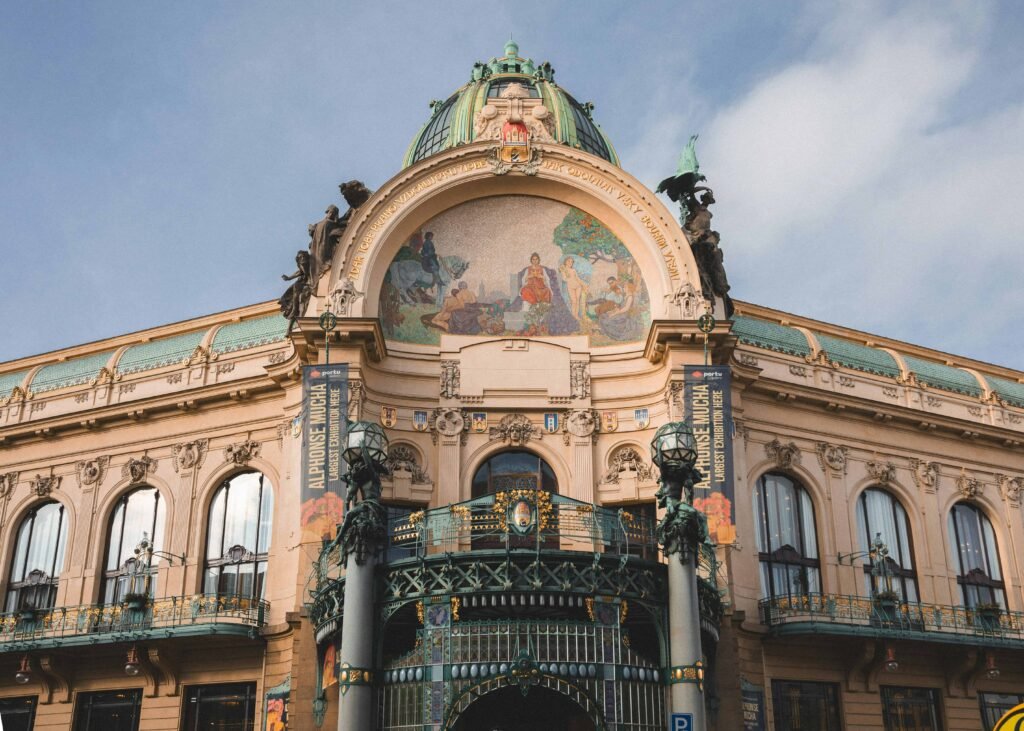
The Municipal House (Obecní dům) stands on the site of the former Royal Court, once a royal residence from the 14th century.
At the beginning of the 20th century, the old Royal Court was demolished. Prague wanted a modern representative building. Construction started in 1905 and finished in 1911.
The building quickly became a symbol of Czech national pride. In 1918, important meetings took place here that led to the creation of Czechoslovakia. The independence of the new state was announced from the balcony. Later, the building hosted concerts, balls, exhibitions, and major public events. During the Velvet Revolution in 1989, artists and students also gathered here.
The Municipal House is one of the finest examples of Art Nouveau architecture in Prague. The exterior is richly decorated with sculptures and mosaics. Above the main entrance is a large mosaic showing the city of Prague. On each side stand two symbolic statues: “Humiliation of the Nation” and “Resurrection of the Nation.”
Inside, there are many halls and decorated rooms. The most important is Smetana Hall, used for classical concerts. There are also cafés, restaurants, and historic bars.
For its time, the building was very modern. It had lifts, ventilation systems, telephones, and other advanced technologies. It was one of the most sophisticated buildings in Central Europe.
Today, the Municipal House is still a living cultural centre and one of the most important landmarks in Prague.
The Church of Our Lady before Týn
The Church of Our Lady before Týn is one of Prague’s most famous landmarks.
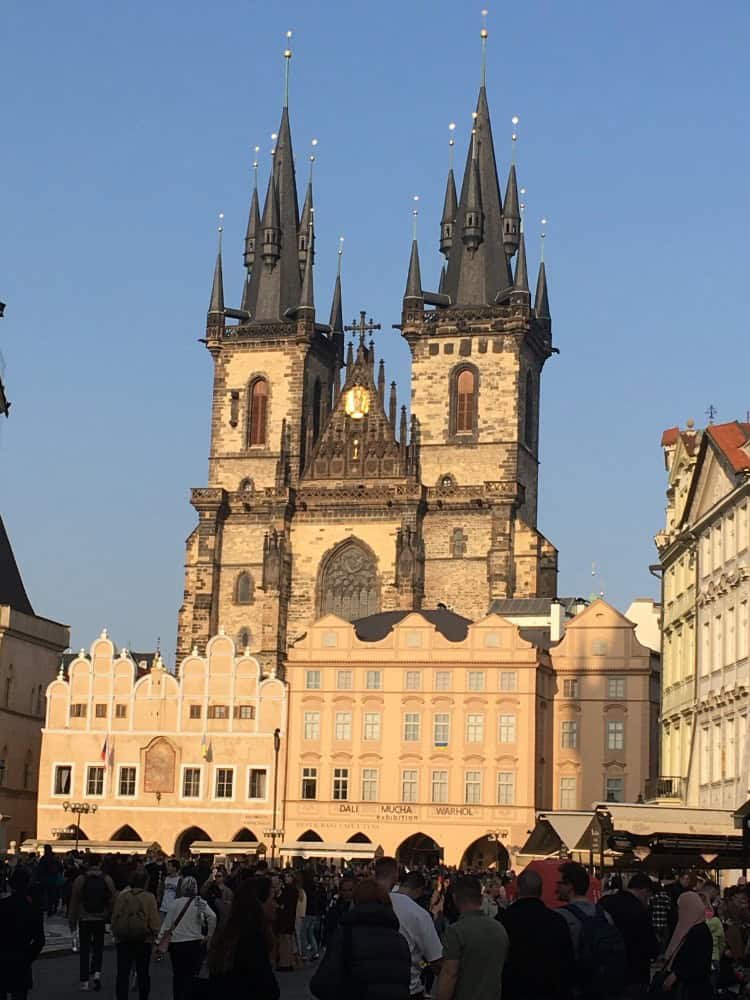
Its two Gothic towers rise above Old Town Square and are among the most recognizable features of the city skyline. Although the church stands on the site of an older building, the present church was built mainly during the 14th and 15th centuries under the reign of Charles IV.
I always recommend stepping inside, as the interior is very different from the Gothic exterior. It is richly decorated in the Baroque style and contains several important works of art. One of the most interesting sights is the final resting place of Tycho Brahe – the famous astronomer. The church is also home to the oldest working organ in Prague, dating from 1673. If you have the chance to attend a concert here, it is a wonderful experience.
Despite being located in the heart of busy Old Town Square, the church has a peaceful atmosphere and is well worth a visit.
Ungelt
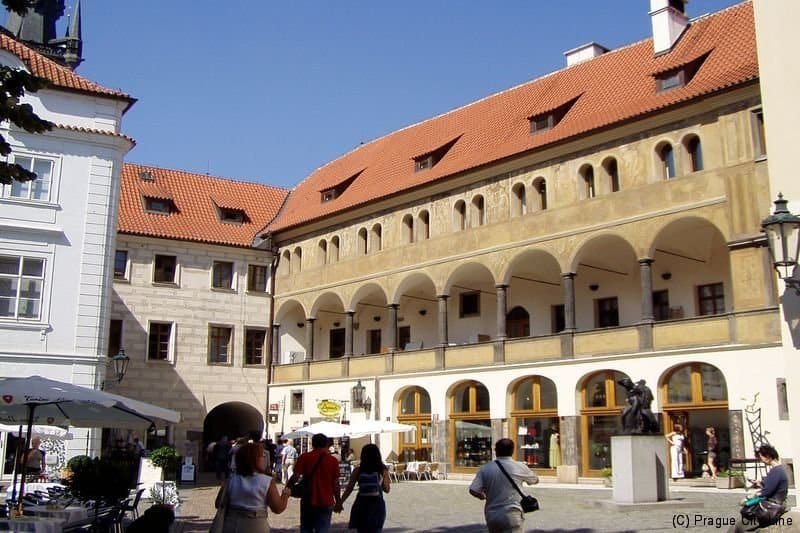
Ungelt, also known as Týn Courtyard, is one of the hidden gems of Prague’s Old Town. Just a short walk from Old Town Square, this peaceful courtyard feels like a different world away from the crowds. Its history dates back to the 12th century, when it served as a fortified merchants’ yard.
In the Middle Ages, every foreign merchant arriving in Prague had to stop here. They were required to declare their goods and pay customs duties before they could trade in the city. In return, they received royal protection. The name “Ungelt” is believed to come from the German phrase um Geld, meaning a payment or duty. At its peak, merchants from across Europe passed through these gates, bringing everything from fabrics and spices to metals, furs, and exotic goods.
Today, the courtyard is surrounded by 18 historic buildings in a mix of architectural styles. I always recommend taking a few minutes to wander through and enjoy the atmosphere. It is one of those places that many visitors miss, yet it offers a fascinating glimpse into Prague’s medieval trading past.
Wenceslas Square
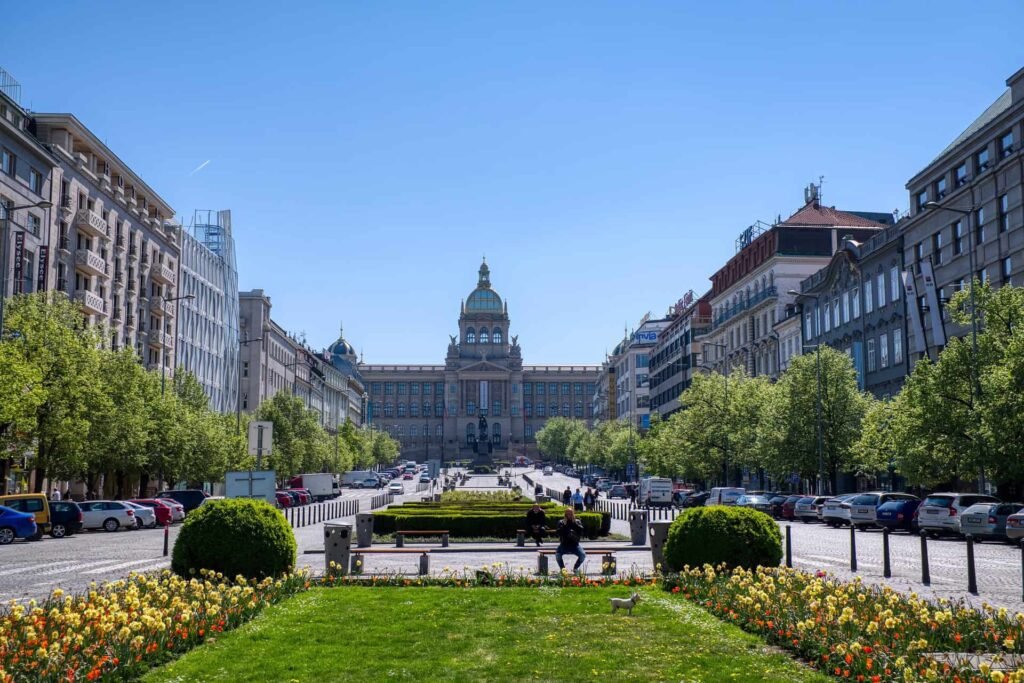
Located in Nové Město, Wenceslas Square (Václavské náměstí) is one of the most important squares in Prague. It is long and wide, more like a wide boulevard than a traditional square. The square was originally called Horse Market. It was created in the 14th century during the time of the king Charles IV. In 1848 it was renamed after Saint Wenceslas. Today it is also a major commercial centre. There are hotels, shops, restaurants, cinemas, and offices all along it. It is one of the busiest places in Prague, both for locals and tourists.
Wenceslas Square is very important for Czech history. In 1918, the creation of Czechoslovakia was announced here. In 1989, during the Velvet Revolution, huge demonstrations took place here against communist regime. Václav Havel and other leaders spoke to the crowds from nearby balconies.
At the top of the square stands the National Museum, the largest museum in the Czech Republic. It was founded in 1818 and completed in 1890. It houses huge collections covering natural science, history, archaeology, and culture.
Loreta
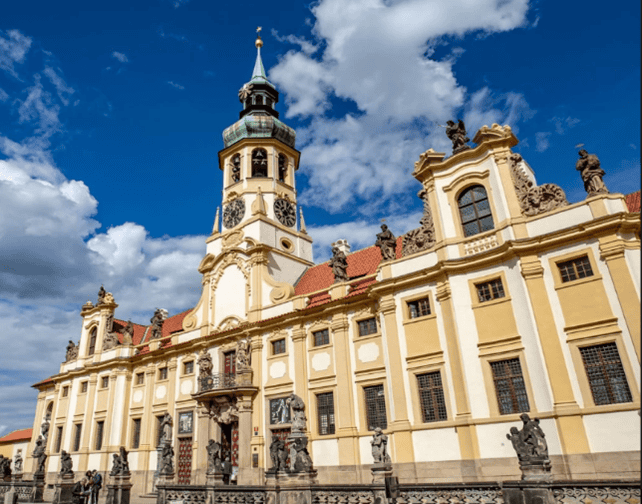
Loreta is a Baroque pilgrimage complex in Hradčany, just a few minutes from Prague Castle and St. Vitus Cathedral. It was built in the 17th and early 18th century around a central copy of the Holy House (Santa Casa), surrounded by cloisters, chapels, and the Church of the Nativity of Our Lord.
The complex was founded by Benigna Kateřina of Lobkowicz and gradually completed with the help of leading Baroque architects, including the Dientzenhofers. The Capuchin monks still care for the site today.
The tower is famous for its carillon of bells. They first rang in 1695 and still play every hour. On Sundays and holidays, live performances can be heard.
Inside is the Loreta Treasury, with a large collection of religious art. The most famous piece is the diamond “Prague Sun” monstrance from the late 17th century.
Loreta is known for its quiet courtyard layout, regular symmetry, and calm atmosphere in contrast to the busy streets nearby.
Read more Prague Landmarks: The Top Attractions for First-Time Visitors
Prague Hidden Gems: Secret Places Beyond the Crowds (2026)
Unusual Things to See in Prague: Unique & Unexpected Places
History of Prague: Complete Timeline From Ancient Times to Today
Prague tourist information : official visitor centres
Where To Next?

Czech Pub Etiquette: How to Order Beer Like a Local
The Best Beer Gardens in Prague to Visit This Summer
20 Most beautiful historic cafés in Prague (2026)
The Oldest Pubs in Prague: Where History Meets Great Czech Beer
Prague´s Hidden Historic Pubs to Taste Authentic Czech Beer